Algeria
 Egypt
 Libya
 Morocco
 Sudan
 Tunisia
 Benin
 Burkina Faso
 Cabo Verde
 Côte d'Ivoire
 Ghana
 Guinea-Bissau
 Liberia
 Mali
 Mauritania
 Niger
 Nigeria
 Senegal
 Sierra Leone
 The Gambia
 Togo
 Cameroon
 Central African Republic
 Chad
 DR Congo
 Equatorial Guinea
 Gabon
 Republic of the Congo
 São Tomé and Príncipe
 Burundi
 Comoros
 Djibouti
 Eritrea
 Ethiopia
 Kenya
 Madagascar
 Malawi
 Mauritius
 Mozambique
 Rwanda
 Seychelles
 Somalia
 South Sudan
 Tanzania
 Uganda
 Angola
 Botswana
 Eswatini
 Lesotho
 Namibia
 South Africa
 Zambia
 Zimbabwe
A mining shift that goes beyond bauxite
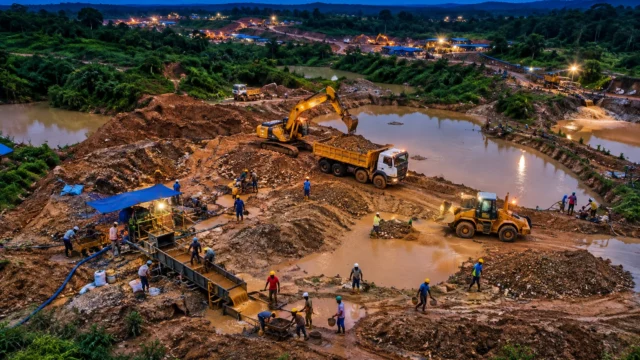
In Conakry, the question is no longer simply how to extract the ore. It has become more ambitious: how can Guinea retain more value at home, when Guinea remains the world’s leading producer of bauxite and the sector continues, for the most part, to supply smelters and refineries elsewhere? Across West Africa, this debate extends beyond Guinea. It touches on the role of the state, economic sovereignty and the ability to process resources locally.
This shift in scale is part of a broader sequence, driven by the Simandou 2040 programme and a series of recent decisions in mining, energy and infrastructure. Guinea’s capital is seeking to make the extractive sector an industrial lever, rather than merely a source of raw exports. This is where the agreement reached with Glencore takes on its full significance.
A commercial agreement opens the door to downstream industry
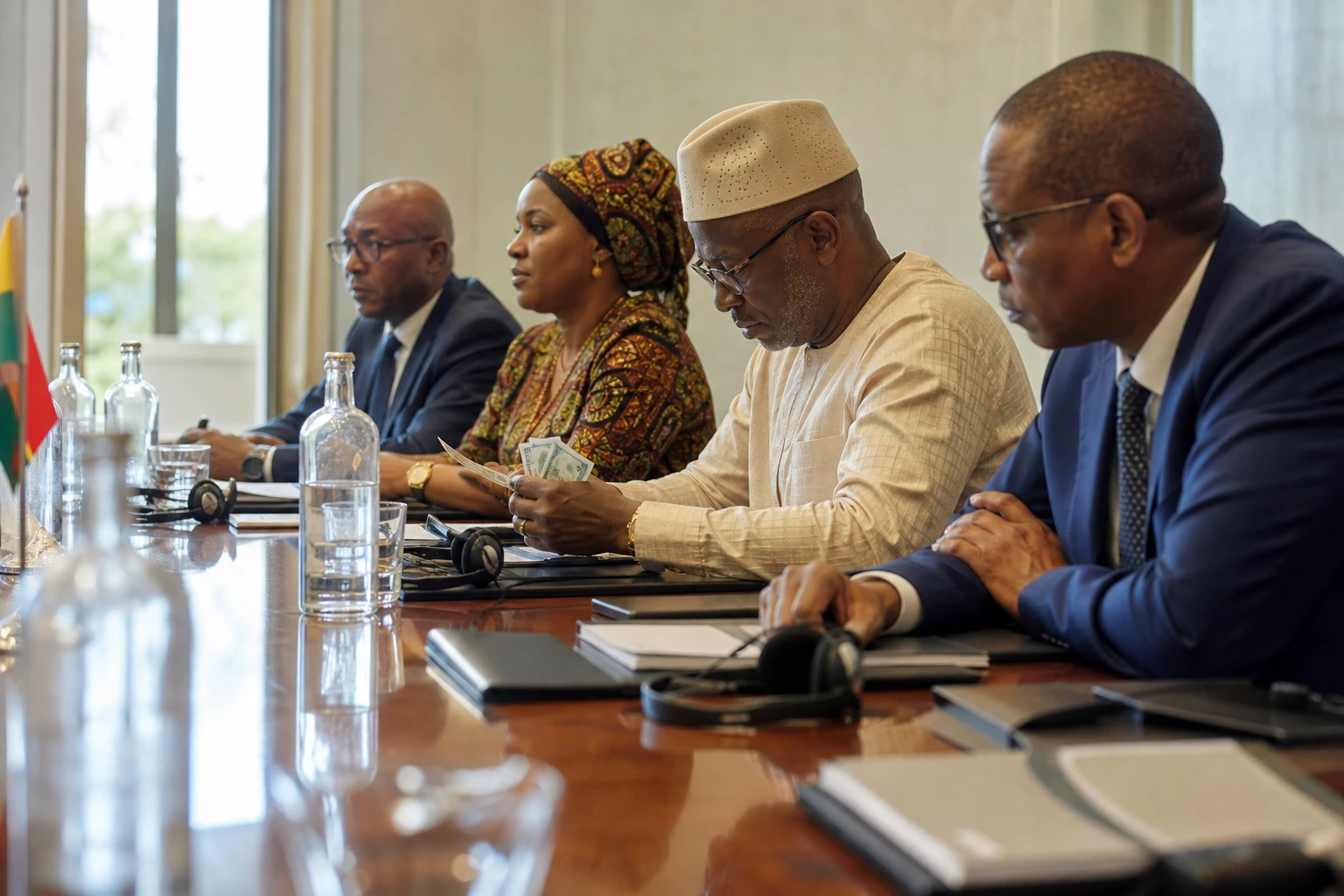
On 7 September 2026, Nimba Mining Company, a company owned by the Guinean state, concluded a pre-financing agreement worth more than $300 million with Glencore. The arrangement also provides for the marketing of 10 to 12 million tonnes of bauxite a year for five years, or up to 60 million tonnes over the period, according to information reported in Conakry and corroborated by several specialist media outlets.
Mining Minister Bouna Sylla said the partnership would not be limited to selling ore. He mentioned discussions with Glencore on alumina refining, energy and other strategic investments. The idea is clear: to turn a commercial contract into an entry point for more industrial projects.
This approach builds on a reorganisation launched in 2025 around Nimba Mining Company. The company was established after the takeover of Guinea Alumina Corporation’s assets. It subsequently began operations, with the authorities announcing the first bauxite shipment in late 2025, followed by a ramp-up in 2026. The publicly stated targets remain high: 10 million tonnes in 2026, then 12 million tonnes a year from 2027.
Why Conakry is pushing local processing
Guinea’s strategy rests on a simple observation: exporting raw materials generates revenue, but few industrial jobs and little local value-chain activity. Turning bauxite into alumina, and then aluminium, changes the equation. It requires capital, energy, roads, ports and regulatory stability, however. In short, a deposit alone is not enough.
Conakry is therefore seeking to secure several levers at once. On the one hand, the country is retaining its major Asian partners. China remains the leading destination for Guinean bauxite, and the Sino-Guinean relationship continues to absorb a large share of mining flows. On the other, the authorities want to diversify their partners, as shown by the settlement of the dispute with Emirates Global Aluminium and the opening up to new players in trading and industry.
This diversification also addresses the balance of power. In a country where mining accounts for a large share of public revenue, dependence on a single buyer or logistics corridor weakens the state’s position. The Guinean authorities have therefore strengthened their presence in the mining chain, notably through Nimba Mining Company and Guinéenne des transports maritimes, which is expected to take on a share of export transport in accordance with the rights provided for in the mining code.
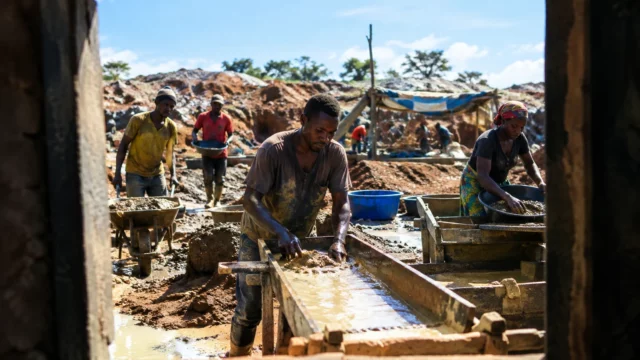
For residents of Boké, Kamsar and the mining areas in the west, the stakes are tangible. A local processing strategy could create more skilled jobs, stimulate subcontracting and boost tax revenues. But it could also increase pressure on energy, roads and land if projects move ahead faster than social infrastructure. This is where the difference between rapid extraction and sustainable industrialisation will be determined.
What the agreement says about Guinea, and beyond
Guinea now wants to be seen as a country that is no longer content merely to sell a strategic raw material. The signal matters across the region. In West Africa, several producing states are watching this shift closely, as it raises a shared question: how can countries move from an export model to a processing model without losing national control over their resources?
The regional context adds another dimension. ECOWAS is going through a period of political and economic realignment, while coastal countries are seeking more stable sources of growth. In this context, if Guinea’s mining sector becomes industrialised, it could affect logistics chains, energy needs and port markets across the sub-region. This is also why electricity, ports and railways are becoming mining issues as well as infrastructure issues.
One central question remains: will Glencore stop at being a trader and financier, or will it enter into deeper co-operation on alumina and energy? The Guinean authorities say they want to move in that direction, but no timetable or amount has been made public for these possible extensions. The next test, then, will be less the signing itself than its industrial outworking. In Guinea, that is often what distinguishes an announcement from a turning point.