Algeria
 Egypt
 Libya
 Morocco
 Sudan
 Tunisia
 Benin
 Burkina Faso
 Cabo Verde
 Côte d'Ivoire
 Ghana
 Guinea-Bissau
 Liberia
 Mali
 Mauritania
 Niger
 Nigeria
 Senegal
 Sierra Leone
 The Gambia
 Togo
 Cameroon
 Central African Republic
 Chad
 DR Congo
 Equatorial Guinea
 Gabon
 Republic of the Congo
 São Tomé and Príncipe
 Burundi
 Comoros
 Djibouti
 Eritrea
 Ethiopia
 Kenya
 Madagascar
 Malawi
 Mauritius
 Mozambique
 Rwanda
 Seychelles
 Somalia
 South Sudan
 Tanzania
 Uganda
 Angola
 Botswana
 Eswatini
 Lesotho
 Namibia
 South Africa
 Zambia
 Zimbabwe
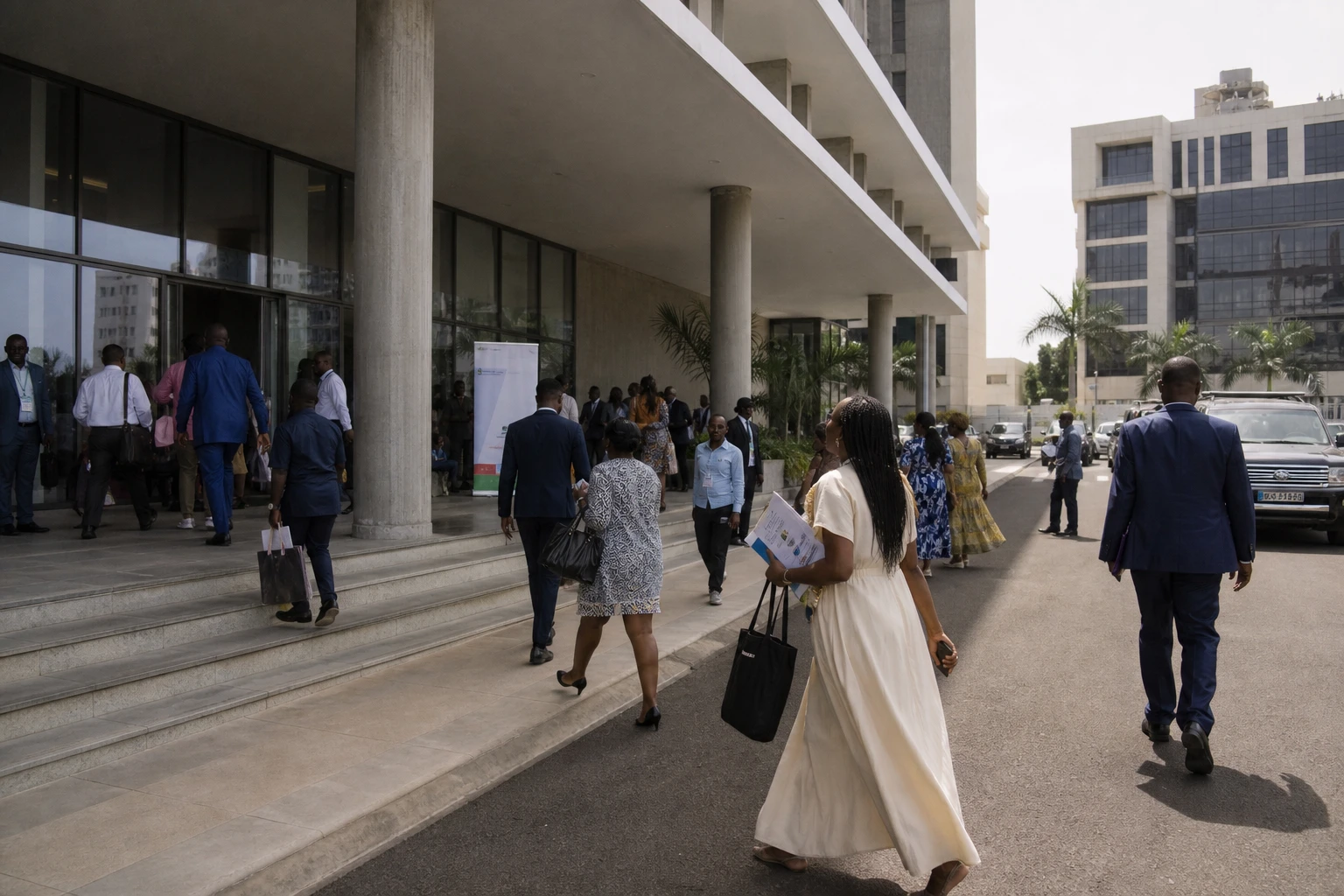
In Conakry, a conference putting pressure on Guinea’s authorities
In Guinea, the fight against female genital mutilation is not played out only in legal texts. It is played out in families, neighbourhoods, schools and health centres. The opening in Conakry of the 12th African Conference on Sexual and Reproductive Health and Rights has brought the issue back to the centre of public debate, at a time when the practice remains widespread in the country.
The gathering is all the more sensitive because Guinea is already one of the countries where the prevalence of female genital mutilation remains among the highest in the world. UNICEF data indicate that 94.5% of women aged 15 to 49 have undergone the practice, and that 39% of girls aged 0 to 14 are still exposed to it. Across the continent, the country remains among the most affected.
A longstanding issue that remains unresolved in Guinea
Guinea is not without a legal framework. The country bans female genital mutilation under its penal code, and the Constitution adopted in 2025 strengthened that ban by explicitly enshrining it in the constitutional framework. On paper, the state’s message is clear. In practice, enforcement remains uneven, as reports by UN agencies and field partners have noted.
The Conakry conference is also part of a wider regional process. Sexual and reproductive rights are now being addressed in West Africa as a matter of public health, education and the protection of girls. The theme chosen in Conakry focuses on adolescents and young people facing multiple crises, with particular attention to gender-based violence and the sustainable funding of health services.
What the figures say, and what they do not
Guinean authorities promise to act, but reality remains resistant. A civil society source, cited in local media in recent days, referred to more than 300 cases reported this year. Other observations raised by women’s organisations have also pointed to a rise in alerts in several localities. This figure should be treated with caution: it is a number of reported cases, not a comprehensive national tally.
The contrast with the structural data is stark. UNICEF notes that the practice remains entrenched in all the country’s major regions, with very high levels even in the capital, Conakry. In its 2024 snapshot, the agency also highlights that progress is slow, despite a gradual decline among younger age groups over three decades. In short, the underlying trend has not yet overcome the weight of social norms.
Between the law, social norms and the capacity to protect
The real challenge is no longer only legal. It is social, health-related and institutional. In many communities, family pressure and fear of stigma continue to weigh heavily. Families may know that the practice is banned yet feel they have no choice. This is where public action becomes decisive: protecting minors, raising awareness among neighbourhood leaders, supporting midwives, training health workers and providing care for survivors.
This fight also has a political cost. For the Guinean state, taking a firm position in Conakry means showing that it wants to align international commitments, the Constitution and day-to-day action. For NGOs and campaigners, the priority is different: securing prosecutions, effective reporting mechanisms and real protection for girls at risk. Between these two expectations, there is often an implementation gap, familiar to public health stakeholders in West Africa.
A test for Guinea, and for West Africa
At the regional level, what is happening in Conakry goes beyond Guinea alone. ECOWAS and networks working on health and women’s rights are following these issues closely, because female genital mutilation crosses social, migration and family boundaries. When a West African capital hosts a conference of this kind, it is not speaking only to its own public. It is also sending a signal to neighbouring countries facing the same practices and the same resistance.
The continental significance is clear. Africa continues to carry weight in global debates on girls’ rights, not as a uniform bloc, but as a space of contrasting strategies. In Conakry, the question is therefore not only whether to condemn a practice. It is whether Guinea can turn repeated commitments into sustainable, measurable public policy that is upheld over time. It is this transition from words to implementation that will be watched in the weeks and months ahead.