Algeria
 Egypt
 Libya
 Morocco
 Sudan
 Tunisia
 Benin
 Burkina Faso
 Cabo Verde
 Côte d'Ivoire
 Ghana
 Guinea-Bissau
 Liberia
 Mali
 Mauritania
 Niger
 Nigeria
 Senegal
 Sierra Leone
 The Gambia
 Togo
 Cameroon
 Central African Republic
 Chad
 DR Congo
 Equatorial Guinea
 Gabon
 Republic of the Congo
 São Tomé and Príncipe
 Burundi
 Comoros
 Djibouti
 Eritrea
 Ethiopia
 Kenya
 Madagascar
 Malawi
 Mauritius
 Mozambique
 Rwanda
 Seychelles
 Somalia
 South Sudan
 Tanzania
 Uganda
 Angola
 Botswana
 Eswatini
 Lesotho
 Namibia
 South Africa
 Zambia
 Zimbabwe
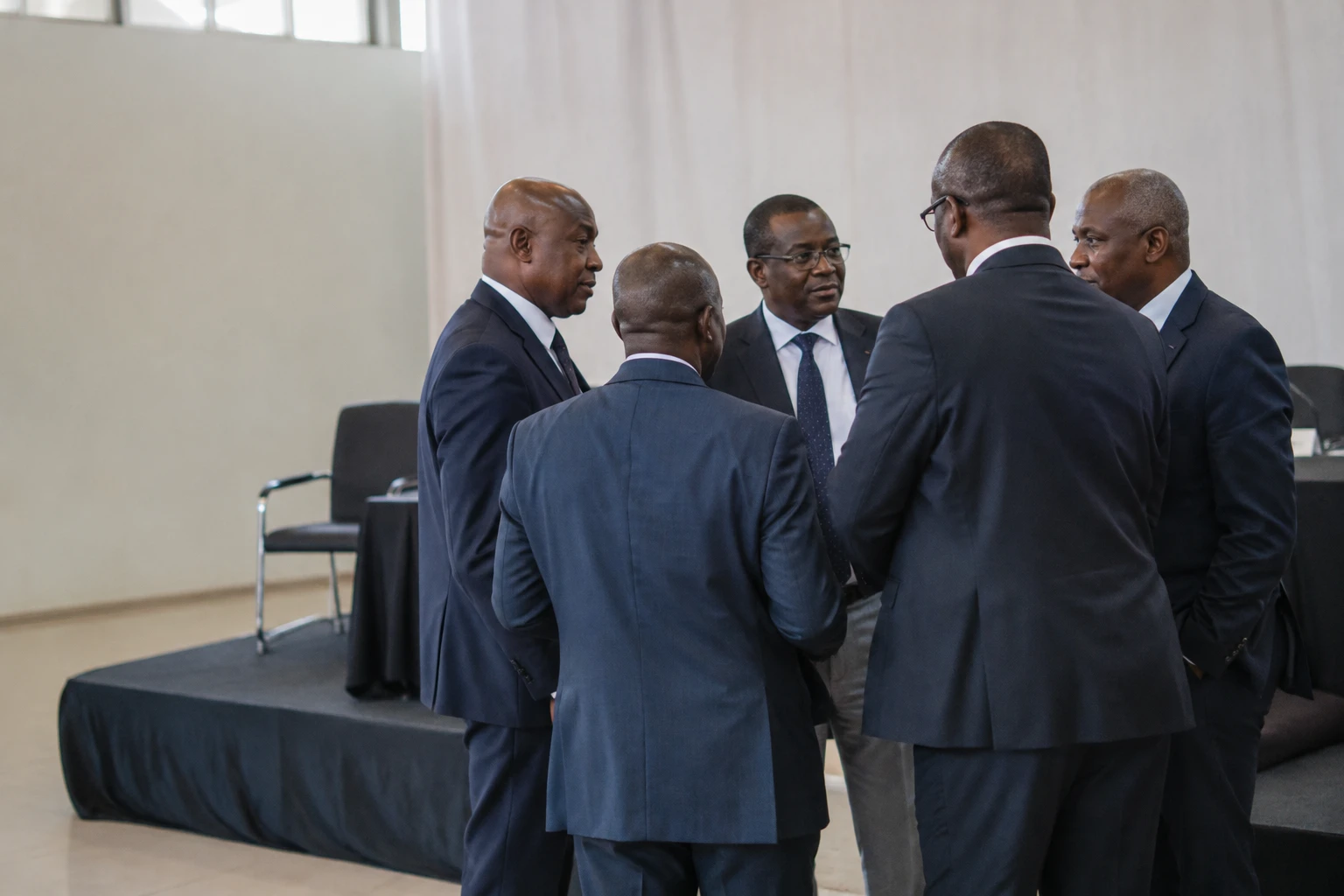
A close vote can usher in a new period of stability, but it is not enough to repair a federation weakened by internal tensions. In Guinea, the new president of Feguifoot will have to turn a relative majority into the ability to unite clubs, leagues and football stakeholders.
A contested vote after a governance crisis
The Guinean Football Federation is emerging from a turbulent period. In April 2025, several members of its executive committee initiated the removal of president Aboubacar Sampil. The general assembly ratified it on 8 May by 51 votes, while Sorel Doumbouya served as interim president. The procedure had, however, prompted objections from some football stakeholders.
This recent history adds significance to the vote held in Conakry on Tuesday 27 October 2026. Mamady Doumbouya, candidate for the Rénovons le Foot 224 (RF224) movement, received 21 of the 52 votes cast. Mamadou Antonio Souaré received 18, Ibrahima Kalil Kaba 13, and Mohamed Chérif Haïdara none, according to several independent Guinean reports. The result shows that the contest was real, but also that the federation is divided into sizeable blocs.
The reports consulted are inconsistent on the spelling of the winner’s first name: some write “Mamady”, others “Mamadi”. His full name should therefore be checked against the official minutes before any final publication. Similarly, his age of 34 and his role as director-general of the Telecommunications and Posts Regulatory Authority are not confirmed by the independent sources consulted.
Confusion should also be avoided with Mamadi Doumbouya, president of the Republic of Guinea. The available information does not establish a link between the two men. Guinean media describe the federation’s new leader as an official of Union FC and RF224.
The promise of unity put to the test
On the evening of his election, the president-elect called on his rivals to join him on the podium. The gesture addresses an immediate challenge: governing an organisation in which his three main opponents together won 31 votes. This arithmetic makes dialogue essential if the campaign is not to continue within the federation’s governing bodies.
The programme announced by RF224 emphasises transparency, financial accountability, stronger clubs, training and women’s football. The new president has also cited measurable goals for his first 100 days. These commitments remain to be fleshed out: the publicly available information does not yet specify the budgets, deadlines or indicators that will be used to track their implementation.
The challenge goes beyond the national team’s results. Clubs need regular competitions, predictable management and better-structured resources. Training is needed for young players, coaches and referees, including outside Conakry. Women’s football, meanwhile, will make lasting progress only if competitions, facilities and resources match the stated principles.
The allocation of resources will be another test. The federation’s decisions affect professional clubs, as well as local teams and people who earn a living from football in the informal economy. Public rules for allocating aid and accessible accounts could reduce suspicion and make support more equitable. Conversely, concentrating resources in a few organisations could rekindle rivalries.
A federation under regional scrutiny
Feguifoot is affiliated to the Confederation of African Football (CAF), the continental body that organises African competitions, and to FIFA. The federation must therefore reconcile the demands of its Guinean members with the rules of these organisations. In 2025, the internal crisis had led the Ministry of Sports to seek FIFA’s intervention, a sign that local tensions could have wider institutional implications.
Guinea is also a member of the Economic Community of West African States (ECOWAS), a regional co-operation organisation. The federation vote is not an ECOWAS decision, but the stability of sports bodies matters in a region where competitions and players’ careers cross national borders.
The next step will be the composition of the executive committee and the publication of a precise timetable for the announced commitments. The new team will also have to clarify governance rules and financial oversight mechanisms. The result of 21 votes gives it a mandate, not a blank cheque: its ability to include rival camps will matter as much as its promises of performance.