Algeria
 Egypt
 Libya
 Morocco
 Sudan
 Tunisia
 Benin
 Burkina Faso
 Cabo Verde
 Côte d'Ivoire
 Ghana
 Guinea-Bissau
 Liberia
 Mali
 Mauritania
 Niger
 Nigeria
 Senegal
 Sierra Leone
 The Gambia
 Togo
 Cameroon
 Central African Republic
 Chad
 DR Congo
 Equatorial Guinea
 Gabon
 Republic of the Congo
 São Tomé and Príncipe
 Burundi
 Comoros
 Djibouti
 Eritrea
 Ethiopia
 Kenya
 Madagascar
 Malawi
 Mauritius
 Mozambique
 Rwanda
 Seychelles
 Somalia
 South Sudan
 Tanzania
 Uganda
 Angola
 Botswana
 Eswatini
 Lesotho
 Namibia
 South Africa
 Zambia
 Zimbabwe
Health, the latest variable in the legal case
In Guinea, some legal cases quickly extend beyond the law itself. They also raise questions about the place given to detainees’ health, the credibility of institutions and the state’s ability to balance firmness with humanity. That is precisely what emerges from the latest development concerning Ibrahima Kassory Fofana and Amadou Damaro Camara.
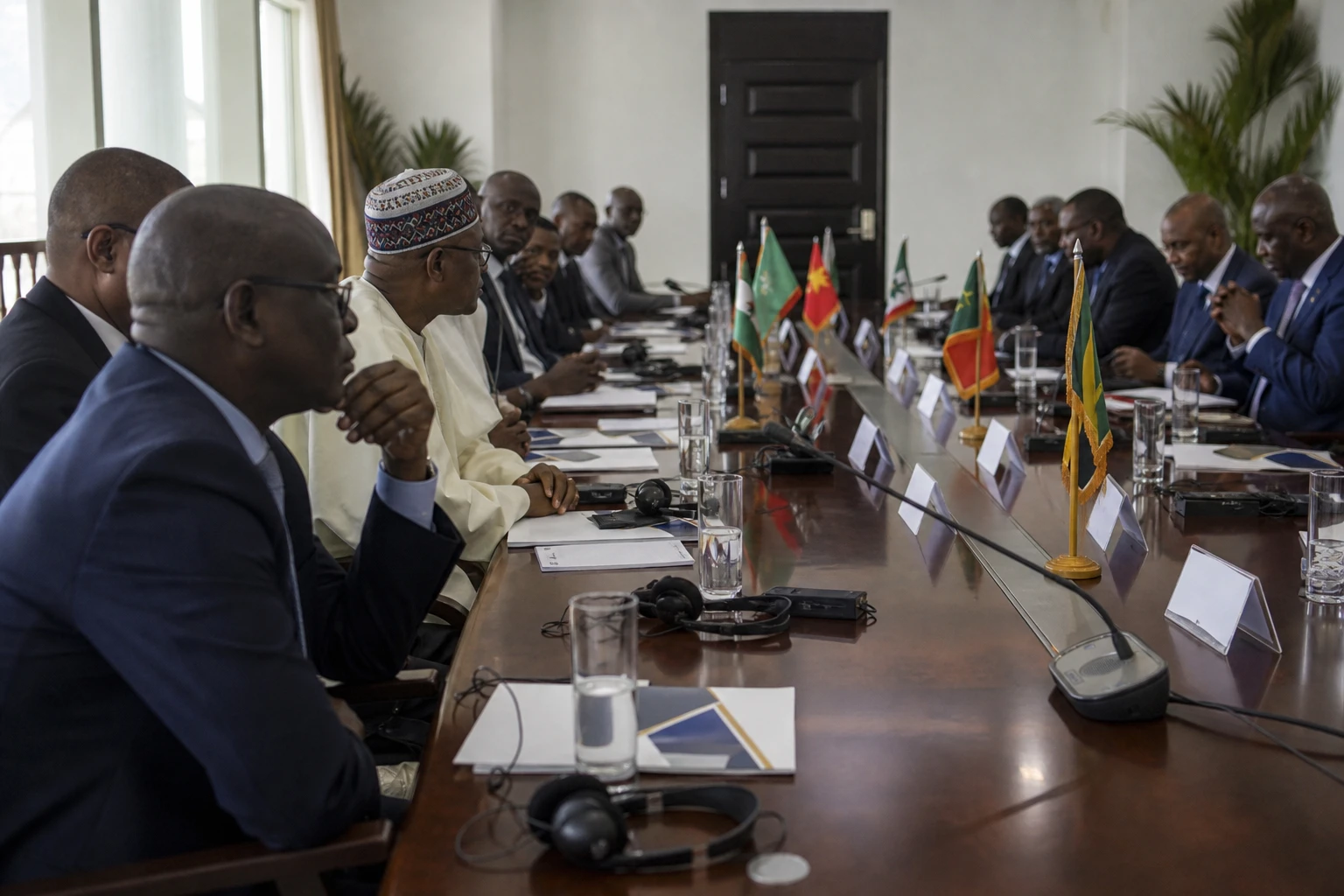
The two men, figures in Alpha Condé’s former government, have been authorised to leave the country for medical treatment abroad. The approval came from the special prosecutor’s office at the Court for the Repression of Economic and Financial Offences, known as CRIEF, a court established to try economic and financial offences in the Republic of Guinea.
A decision set against the course of Guinea’s transition
The context is a political transition that has reached a turning point. Guinea held a constitutional referendum on 21 September 2025, followed by presidential, legislative and local elections in 2025 and 2026, in a process monitored by ECOWAS, the African Union and other regional partners. The ECOWAS Authority of Heads of State and Government subsequently lifted the remaining sanctions and fully reintegrated Guinea into the organisation’s mechanisms.
Against this backdrop, justice remains a key marker of the refoundation announced by the authorities in Conakry. CRIEF, in particular, symbolises the stated determination to tackle corruption and alleged embezzlement. But it also embodies strong expectations around fair procedures, proportionate sentences and the treatment of those facing prosecution, especially when their health is at stake.
What the prosecutor’s office decided
According to information made public, the special prosecutor instructed the authorities at Ahmed Sékou Touré International Airport and the border police to carry out the exit permits. The measure is intended to allow Kassory Fofana and Damaro Camara to travel abroad for medical treatment.
The prosecutor’s office has nevertheless stressed that the authorisation does not bring the proceedings to an end. In other words, it is a measure linked to the health of the two former officials, not a cancellation of their convictions or a withdrawal of the charges. Information published about the case has also referred to guarantees that they will return after treatment.
The defence has welcomed the decision as a relief. The lawyers for Kassory Fofana and Damaro Camara based their request on medical reports. They say they hope their clients will be able to leave soon and receive treatment at a centre deemed suitable outside Guinea.
Why the authorisation matters politically
The stakes go beyond the personal circumstances of two former senior officials. Kassory Fofana, a former prime minister, and Amadou Damaro Camara, a former president of the National Assembly, are among the most prominent figures of the former regime. Their case therefore touches directly on the legacy of Alpha Condé’s rule, as well as on how the transitional authorities and current institutions are handling the period since 2021.
The convictions in their cases show that CRIEF is not dealing only with technical matters. It is also acting as a tribunal of political rupture. In July 2026, the appeal chamber upheld a three-year-and-nine-month prison sentence for Kassory Fofana for illicit enrichment and money laundering, following a longer sentence at first instance. Guinean media reports have also said that Damaro Camara was sentenced on appeal to three years and six months in prison.
In this context, the travel authorisation can be read in two ways. On a human level, it meets a request for specialist treatment. Institutionally, it tests the ability of Guinea’s justice system to avoid appearing absolutely inflexible while retaining control of the case. It is a delicate balance, since the public also judges these cases against the fight against impunity and the quality of the hospitals available in the country.
A signal for Guinea and the wider region
The significance of the case extends beyond Conakry. In West Africa, several transitions have shown that cases against former leaders often become a test of credibility for new governments. Guinea is seeking to consolidate its institutional and regional return in an environment where ECOWAS is monitoring democratic safeguards and the stability of member states.
The health issue adds another dimension. The renovation of Donka National Hospital has been presented by the authorities as a way to reduce medical evacuations abroad. Yet requests for treatment overseas continue to carry considerable weight in high-profile cases. This is a reminder that even renovated health infrastructure must still demonstrate its ability to handle complex cases in practice.
For now, the points to watch are straightforward: whether the two men actually leave, the conditions of their treatment, and whether they return to Guinea. In a country where justice, transition and institutional reconstruction are advancing in parallel, every stage of this case will matter beyond the individuals involved.