Algeria
 Egypt
 Libya
 Morocco
 Sudan
 Tunisia
 Benin
 Burkina Faso
 Cabo Verde
 Côte d'Ivoire
 Ghana
 Guinea-Bissau
 Liberia
 Mali
 Mauritania
 Niger
 Nigeria
 Senegal
 Sierra Leone
 The Gambia
 Togo
 Cameroon
 Central African Republic
 Chad
 DR Congo
 Equatorial Guinea
 Gabon
 Republic of the Congo
 São Tomé and Príncipe
 Burundi
 Comoros
 Djibouti
 Eritrea
 Ethiopia
 Kenya
 Madagascar
 Malawi
 Mauritius
 Mozambique
 Rwanda
 Seychelles
 Somalia
 South Sudan
 Tanzania
 Uganda
 Angola
 Botswana
 Eswatini
 Lesotho
 Namibia
 South Africa
 Zambia
 Zimbabwe
In Conakry, the start of term is also being decided in social dialogue offices
In Guinea, preparations for the school year involve more than exercise books and textbooks. They are also being negotiated around a more sensitive issue: the status of thousands of teachers already running classes but without clear administrative security. In Conakry, this dilemma weighs on the entire Guinean public school system, where every post that remains unsettled has a direct impact on pupils.
The issue comes against an already fragile educational backdrop. Guinea is among the West African countries still seeking to strengthen basic education, amid teacher shortages, the quality of learning and inequalities between urban centres and outlying areas. The government has also reiterated in several public statements that education remains a pillar of the state’s refoundation.
The crux of the problem: 4,500 contract teachers, a signed agreement, then a wait
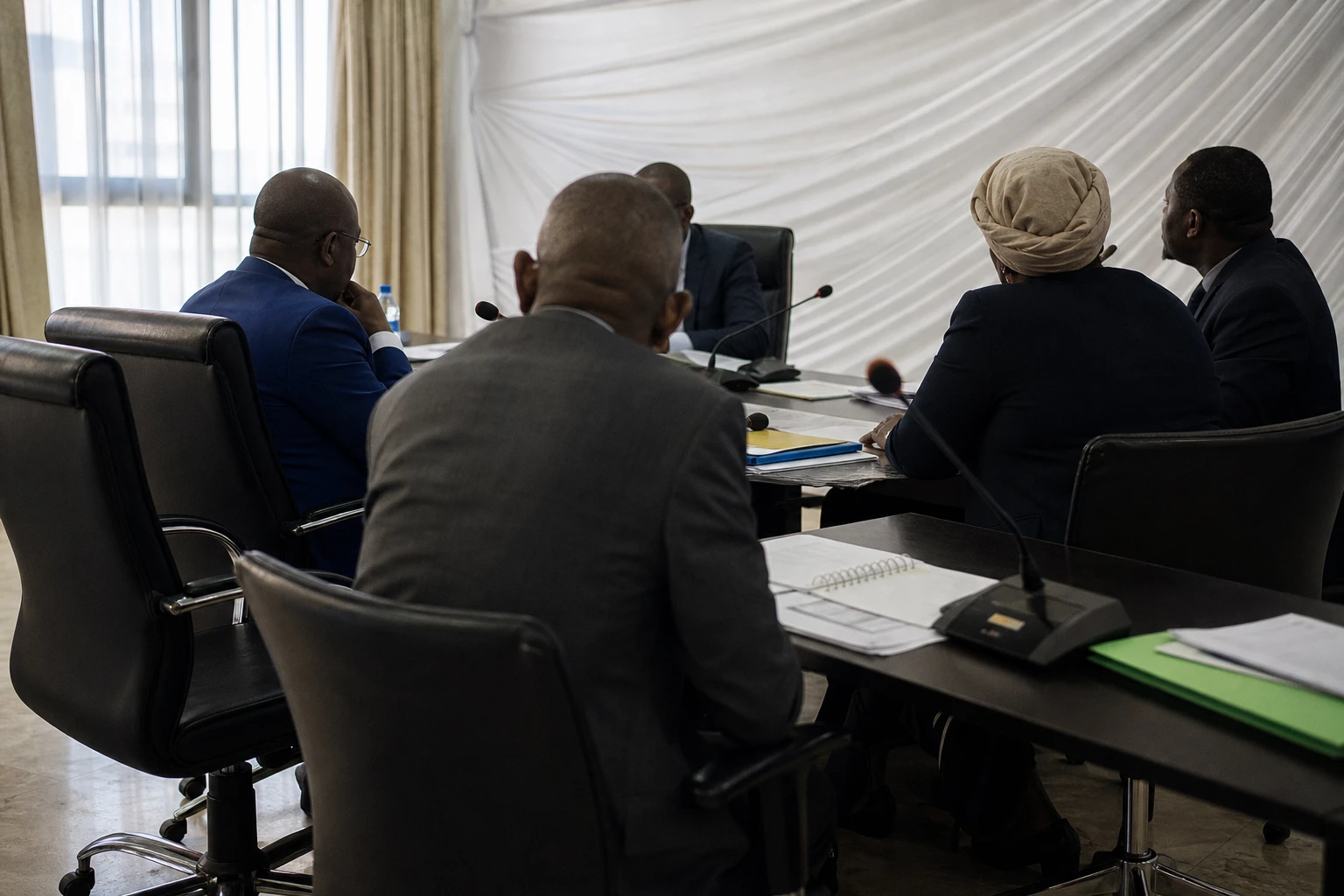
On 4 August, the new education minister met the sector’s union federations in an effort to avert another crisis as schools reopen, according to the ministry. At the heart of the talks are 4,500 communal contract teachers who were not selected in the 2024 recruitment process. Some of them had already been teaching before the examination, which included a practical classroom assessment. Of around 14,000 candidates, some 10,000 received an integration order in September 2024, while the others were left waiting.
The conflict has not come out of nowhere. On 3 January 2026, an agreement was signed between the state and the education inter-union coalition, bringing together the FSPE, SLECG and SNE. It provided for a joint committee to review biometric lists and classroom practice marks. Seven months later, the unions say they have seen no appointment order. They are demanding that one be signed before schools reopen, failing which they are threatening an unlimited general strike.
A social standoff in a school system already under pressure
The risk of disruption affects a system in which tensions have been simmering for years. The pupil-teacher ratio in primary schools stands at a national average of 43.3, according to data reported for Guinea. It rises to 46.2 in the public sector, where a large proportion of the contract teachers concerned work. In practice, this means more crowded classrooms, less individual attention and greater fatigue for teaching staff.
The problem extends beyond salaries or appointment orders. Guinea also suffers from a massive learning deficit. The joint World Bank-UNESCO brief published in April 2024 estimates that 83% of Guinean children at the end of primary school cannot read a simple text properly by the age of 10. The same document states that 22% of primary-school-age children are out of school, and that girls are more likely than boys to leave school.
This context gives the union standoff immediate significance. For teachers, the issue is administrative recognition and regular pay. For families, especially in poorer neighbourhoods and rural areas, the concern is more concrete still: whether classes will start on time and whether the school year will be cut short from September. For the state, finally, the question is political. A fresh conflict in education would weaken a sector already central to the promise of public renewal made since the transition.
What this dispute says about Guinea and West Africa
This episode extends beyond Guinea alone. In West Africa, education systems are often caught between rising social expectations, constrained budgets and slow public-sector recruitment. ECOWAS (Economic Community of West African States) does not impose a direct solution to this kind of conflict, but social instability in a member country inevitably affects family mobility, continuity of learning and the credibility of public policies.
In the short term, everything will depend on the Guinean government’s ability to turn written commitments into administrative action. The unions have already shown that they can suspend a strike call and then revive it if promises are slow to materialise. The coming start of term will therefore show whether the executive can stabilise the teaching workforce, or whether Guinea’s public schools will once again enter a season of postponements, tensions and lost teaching time.