Algeria
 Egypt
 Libya
 Morocco
 Sudan
 Tunisia
 Benin
 Burkina Faso
 Cabo Verde
 Côte d'Ivoire
 Ghana
 Guinea-Bissau
 Liberia
 Mali
 Mauritania
 Niger
 Nigeria
 Senegal
 Sierra Leone
 The Gambia
 Togo
 Cameroon
 Central African Republic
 Chad
 DR Congo
 Equatorial Guinea
 Gabon
 Republic of the Congo
 São Tomé and Príncipe
 Burundi
 Comoros
 Djibouti
 Eritrea
 Ethiopia
 Kenya
 Madagascar
 Malawi
 Mauritius
 Mozambique
 Rwanda
 Seychelles
 Somalia
 South Sudan
 Tanzania
 Uganda
 Angola
 Botswana
 Eswatini
 Lesotho
 Namibia
 South Africa
 Zambia
 Zimbabwe
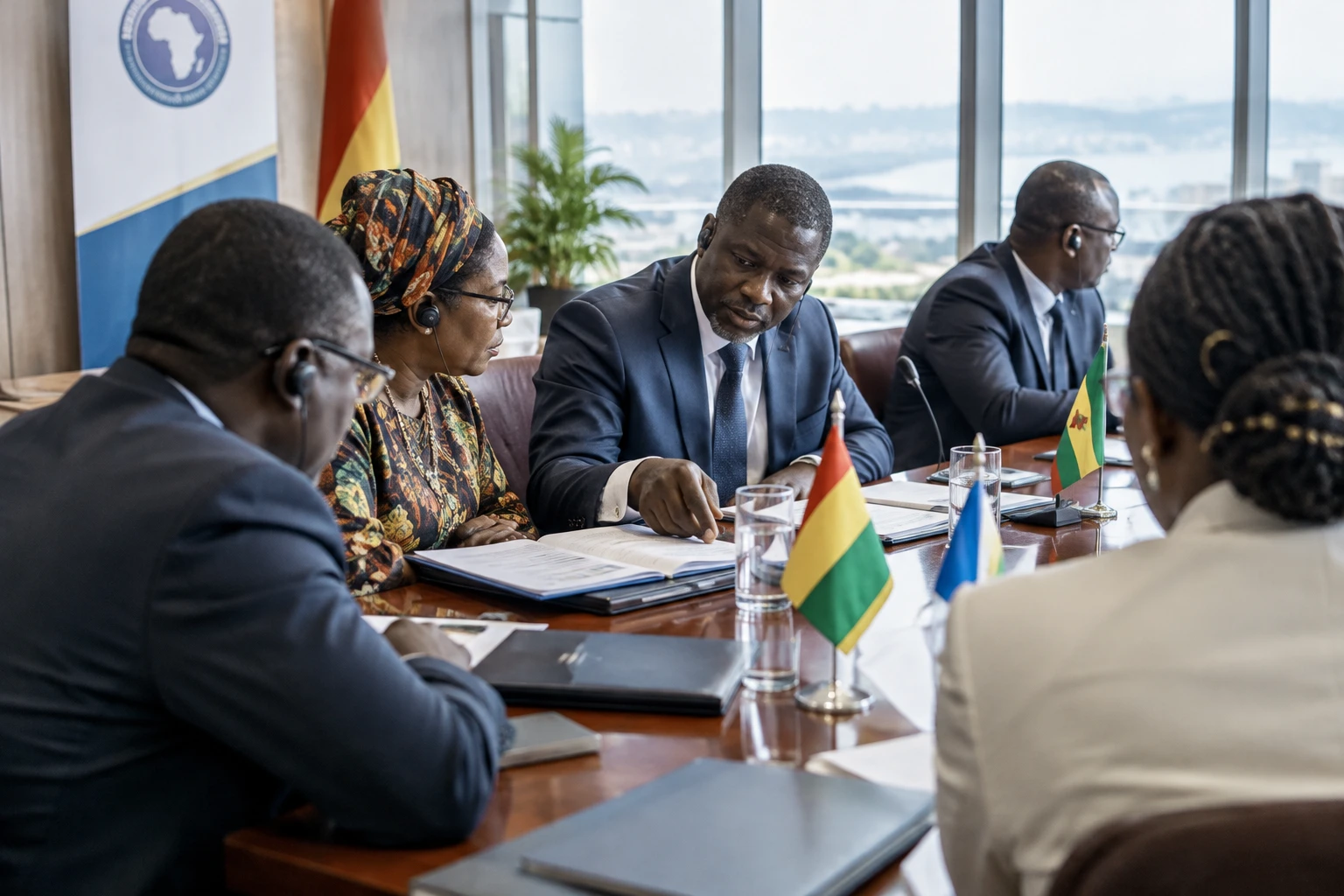
Refining gold in Conakry can retain a greater share of its value in Guinea. But opening a plant is not enough: gold, particularly from artisanal operations, must also enter declared and monitored supply chains.
The Nimba Gold Refinery was inaugurated on 1 November 2026 in the commune of Gbessia, in Conakry. The new facility is part of a regional strategy to process mineral resources locally. Its effectiveness will nevertheless depend on sourcing rules, credible checks and commercial outlets.
From extraction to refining: a supply chain to build
Guinea extracts gold from industrial, semi-industrial and artisanal mines. Yet much of the metal left the country without being refined locally. The processing stage, which notably purifies and certifies gold before it is sold, therefore took place abroad.
This situation is not unique to Guinea. Across West Africa, several states are seeking to strengthen their control over gold production and trade. Mali, Burkina Faso and Ghana have launched local refining projects. Côte d’Ivoire is also preparing a facility. These choices address a shared challenge: capturing more value locally without mistaking the construction of a plant for full control of the sector.
Guinea is a member of ECOWAS, the Economic Community of West African States. Its membership places gold trade within a regional area where borders and commercial routes are closely linked. If some production escapes national reporting, refining in Conakry will not automatically bring it back into official channels.
A facility announced, results still to be measured
President Mamadi Doumbouya inaugurated the facility in Gbessia. Mines Minister Bouna Sylla described the opening as a turning point for a country that had until now exported its gold without refining it on its own territory. The authorities also want to be able to buy some of the output from industrial and semi-industrial mines and direct it to the plant.
The Guinean presidency says the refinery has a theoretical capacity of up to 733 tonnes a year. This figure describes its stated capacity, not the volume of gold already processed. It far exceeds the country’s recorded exports in 2025. The gap between capacity, actual supply and output will therefore be a key indicator of how the facility is performing.
Mining statistics cited from the Mines Ministry’s 2025 bulletin report that 72.12 tonnes of gold were exported that year. About 49.6 tonnes came from artisanal mining, compared with nearly 20 tonnes from industrial mines and 2.6 tonnes from semi-industrial operations. These categories do not simply represent different volumes: they involve distinct extraction methods, purchasing channels and opportunities for oversight.
The minister said the state could buy up to 30% of the gold produced by industrial and semi-industrial operators. This announcement concerns a proposed share of their output; it guarantees neither actual purchases nor a steady supply to the plant. Pricing, payment and traceability rules will influence companies’ decisions on whether to sell locally.
The decisive challenge: bringing artisanal gold into declared channels
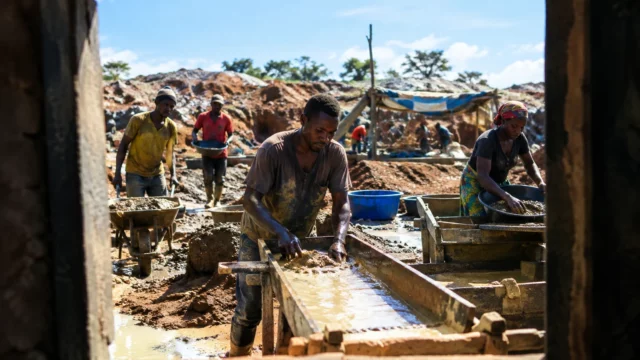
Artisanal gold mining accounted for the largest share of Guinea’s recorded gold exports in 2025. But operations are dispersed and some production may circulate without being registered by the authorities. Oumar Totiya Barry, director of the Guinean Observatory of Mines and Metals, says the challenge is to capture this production and direct it to the new facilities.
When gold escapes oversight, the state loses visibility over the quantities extracted and exported. Miners, for their part, may depend on intermediaries and informal buying networks. A plant in the capital does not, on its own, solve the difficulties of collecting gold in mining areas, particularly in Upper Guinea, or the challenges of transport, security and market access.
To bring artisanal mining closer to the official sector, the authorities will need to offer accessible and predictable purchasing arrangements. They will also need to explain how they verify the metal’s origin and distinguish declared production from gold brought in from neighbouring countries. Without these safeguards, a local refining requirement risks merely shifting transactions into less visible channels.
The government has also cited environmental reasons for recently suspending artisanal gold mining. Such a measure directly affects people whose incomes depend on this activity, as well as communities in extraction areas. For the reorganisation to be sustainable, it will therefore need to balance environmental protection, worker safety and concrete alternatives, rather than being limited to an administrative decision.
Value added is about more than a refinery
Local refining can create technical jobs, develop skills and improve traceability. It can also help the state monitor metal flows more effectively. But the benefits will depend on the jobs actually created, local purchases, public revenues and transparent operations. High industrial capacity alone does not show what share of the value goes to workers, mining communities or the national budget.
The new refinery joins a broader policy of processing resources in Guinea, also reflected in mining and infrastructure projects linked to the Simandou 2040 programme. This approach raises a practical question: how can investment in mines be converted into lasting activity beyond extraction sites and Conakry? Refining can contribute, provided supply, energy, logistics and marketing are in place.
The regional significance will also depend on Guinea’s ability to offer buyers and trading partners reliable checks. Other West African countries are also watching how to reconcile local processing, cross-border gold flows and the formalisation of artisanal mining. For Conakry, the next steps will therefore be practical rather than symbolic: publish regular data on refined volumes, clarify purchasing rules and show that the gold processed comes from verifiable channels.
The Nimba Gold Refinery gives Guinea a new industrial tool. The test starts now: getting gold to the plant without leaving artisanal operators behind, and then showing that the value created genuinely benefits the Guinean economy.