Algeria
 Egypt
 Libya
 Morocco
 Sudan
 Tunisia
 Benin
 Burkina Faso
 Cabo Verde
 Côte d'Ivoire
 Ghana
 Guinea
 Liberia
 Mali
 Mauritania
 Niger
 Nigeria
 Senegal
 Sierra Leone
 The Gambia
 Togo
 Cameroon
 Central African Republic
 Chad
 DR Congo
 Equatorial Guinea
 Gabon
 Republic of the Congo
 São Tomé and Príncipe
 Burundi
 Comoros
 Djibouti
 Eritrea
 Ethiopia
 Kenya
 Madagascar
 Malawi
 Mauritius
 Mozambique
 Rwanda
 Seychelles
 Somalia
 South Sudan
 Tanzania
 Uganda
 Angola
 Botswana
 Eswatini
 Lesotho
 Namibia
 South Africa
 Zambia
 Zimbabwe
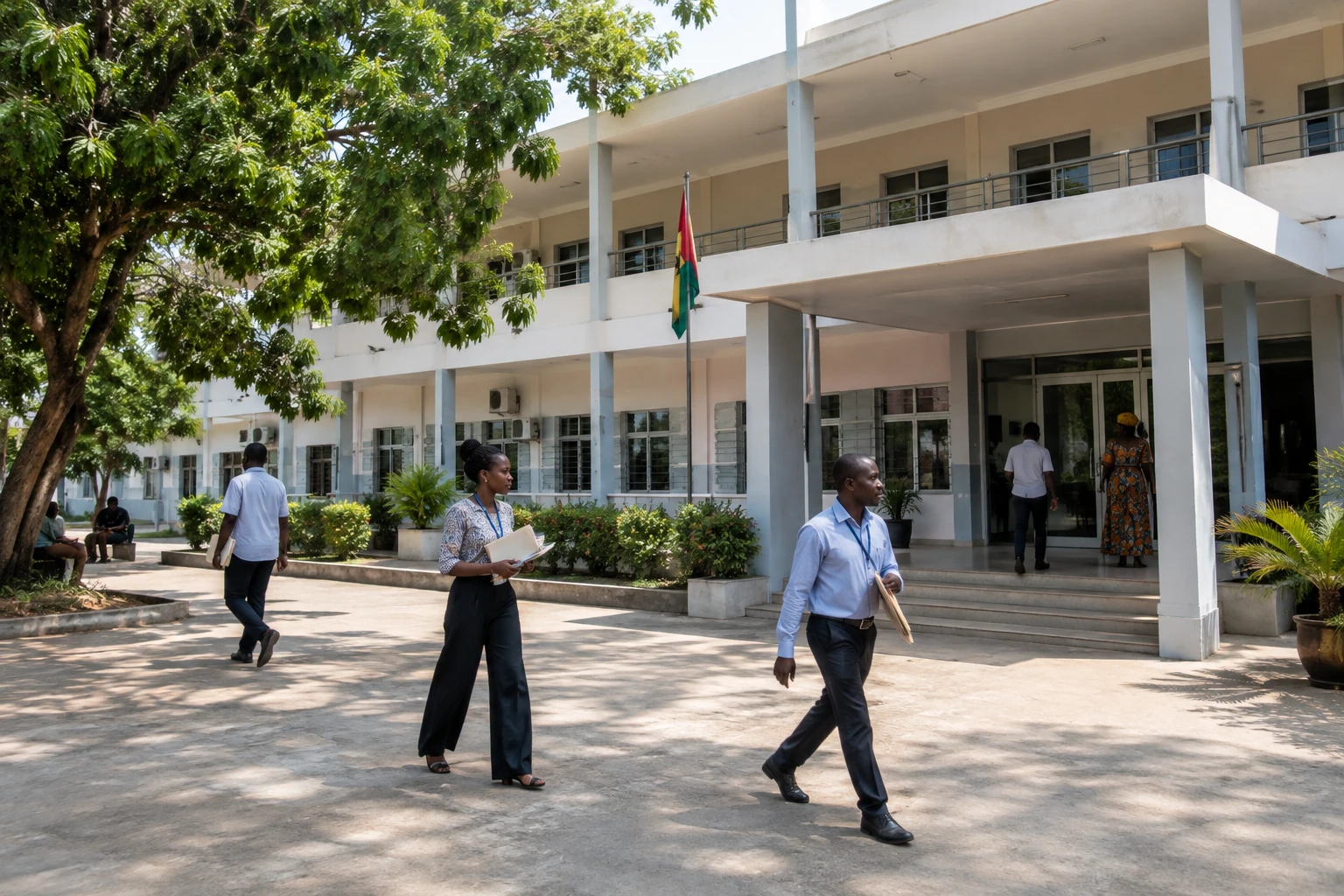
In Bissau, the 6 December deadline was meant to pave the way for a return to civilian rule. But less than two months before the vote, the electoral authorities and transitional government believe conditions are not in place to hold it on the scheduled date. No postponement has yet been officially announced: the decision rests with the transitional president, General Horta Inta-A, also known as Horta N’Tam.
A timetable set, but already under strain
A presidential decree issued on 21 January 2026 set 6 December as the date for simultaneous presidential and parliamentary elections. The date was meant to fulfil the military transition’s promise to hold a vote and restore civilian government.
The timetable is part of a crisis that began on 26 November 2025. The military seized power the day before provisional results were expected to be published for the 23 November elections, halting the electoral process. ECOWAS, the West African regional organisation, rejected the transition programme announced by the military and called for a return to constitutional order.
However, the process was already fragile before this rupture. Electoral institutions were facing material and operational difficulties. In January, the president of the National Electoral Commission (CNE) cited a shortage of ballot boxes and computers, as well as server problems. He also proposed a new voter registration exercise.
The transition has since changed the political framework. In late August 2026, a constitutional referendum approved a shift towards a strengthened presidential system, contested by opposition parties, including PAIGC. The historic party called for a boycott, denouncing a vote held amid restrictions on civil liberties, according to reports from Bissau.
CNE cites technical and political obstacles
On 8 October, CNE vice-president Felisberta Moura Vaz said the institution had shared its assessment with the head of the transition: technically, the conditions required for the vote would not be in place on 6 December. She said the formal decision on any postponement rested with the transitional president.
Prime Minister Ilídio Vieira Té also said it would be impossible to hold reliable elections under the current timetable. He cited the situation of political parties: according to him, the terms of several party leaderships had expired and their governing bodies needed to be renewed. These are the words of the head of the transitional government; they do not, on their own, constitute an independent assessment of all political organisations.
A legal obstacle adds to these difficulties. The prime minister said parties should have submitted their candidacies to the Supreme Court before 6 October. If this legal timetable has not been met, holding the vote barely two months later becomes even more uncertain.
The sequence of events highlights a contradiction: in January, the authorities had announced that conditions were in place for a free and transparent vote, while the CNE was already reporting missing equipment and problems with voter registration. The Commission has now concluded that preparations are inadequate. The date therefore remains on the calendar, but its feasibility is openly in question.
Postponement will not resolve the question of trust
Delaying the vote could allow more time for preparations, but would not be enough to guarantee its credibility. The legal timetable, the CNE’s resources, the rules governing party participation and the conditions for campaigning would also need to be clarified. Without a precise deadline or verifiable guarantees, a postponement risks prolonging uncertainty instead.
The consequences are not limited to political leaders. For voters in Bissau and in regions far from the capital, the timetable determines when electoral rolls will be drawn up and when they will be able to choose their representatives. For parties, the time available determines the selection of candidates and the organisation of their campaigns. For the electoral administration, every delay reduces the time needed to update the rolls and make practical preparations.
The security context also weighs on trust. A few days before 8 October, the authorities prevented former president Umaro Sissoco Embaló from returning to the country, citing a lack of security conditions. General Horta N’Tam had also called on members of the presidential guard to hand in their weapons. These developments illustrate tensions surrounding the security apparatus, without by themselves establishing responsibility for episodes of political violence.
The central question is therefore who arbitrates and what guarantees are in place. The CNE can assess technical constraints, but the power to set or change the date rests with the transitional president. In a military-led transition, this concentration of decision-making makes transparency over the timetable and dialogue with parties, civil society and independent institutions all the more important.
ECOWAS awaits concrete guarantees
The crisis in Guinea-Bissau also affects neighbouring countries. ECOWAS condemned the military seizure of power and called for the release of political detainees and the restoration of constitutional order. African officials, diplomats, academics and civil society actors have, for their part, urged the organisation to facilitate a credible timetable, backed by guarantees on civil liberties, pluralism and the independence of the electoral administration.
For the regional organisation, the issue goes beyond the date of an election: it is a question of whether a military-led transition can lead to a genuinely open political contest. Guinea-Bissau has experienced several coups and attempted putsches since independence. Each postponed deadline therefore raises questions about the institutions’ ability to emerge from this instability for good.
As of 8 October 2026, no official postponement has been announced. The next step is expected to be a decision by the transitional president, who will have to specify whether the 6 December vote will go ahead, be cancelled or be replaced by a new date. The credibility of what follows will depend as much on that decision as on the guarantees offered to voters, parties and the CNE.