Algeria
 Egypt
 Libya
 Morocco
 Sudan
 Tunisia
 Benin
 Burkina Faso
 Cabo Verde
 Côte d'Ivoire
 Ghana
 Guinea
 Liberia
 Mali
 Mauritania
 Niger
 Nigeria
 Senegal
 Sierra Leone
 The Gambia
 Togo
 Cameroon
 Central African Republic
 Chad
 DR Congo
 Equatorial Guinea
 Gabon
 Republic of the Congo
 São Tomé and Príncipe
 Burundi
 Comoros
 Djibouti
 Eritrea
 Ethiopia
 Kenya
 Madagascar
 Malawi
 Mauritius
 Mozambique
 Rwanda
 Seychelles
 Somalia
 South Sudan
 Tanzania
 Uganda
 Angola
 Botswana
 Eswatini
 Lesotho
 Namibia
 South Africa
 Zambia
 Zimbabwe
A decline in the deficit can signal better control of public accounts. On its own, it does not show whether the state has a sufficiently robust revenue base to fund its services and investments. In Guinea-Bissau, the question is particularly pressing: public finances depend on an export economy concentrated on cashew nuts, while the country is going through a period of acute political uncertainty.
Public accounts exposed to volatility
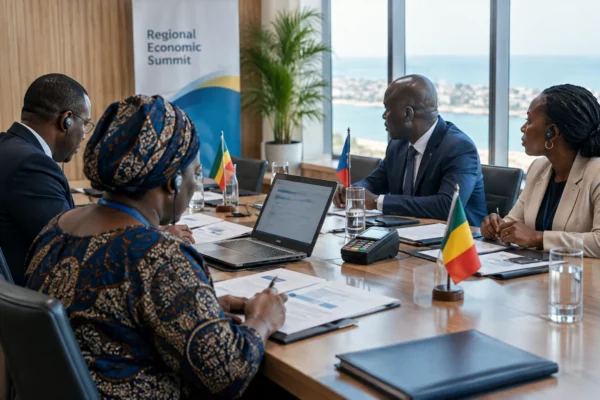
Guinea-Bissau belongs to the West African Economic and Monetary Union (WAEMU), which brings together eight countries that share, among other things, a currency and budget convergence rules. This regional integration does not eliminate the vulnerabilities specific to each state. In Bissau, weak tax revenues limit the government’s room for manoeuvre, while agricultural exports remain sensitive to prices, weather and overseas markets.
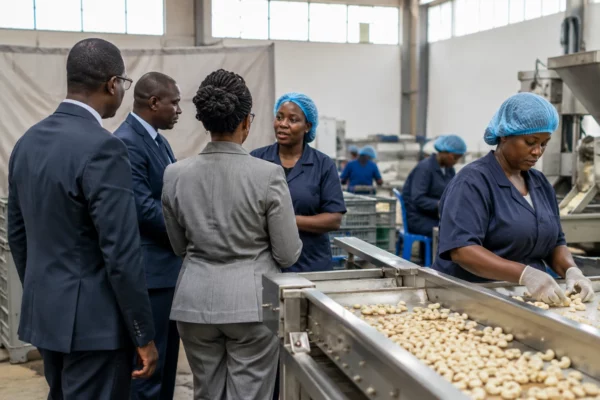
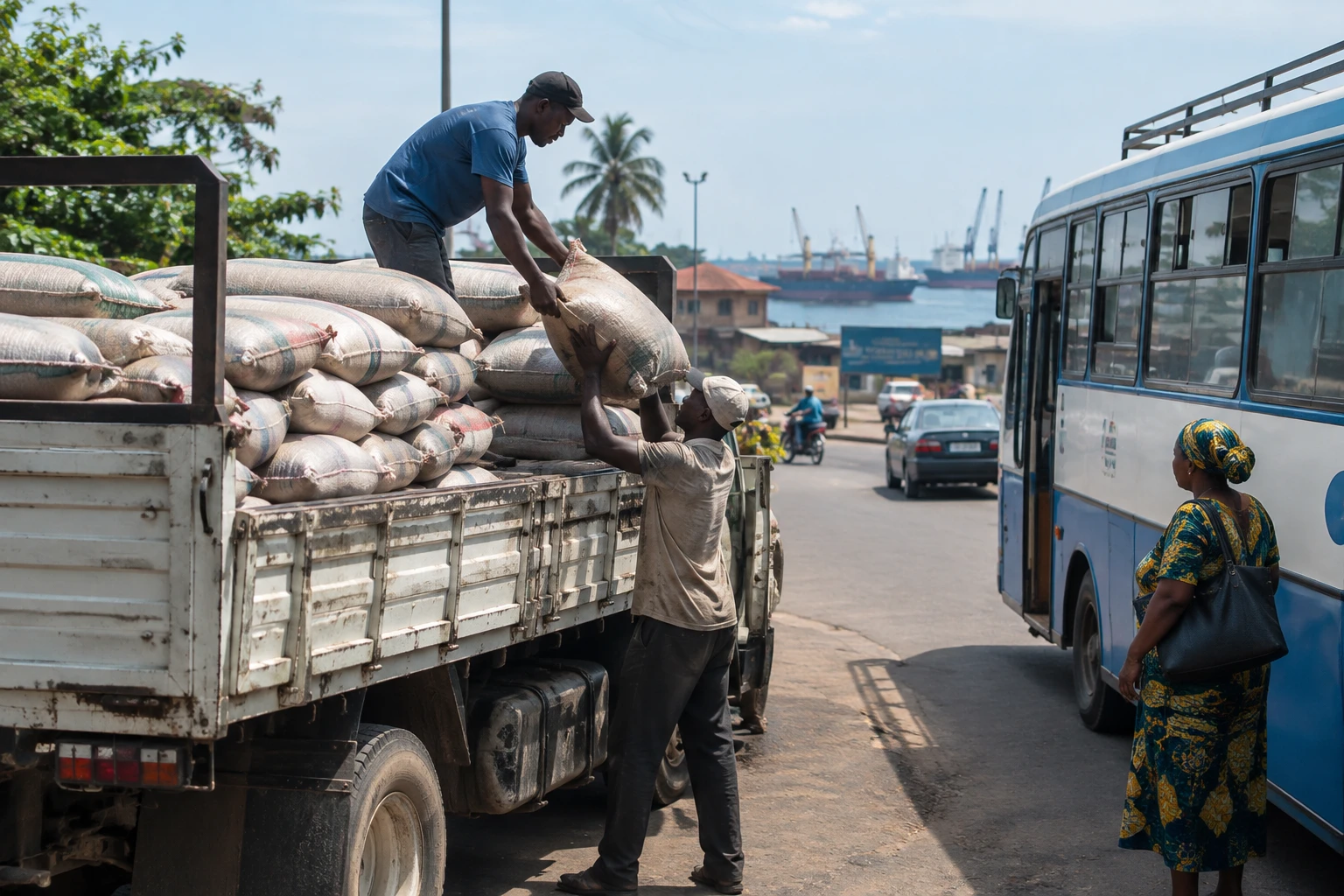
Cashew nuts are central to this equation. In 2024, exports fell to about 167,500 tonnes, from 191,400 tonnes the previous year. The World Bank links the decline to lower production, weaker external demand — particularly in India — and logistical difficulties at the port of Bissau. These figures are therefore for 2023 and 2024; they should not be confused with projections announced for 2026. World Bank data on cashew exports show how agricultural conditions can affect foreign-currency revenues.
The political context adds significant uncertainty. Military officers took power on 26 November 2025, before the results of the presidential election held on 23 November had been announced. In its March 2026 report, the International Monetary Fund said Guinea-Bissau had been suspended from the decision-making bodies of ECOWAS and the African Union. ECOWAS is the West African regional organisation tasked, among other things, with promoting integration and defending constitutional order. The IMF report on Guinea-Bissau thus places the economic issues in the context of an institutional rupture.
Projected decline, but agreement still to be approved
Information provided for this article attributes to the IMF an estimate that the budget deficit would fall from 8.2% of gross domestic product (GDP) in 2023 to 4.2% in 2026. It also reports a staff-level agreement on the twelfth and final review of the programme supported by the Extended Credit Facility, an IMF financing mechanism for low-income countries.
These details should, however, be treated with caution. As of 5 November 2026, the IMF’s public pages and statements consulted do not independently confirm the announcement of this twelfth review or the deficit figures cited for 2026. A staff-level agreement is not a final decision: it must still be approved by Fund management and then considered by its Executive Board. The latest official statement found in this research confirms the completion of the eleventh review, on 12 June 2026, not the twelfth. The IMF statement on the eleventh review makes it possible to distinguish this verified decision from the announcement that remains to be confirmed.
According to the information provided, approval of the final review would pave the way for a disbursement of $1.6 million, bringing total disbursements under the programme to $53.9 million. These amounts, like the deficit and growth forecasts for 2026, remain unverified until independent public confirmation is available. The same caution applies to the reported nearly 12% rise in cashew export volumes compared with 2025 and projected real growth of 4.8%.
Fiscal discipline does not settle the revenue question
The projected decline in the deficit is said to reflect cashew-season revenues above expectations, tighter spending controls and a lower-than-forecast volume of foreign-funded projects. These factors do not have the same implications. A good harvest can improve revenues in the short term, but it does not guarantee a steady income stream. Better control of spending can reduce the deficit, but a decline in externally funded projects can also slow some investment.
For farming households and traders, a good season can support incomes and activity in collection, transport and sales. Producers, however, remain exposed to price fluctuations and yields. In Bissau, the concentration of trade and services amplifies the impact of commercial conditions on urban activity. In production areas, incomes depend more on the agricultural calendar, access to buyers and transport conditions. These are different effects of the same sector, and cannot be reduced to the national budget balance.
Local processing is another issue. Production that is mostly exported in raw form creates fewer stages of added value in the country. Developing processing could diversify the activities and jobs linked to the sector, but would require financing capacity, reliable energy, equipment and markets. Rising exports alone therefore do not show that economic dependence is easing.
Debt, public services and regional credibility
The figures provided put public debt at about 74% of GDP at the end of 2026, almost unchanged from the end of 2025. This projection has not been cross-checked against the public documents consulted. If confirmed, it would be a reminder that a lower annual deficit is not enough to reduce the debt burden quickly: that also depends on growth, interest costs, new borrowing and revenues actually collected.
The budgetary choice is a practical one. The state must contain spending and manage borrowing prudently, without crowding out expenditure needed for public services and investment. Consolidation based mainly on postponing projects or cutting useful spending can improve an indicator without durably strengthening the economy. Conversely, better revenue collection and more targeted spending can widen the scope for action, provided implementation is monitored and transparent.
Guinea-Bissau is therefore at an economic and institutional crossroads. The announced end of the IMF programme would not mean an end to vulnerabilities, nor an automatic replacement of external financing. For WAEMU and ECOWAS, the issue goes beyond budget ratios: the stability of public finances also depends on credible institutional rules and a clear political recovery. The next steps to watch are the publication of a formal decision by the IMF Executive Board, the release of verifiable data on budget execution and the direction of the 2027 budget.