
 Algeria
 Egypt
 Libya
 Morocco
 Sudan
 Tunisia
 Benin
 Burkina Faso
 Cabo Verde
 Côte d'Ivoire
 Guinea
 Guinea-Bissau
 Liberia
 Mali
 Mauritania
 Niger
 Nigeria
 Senegal
 Sierra Leone
 The Gambia
 Togo
 Cameroon
 Central African Republic
 Chad
 DR Congo
 Equatorial Guinea
 Gabon
 Republic of the Congo
 São Tomé and Príncipe
 Burundi
 Comoros
 Djibouti
 Eritrea
 Ethiopia
 Kenya
 Madagascar
 Malawi
 Mauritius
 Mozambique
 Rwanda
 Seychelles
 Somalia
 South Sudan
 Tanzania
 Uganda
 Angola
 Botswana
 Eswatini
 Lesotho
 Namibia
 South Africa
 Zambia
 Zimbabwe
For households, farmers and businesses in Ghana, access to water depends as much on infrastructure as on the ability to finance and maintain it. Accra is therefore seeking to organise investment in the sector over several years, as needs exceed the resources available in the public budget.
A programme to select priority investments
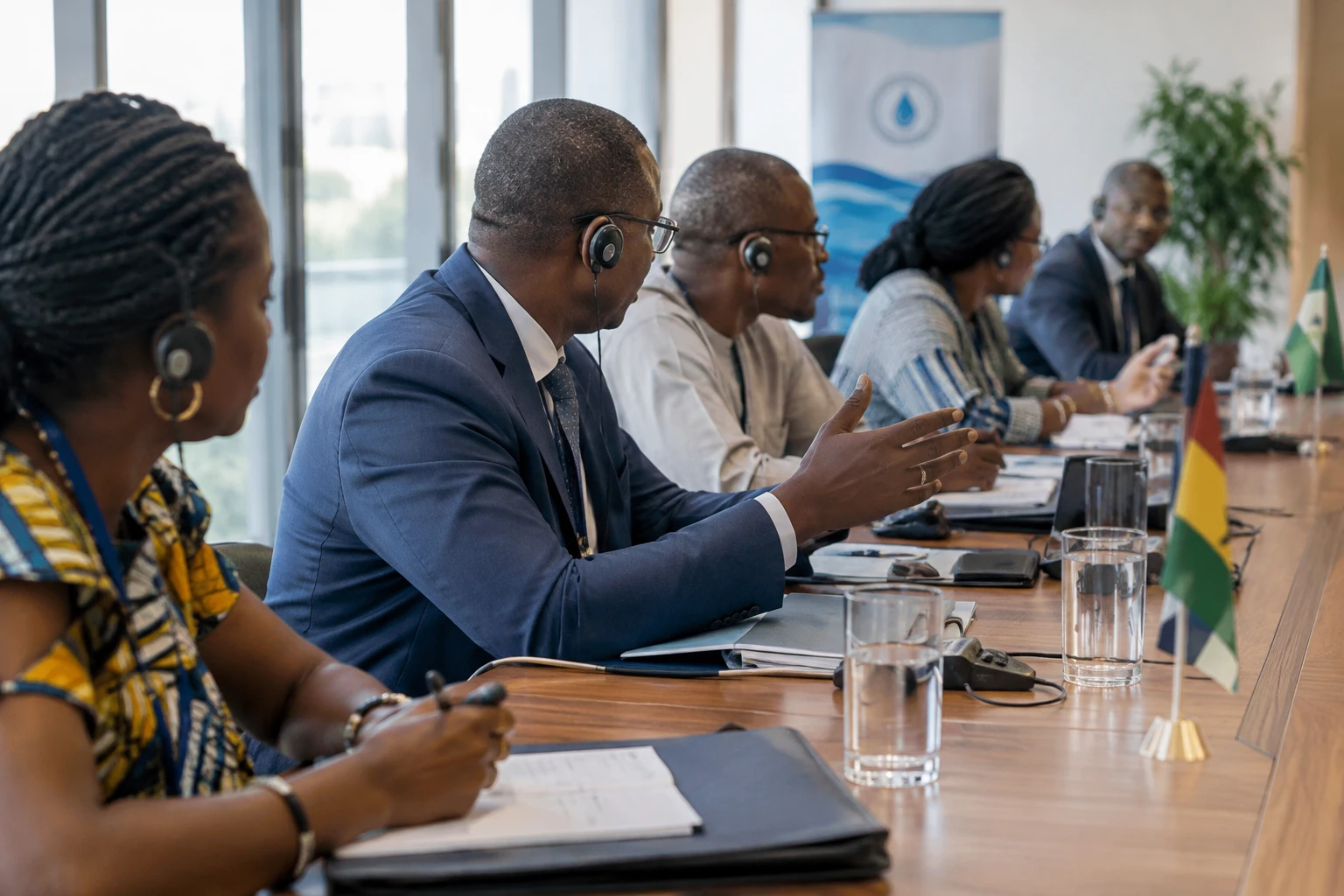
Ghana is preparing a $4.28bn financing framework under its National Water Investment Programme. The proposal was presented at a validation workshop in Accra on 6 October 2026, according to the Ghana News Agency (GNA). It is intended to help institutions rank priority projects, set out their implementation and seek public, private and climate finance.
The announced amount corresponds to the needs the programme aims to organise and finance. It does not mean that this sum has already been raised. The Water Resources Commission (WRC), which is responsible in particular for managing and co-ordinating water resources, is involved in the initiative. Officials also want to align investments with national development and climate adaptation priorities.
According to sector estimates reported by the GNA, the country would need about $1.7bn a year to pursue universal access to water and meet its sustainability goals by 2030. This annual figure should not be confused with the $4.28bn framework: the two amounts describe distinct needs. In 2024, Ghana and the United Nations had already included an annual commitment of $1.7bn for water, sanitation and hygiene in a presidential compact.
Diversified financing, with safeguards
The constraint is as much budgetary as technical. Public debt and the state’s limited fiscal headroom restrict its ability to finance networks, treatment facilities and their maintenance on its own. The strategy outlined by officials therefore combines public resources, concessional loans — offered on more favourable terms than commercial loans —, climate finance and private sector participation.
This diversification alone does not guarantee that projects will be funded or completed. Among other things, robust proposals will need to be prepared, responsibility for risks made clear and the use of funds reported. The GNA reports that financial officials want to strengthen engagement with development partners and climate finance institutions. The challenge will be to mobilise this capital without imposing disproportionate costs on users or neglecting less profitable areas.
Ghana has undertaken other preparatory work. In February 2026, with support from the Green Climate Fund, it launched a water investment preparation initiative linked to the African Union’s continental programme. It aims in particular to strengthen national capacity and prepare projects that meet climate financiers’ criteria. The government had also announced plans to develop a project preparation fund as part of public-private partnerships.
Uneven needs across cities and regions
The 2026-2029 medium-term development plan provides for investment in urban water infrastructure. The ministry’s planning document sets a target of increasing by 14% the share of the population with basic access to drinking water by 2029. It refers to projects in several cities, including Keta, Damongo, Tamale, Yendi and Techiman.
These urban projects do not, however, reflect the country’s needs in their entirety. Service quality and continuity can vary by region, while small towns and rural communities often rely on systems different from urban networks. Investment choices will therefore have different effects: businesses and households connected to networks expect reliable service, while people far from the networks need solutions suited to their needs and maintained locally.
Infrastructure is also not enough if the resources that supply it are degraded. The WRC emphasises the role of catchment management, water quality monitoring and resource protection. Climate pressure, rising demand and pollution make these tasks central to the resilience of facilities. In other words, financing equipment without planning for its maintenance and the protection of water sources risks shortening its lifespan.
A Ghanaian challenge that echoes regional priorities
In West Africa, where river basins and water-related challenges extend beyond national borders, water security also depends on regional co-operation. Ghana is a member of ECOWAS, the Economic Community of West African States. At continental level, its initiative forms part of the African Union’s efforts to increase investment in water and strengthen climate resilience.
The next step will be to turn the framework into funded projects, with verifiable responsibilities and timelines. The validation workshop is intended to identify gaps before the programme is finalised. For Ghanaians, the practical issue will not be the announced amount itself, but whether investments can sustainably improve access to water in cities and less well-served areas alike.
Sources consulted: Ghana News Agency on the financing framework ; United Nations in Ghana on the 2024 water and sanitation compact ; Ghana News Agency on the climate investment preparation project ; The ministry’s 2026-2029 development plan, published by the National Development Planning Commission ; Ghana Water Resources Commission.



