Algeria
 Egypt
 Libya
 Morocco
 Sudan
 Tunisia
 Benin
 Burkina Faso
 Cabo Verde
 Côte d'Ivoire
 Guinea
 Guinea-Bissau
 Liberia
 Mali
 Mauritania
 Niger
 Nigeria
 Senegal
 Sierra Leone
 The Gambia
 Togo
 Cameroon
 Central African Republic
 Chad
 DR Congo
 Equatorial Guinea
 Gabon
 Republic of the Congo
 São Tomé and Príncipe
 Burundi
 Comoros
 Djibouti
 Eritrea
 Ethiopia
 Kenya
 Madagascar
 Malawi
 Mauritius
 Mozambique
 Rwanda
 Seychelles
 Somalia
 South Sudan
 Tanzania
 Uganda
 Angola
 Botswana
 Eswatini
 Lesotho
 Namibia
 South Africa
 Zambia
 Zimbabwe
When the grid falters, Ghana’s entire economy slows
In Ghana, a power cut is never just a domestic inconvenience. It affects shops, workshops, hospitals, petrol stations, households and, more broadly, the credibility of an electricity system already under strain. In Accra, as in the Eastern, Northern, Central and Ashanti regions, repeated outages have revived a simple question: is the problem really that the country does not produce enough power, or does it struggle to transport the electricity it can already generate?
The question comes at an important moment for the country. Since January 2025, the Minister for Energy and Green Transition, John Abdulai Jinapor, has pressed ahead with reforms to clean up the sector’s finances and strengthen payment discipline. The government says it paid about $1.470 billion in 2025 to clear inherited arrears, while the Finance Ministry says the state is now largely up to date with bills owed to independent power producers.
A decision taken after two incidents in quick succession
The events that prompted the current decision are clear. On 29 July 2026, a disturbance in the national electricity system caused several power plants to shut down. Then, on 20 August 2026, a further failure on the Akosombo-Volta line triggered the automatic shutdown of the Akosombo units and some thermal power plants, causing outages in parts of Accra and several regions of the country. GRIDCo confirmed that a major fault on the line triggered the grid’s automatic protection system at about 4.30am.
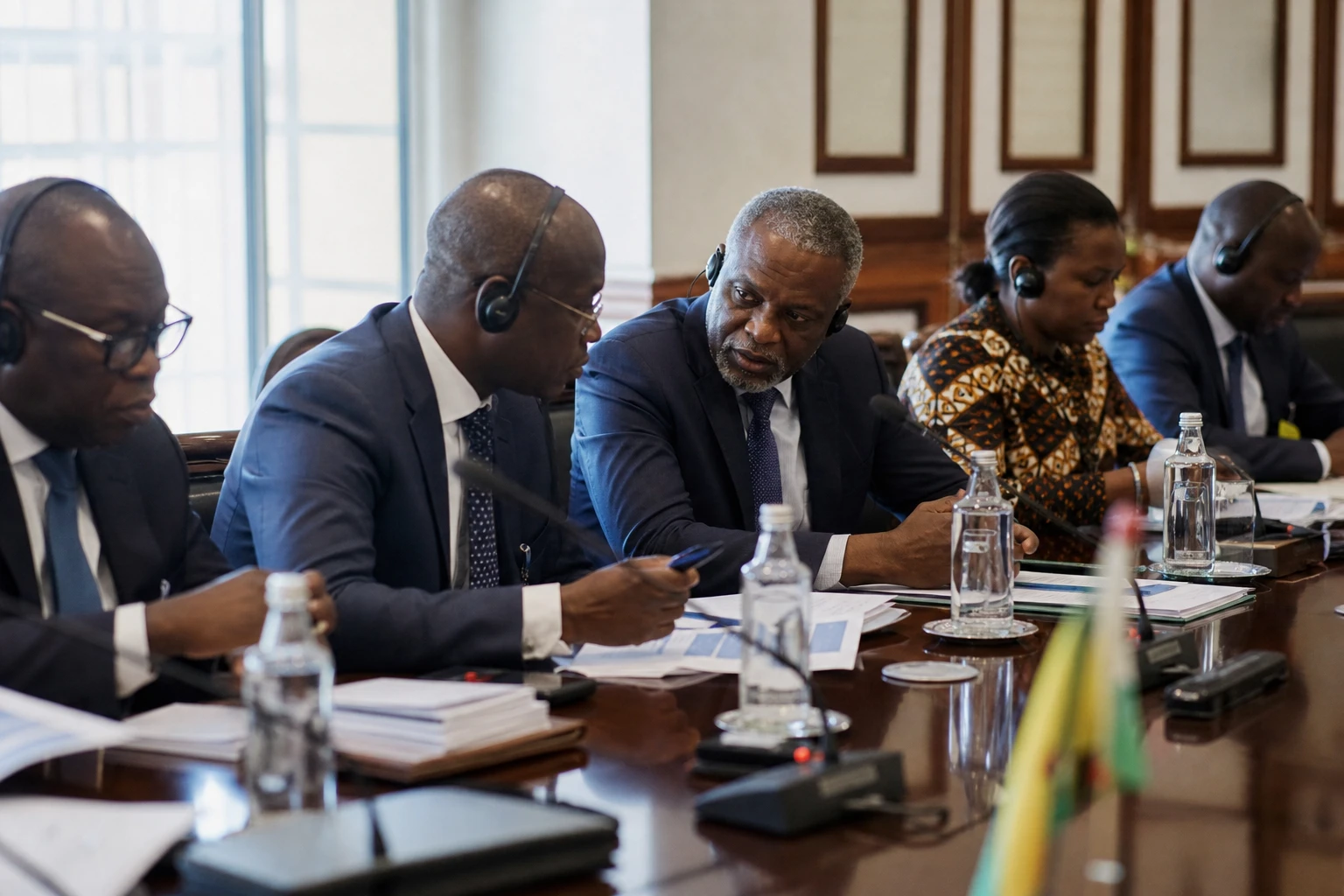
Following the repeated incidents, the government decided to commission an independent audit of the Ghana Grid Company Limited, better known as GRIDCo. According to an account published in Accra on 25 August 2026 at the Future of Energy Conference organised by the think-tank Africa Centre for Energy Policy, the minister announced that a team of experts would be tasked with assessing the actual condition and performance of transmission infrastructure. The initiative also comes against a broader backdrop: as early as April 2026, the ministry had ordered a national audit of energy facilities after the Akosombo incident.
GRIDCo is no peripheral organisation. The state-owned company, established in 2006 and operational since 2008, manages high-voltage electricity transmission on the National Interconnected Transmission System. It supplies industrial customers as well as distributors, both in Ghana and across parts of West Africa.
An ageing grid caught between urgent needs and investment
The problem is not just generation. Ghana already knows how to build capacity and discuss new projects. The real issue is the entire chain: generation, transmission, grid protection, maintenance and equipment reliability. In 2025, GRIDCo had already launched or announced several projects on strategic lines, notably at Takoradi-Thermal-Anwomaso, Akosombo-Nkawkaw and in the Ahodwo-Anwomaso area. These works show that pressure on the grid is not new.
Public debate in Ghana is increasingly focused on ageing transmission infrastructure. On 22 August, former MP Andrew Agyapa-Mercer said GRIDCo could not finance the necessary upgrades on its own. The Institute for Energy Security, meanwhile, has noted that demand has risen sharply over the past decade without sufficient investment in transmission corridors and critical equipment. Even without treating these comments as a definitive verdict, they point to a shared diagnosis: the system is vulnerable not only because of financial constraints, but also because it lacks technical headroom.
The available figures point in the same direction. GRIDCo’s 2024 annual report mentions constraints on part of the grid and notes that some lines have had very low availability. At the same time, the Ghanaian government says it has restored greater budgetary discipline in the sector, with a higher proportion of bills paid to independent power producers. The practical implication is clear: financial repair is under way, but the grid’s physical resilience remains to be proven.
There is also a governance vulnerability. After the August incident, the Energy Ministry itself said that a temporary solution at Akosombo had left the system exposed. In other words, the country is not just facing outages; it is discovering the limits of temporary measures that, when they persist, ultimately weaken the security of the system as a whole.
What the audit could change in Ghana and West Africa
In the immediate term, the audit aims to identify the root cause of the incidents, beyond the fault that appeared on the Akosombo-Volta line. But its political significance is broader. If conducted rigorously, it could establish where the grid is losing resilience: lines, substations, automatic protection systems, maintenance, technical control or coordination between operators. It could also clarify what stems from a one-off accident and what reflects structural ageing.
For Ghanaian households, the stakes are clear: limit outages, protect appliances and reduce the hidden cost of power failures. For businesses, the stakes are even higher, particularly in agro-industry, digital services, commercial refrigeration and local processing. In a country seeking to accelerate industrialisation and attract more investment, reliable electricity matters almost as much as the price per kilowatt-hour. That is precisely the focus of discussions at this year’s Future of Energy Conference in Accra, which is highlighting infrastructure readiness and Africa’s energy competitiveness.
The implications also extend beyond Ghana’s borders. Ghana is part of the West African Power Pool, a specialised ECOWAS agency covering 14 countries in the region and aiming to integrate national electricity systems into a regional market. In short, when Ghana’s grid falters, it also affects electricity trading, regional stability and interconnection projects, particularly with Côte d’Ivoire. The country therefore remains an important node in West Africa’s electricity network.
This regional dimension is also an African one. In July 2026, the African Union noted, at the third forum of the African Single Electricity Market, that continental electricity integration was progressing with the support of several players, including GRIDCo and the Volta River Authority. Ghana’s case shows that the ambition of an African electricity market depends on more than interconnections. In very practical terms, it depends on the health of every national link. Without strong grids, integration remains theoretical.
In the short term, the country will be watching for the audit’s findings and for the government’s ability to turn its diagnosis into visible works. In the medium term, the question will be whether Ghana can tackle three challenges at once: repairing its grid, securing its finances and maintaining its regional ambitions. The credibility of Ghana’s electricity system will be decided there, well beyond just another outage.