Algeria
 Egypt
 Libya
 Morocco
 Sudan
 Tunisia
 Benin
 Burkina Faso
 Cabo Verde
 Côte d'Ivoire
 Guinea
 Guinea-Bissau
 Liberia
 Mali
 Mauritania
 Niger
 Nigeria
 Senegal
 Sierra Leone
 The Gambia
 Togo
 Cameroon
 Central African Republic
 Chad
 DR Congo
 Equatorial Guinea
 Gabon
 Republic of the Congo
 São Tomé and Príncipe
 Burundi
 Comoros
 Djibouti
 Eritrea
 Ethiopia
 Kenya
 Madagascar
 Malawi
 Mauritius
 Mozambique
 Rwanda
 Seychelles
 Somalia
 South Sudan
 Tanzania
 Uganda
 Angola
 Botswana
 Eswatini
 Lesotho
 Namibia
 South Africa
 Zambia
 Zimbabwe
Exporting a mineral without processing it brings immediate revenue, but leaves some of the industrial work elsewhere. Ghana wants to change this equation by 2030. The challenge will be to build, within a few years, the production, energy and financing capacity needed to turn this ambition into more than an announcement.
A national ambition in a regional market
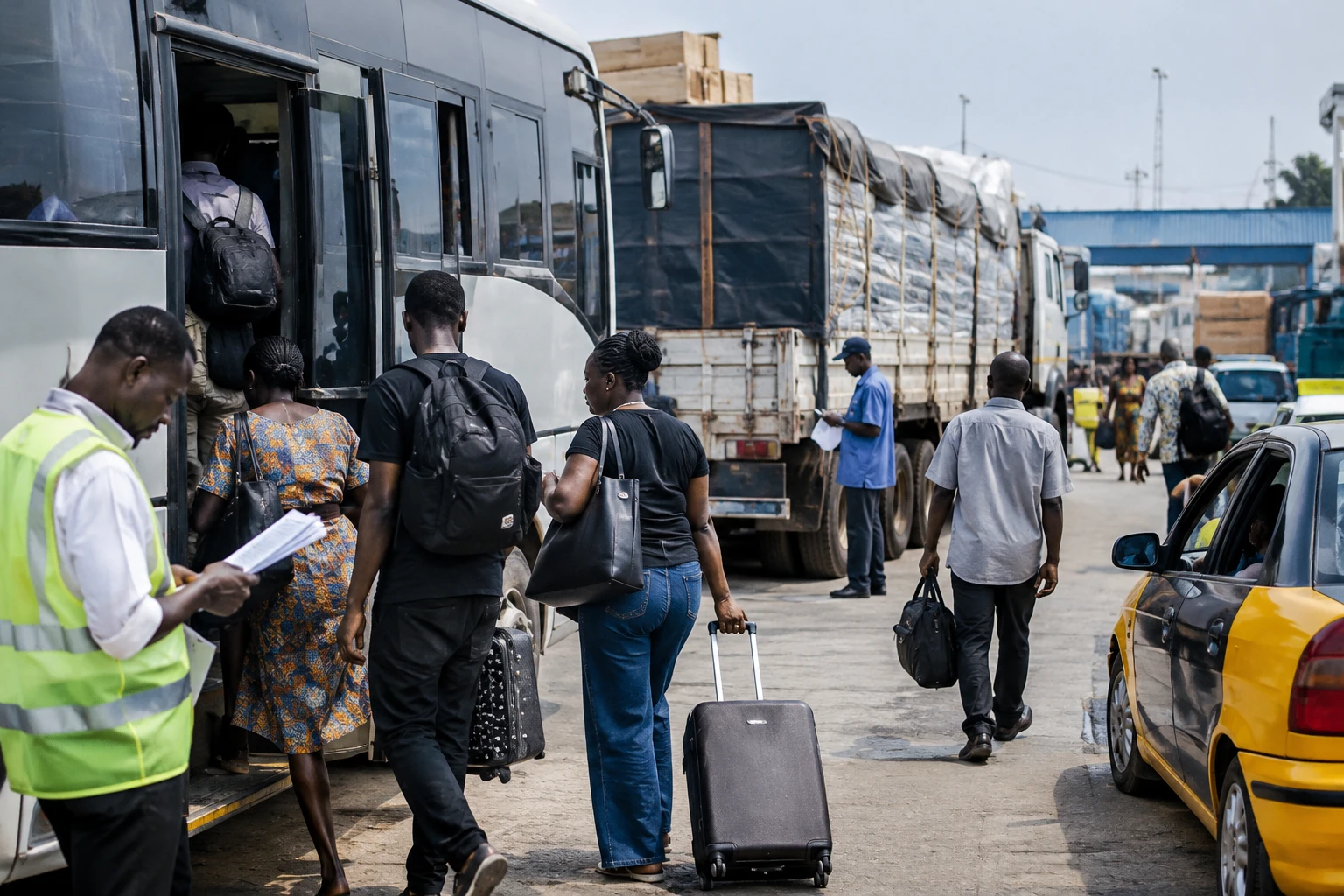
In Accra, debate centres on Ghana’s place in mining value chains. The country is a member of ECOWAS, the Economic Community of West African States. It therefore shares with its neighbours issues around trade, infrastructure and industrialisation that do not stop at national borders.
The question extends beyond Ghana, too. When each country exports its minerals without processing them, the costs of plants, energy and transport weigh on markets that are often limited in size. Regional value chains could instead distribute industrial stages across several economies and serve a larger market, particularly through the African Continental Free Trade Area.
This logic was at the heart of John Dramani Mahama’s speech, but it requires concrete agreements between states: compatible standards, transport infrastructure and guaranteed markets. The president called for value chains to be organised so that minerals extracted in one country could be processed in another. The regional priorities outlined by Ghana’s president thus link mining policy, investment and trade integration.
A target announced, implementation still to be defined
On 19 October 2026, at the opening of the Mining in Motion summit in Accra, Mahama set a target of ending exports of unprocessed minerals by 2030. The government plans a phased ban, accompanied by legislation, requirements tailored to each mineral and an implementation timetable. The details of these rules and interim steps have yet to be specified.
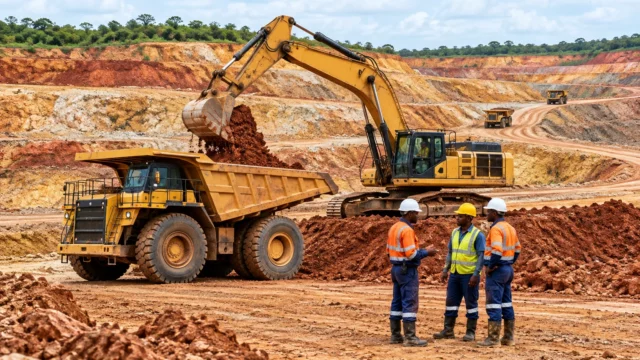
Bauxite, manganese, iron ore, lithium and diamonds are among the resources cited. The plan does not mean that all mining exports would cease immediately. It aims to increase the degree of processing before export. The arrangements will need to take account of the industrial realities of each sector.
On aluminium, the president referred to modernising the Volta Aluminium Company, known as VALCO, and developing a chain from bauxite to industrial products. The aim is to link extraction, refining and manufacturing rather than treat these stages as separate activities. The statement from Ghana’s state information service confirms the target and the gradual approach envisaged.
Local processing takes more than a ban
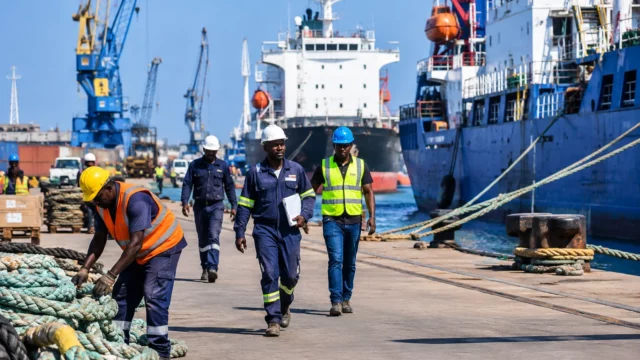
An export restriction can encourage investors to set up processing facilities in Ghana. But on its own, it does not make a plant profitable. Companies need reliable electricity, suitable roads and ports, technical skills, capital and predictable rules. Without these conditions, a processing requirement could delay projects or reduce revenue from extraction.
The effects will not be the same for everyone. The state can expect more industrial activity and skilled jobs. Mining companies, for their part, will have to adapt their operations and contracts. Local workers and suppliers could benefit from new orders, provided jobs and markets are genuinely accessible to them. Small-scale mines and informal operators are more likely to lack the funding and equipment needed to meet new requirements.
The example of gold shows that some local processing measures are already under way. Since 1 September 2026, the aggregators concerned have been required to have doré gold refined in Ghana before exporting it. Doré gold is partially processed metal that still requires refining. The rule applies to specified operators and does not amount to a general ban on gold exports. The Ghana Gold Board directive sets out its scope and conditions.
This measure illustrates both the tool available to the state and the questions around implementation: refinery capacity, costs for operators and enforcement of the rules. In the gold sector, some stakeholders have also highlighted the cost of refining and the need to balance job creation with economic viability. These concerns will weigh in the debate on other minerals.
The test will be industrial and continental
Ghana has already sought to impose greater oversight on some raw material exports. The new target extends this approach to several strategic resources. It is part of a broader African debate: how to secure a larger share of the value created by minerals without discouraging investment or shifting activity to countries with less demanding rules.
For ECOWAS countries, coordination will be decisive. Ghanaian plants could process resources from neighbouring countries or supply intermediate products to their industries. But this cooperation will require shared infrastructure and lasting trade commitments. A call for a continental approach does not yet guarantee that these will be put in place.
The next steps to watch are therefore concrete: publication of a timetable for each mineral, legislation, financing for processing facilities and guarantees of energy supply. The Mining in Motion summit set a political deadline. Ghana’s ability to translate it into investment and enforceable rules will determine whether the 2030 target becomes an industrial lever or remains a statement of intent.