
 Algeria
 Egypt
 Libya
 Morocco
 Sudan
 Tunisia
 Benin
 Burkina Faso
 Cabo Verde
 Côte d'Ivoire
 Guinea
 Guinea-Bissau
 Liberia
 Mali
 Mauritania
 Niger
 Nigeria
 Senegal
 Sierra Leone
 The Gambia
 Togo
 Cameroon
 Central African Republic
 Chad
 DR Congo
 Equatorial Guinea
 Gabon
 Republic of the Congo
 São Tomé and Príncipe
 Burundi
 Comoros
 Djibouti
 Eritrea
 Ethiopia
 Kenya
 Madagascar
 Malawi
 Mauritius
 Mozambique
 Rwanda
 Seychelles
 Somalia
 South Sudan
 Tanzania
 Uganda
 Angola
 Botswana
 Eswatini
 Lesotho
 Namibia
 South Africa
 Zambia
 Zimbabwe
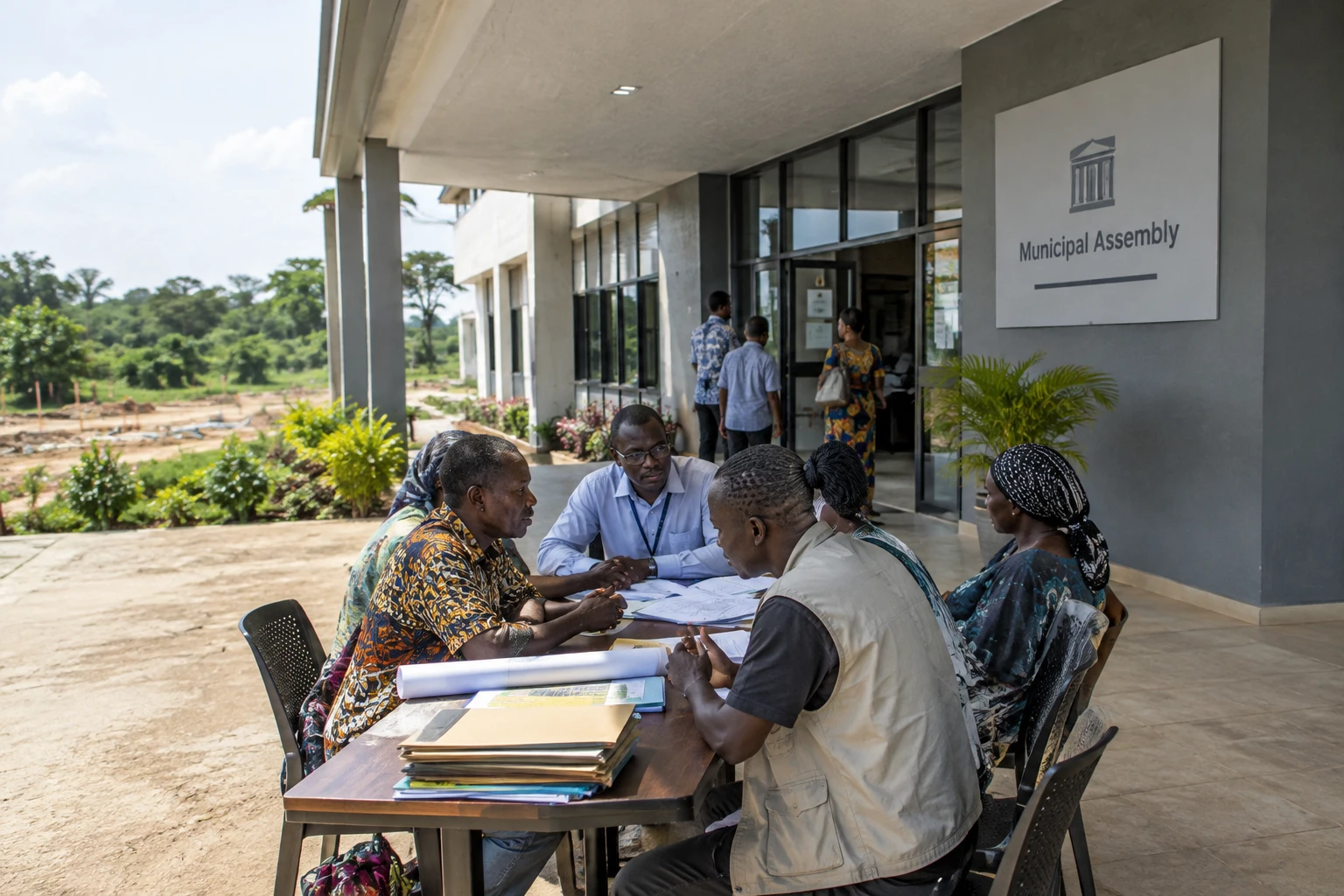
In Jomoro, in western Ghana, the announcement of a $28bn partnership opens up a new industrial prospect. But a signature builds neither a refinery nor a port: the timetable and financing must now stand up to scrutiny on the ground.
On 19 October, the Petroleum Hub Development Corporation (PHDC), the body tasked with developing the complex, announced a build-operate agreement with a consortium led by Global Sphere. Several financial details and the full identities of the partners remain to be clarified.
Industrial ambition in a region seeking capacity
The project is located in Jomoro, in Ghana’s Western Region, near the border with Côte d’Ivoire. It is part of a strategy to process more oil locally and reduce reliance on imported refined products.
This ambition comes amid a changing sector. The state-owned Tema refinery has resumed operations following refurbishment, while the Sentuo refinery is preparing an expansion. In July, Ghana’s Energy Ministry estimated that the two facilities could meet about 70% of national demand after their expansions. These announced capacities make the stakes clear: the Jomoro hub would be an additional major investment, not the country’s only answer to its needs.
Across West Africa, fuel supply and quality extend beyond national borders. ECOWAS, the Economic Community of West African States, is working in particular to harmonise standards for petrol and diesel. Increased Ghanaian output could supply regional trade, but that will also depend on infrastructure, prices and demand in neighbouring countries.
What the announced agreement provides for
According to information made public at the time of the announcement, the second phase would include a refinery with a capacity of 300,000 barrels per day, two petrochemical units and a port jetty. Work is due to begin in early 2027, with commissioning targeted for 2031.
The PHDC describes the agreement as a “build-operate” partnership: the partner is expected to construct the infrastructure and then operate it under agreed terms. But the announcement does not publicly detail the allocation of financial contributions, guarantees, the operating period or the specific commitments of each consortium member.
The lead partner, Global Sphere, is said to be working with investors and technical partners from South Korea, the United Arab Emirates and Mali. The information available does not yet clearly establish its ownership or each partner’s contribution. The $28bn figure should therefore be understood as the announced value of the partnership, not as a sum whose full payment has already been demonstrated.
The entire complex is valued at about $60bn and is to be developed in three phases, with completion targeted for 2036. The long-term plans envisage three refineries, five petrochemical units and substantial storage capacity. These goals describe a long-term ambition; they are not infrastructure that has already been financed or built.
Land, the first test of credibility
The first phase’s history is a reminder to distinguish an announcement from a construction project. In August 2024, an official ceremony marked its launch, with the investment estimated at $12bn. But land procedures and discussions with local communities have continued to weigh on the timetable.
The planned area was reduced from 20,000 to about 12,300 acres, or nearly 5,000 hectares. The PHDC said it had begun consultations with Jomoro communities on the reduction and on questions of acquisition and compensation. In April 2026, however, a local coalition asked the president to clarify the extent of the land involved, indicating that the figures and their interpretation remained contested.
This debate is not peripheral. For residents, the issues include land, compensation and the project’s effects on local livelihoods. For the authorities, land determines access to the site and the timetable. For investors, it determines whether work can begin. The PHDC itself said at the signing that success should be measured by the infrastructure delivered, jobs created and value brought to Ghanaians, rather than by agreements alone.
Potential benefits, unanswered questions
If the facilities are built, they could strengthen refining in Ghana, support petrochemical activities and create opportunities for local businesses. Increased output could also reduce some purchases of refined fuels from abroad. These outcomes will, however, depend on the availability of crude oil, the viability of the facilities and their ability to sell at competitive prices.
The project also raises questions about how benefits will be shared. Skilled jobs and industrial contracts will not automatically benefit neighbouring communities. Training, local-content rules, compensation and transparency over the returns will determine who actually gains from the investment. The authorities will also need to specify measures to protect land, water and existing economic activities.
Finally, a refinery with a capacity of 300,000 barrels per day needs a secure, regular supply of crude. The announced processing capacity alone does not guarantee continuous production or lower costs for consumers. Supply contracts, financing secured and delivery arrangements will need to be known before the effect on prices and Ghana’s external balance can be assessed.
A timetable to watch in Ghana and ECOWAS
The next step is less dramatic than a signing: establish the financial commitments, clarify the consortium’s responsibilities and make progress on land. The start of work on the second phase, announced for 2027, will be an important milestone. Progress on the first phase will also matter, as it will provide a tangible indicator of the project’s ability to move from plans to infrastructure.
For ECOWAS, Jomoro adds to regional competition as several countries seek to develop refining and trade in petroleum products. Ghana could secure a stronger industrial position, but only if the announced capacity is built, supplied and connected to regional markets. For now, the $28bn signals ambition; executed contracts and visible construction will show how far it goes.
Details published on the Jomoro second-phase agreement ; land consultations announced by the PHDC ; concerns raised by a local coalition.



