
 Algeria
 Egypt
 Libya
 Morocco
 Sudan
 Tunisia
 Benin
 Burkina Faso
 Cabo Verde
 Côte d'Ivoire
 Guinea
 Guinea-Bissau
 Liberia
 Mali
 Mauritania
 Niger
 Nigeria
 Senegal
 Sierra Leone
 The Gambia
 Togo
 Cameroon
 Central African Republic
 Chad
 DR Congo
 Equatorial Guinea
 Gabon
 Republic of the Congo
 São Tomé and Príncipe
 Burundi
 Comoros
 Djibouti
 Eritrea
 Ethiopia
 Kenya
 Madagascar
 Malawi
 Mauritius
 Mozambique
 Rwanda
 Seychelles
 Somalia
 South Sudan
 Tanzania
 Uganda
 Angola
 Botswana
 Eswatini
 Lesotho
 Namibia
 South Africa
 Zambia
 Zimbabwe
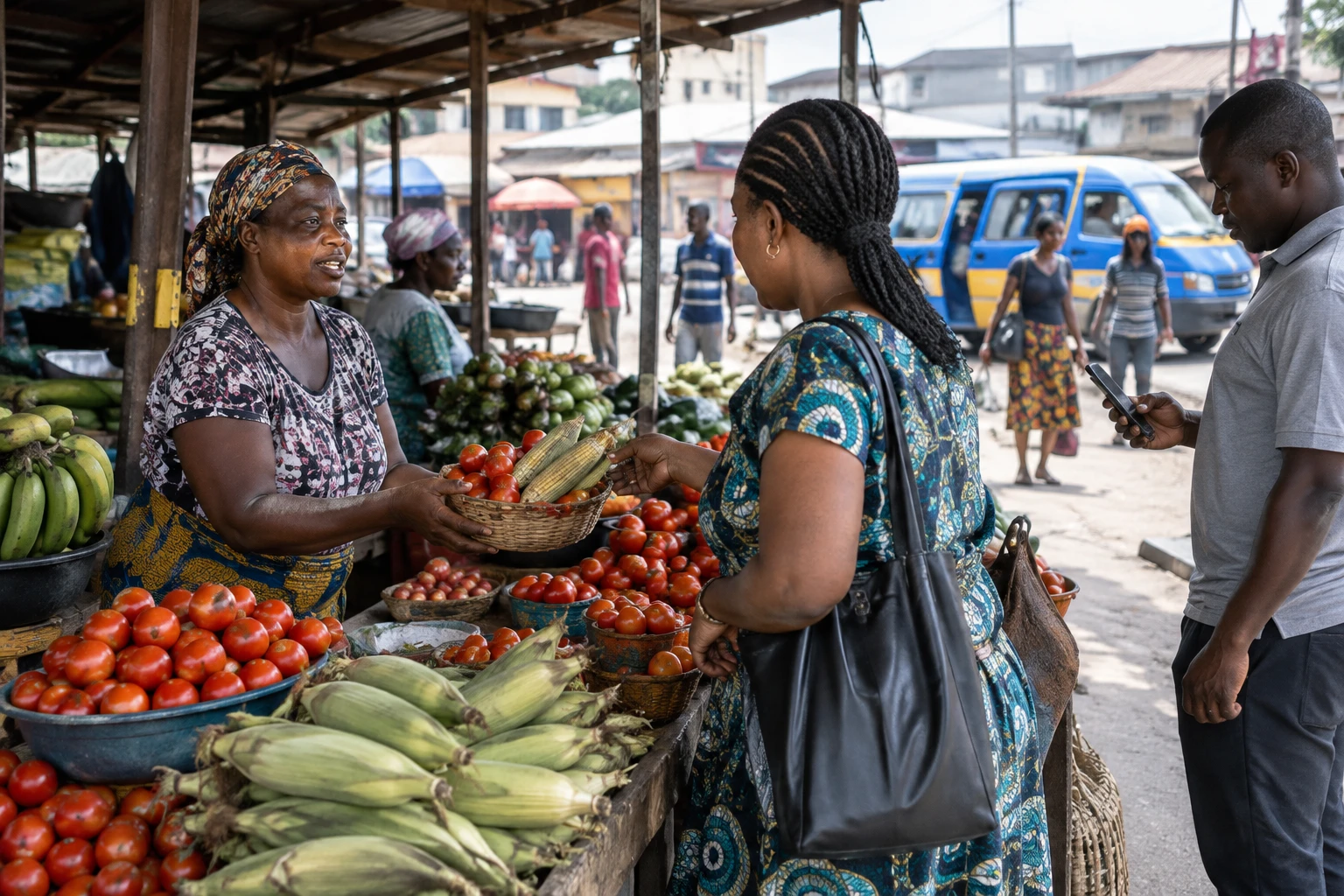
Falling food prices can ease a Ghanaian household’s budget. But they are not enough to calm the cost of living when transport, housing and services are becoming more expensive. In October, both trends were evident in Ghana.
Food prices fall, but not across the board
Annual food inflation fell to 2.8% in October 2026, from 4% in September and 9.5% a year earlier. The figure covers food products and non-alcoholic beverages. It measures their change compared with October 2025, so it does not mean prices fell by 2.8% in a month.
Over the month, however, food prices did fall by 2%, according to data presented by the Ghana Statistical Service (GSS), the national statistics agency. The general price level fell by 0.1% between September and October. These declines may offer some relief, but they are not necessarily distributed evenly across products, markets and regions.
National statistics also show marked differences. Maize, sorghum and locally produced rice cost less than a year earlier, while some products, including fresh tomatoes, recorded sharp increases. Results in markets in the North also differ from those in the Ashanti Region or Greater Accra. A national rate summarises these varied trends; it does not describe every food basket.
Services push overall inflation higher
While food inflation slowed, annual headline inflation rose to 5.5% in October, from 5.2% in September. This was the third consecutive monthly increase, following a low of 3.2% in March. The GSS published the results on Wednesday 4 November.
The pressure is coming mainly from non-food spending. Annual inflation in this category rose to 7.9%, from 6.2% in September. Services inflation accelerated to 11.5%, particularly amid higher transport fares. In other words, a cheaper basket of cereals does not automatically offset more expensive journeys, rent or school fees.
This distinction matters to households depending on where they live and what they do. People who rely on public transport, informal workers who travel every day and small businesses facing higher logistics costs may feel pressure that differs from what the food inflation rate alone suggests. For producers, a fall in the price they receive for their harvest can also reduce income, even if consumers benefit when buying it.
Local production as a medium-term lever
The government is relying on domestic agricultural supply to reduce dependence on imports and make supplies less vulnerable to external shocks. Launched in Techiman on 12 April 2025, the Feed Ghana programme runs from 2025 to 2028. It includes measures to support cereals and pulses, irrigated farming, vegetables and livestock.
The strategy addresses a tangible national challenge: producing more does not, by itself, guarantee affordable prices. Seeds, fertiliser, access to credit, rural roads, storage and market outlets also determine what reaches markets and at what cost. The effects of an agricultural programme must therefore be measured over several seasons, not by a single monthly inflation reading.
The contrast between cheaper products and occasional price spikes also highlights the importance of distribution chains. Abundant harvests can put downward pressure on some prices, while post-harvest losses, transport difficulties or seasonal fluctuations can sustain disparities between rural areas and urban centres. The available data do not make it possible to attribute October’s slowdown to Feed Ghana.
Bank of Ghana faces a less linear trajectory
The central bank monitors inflation when setting its policy rate, which influences borrowing costs and financial conditions. The Bank of Ghana kept the rate at 14% at its September meeting. Its medium-term target is inflation of 8%, with a margin of two percentage points either side.
The return of overall inflation to an upward trend calls for an examination of its composition rather than a reaction to the headline figure alone. Rising service and transport costs are not necessarily driven by the same factors as food prices. At the same time, an inflation rate below the target does not mean prices are returning to their previous levels: it means they are rising more slowly year on year.
An issue that extends beyond Ghana’s borders
For Ghana, a member of the Economic Community of West African States (ECOWAS), food security also depends on regional trade, agricultural seasons and the cost of moving goods. National trends cannot therefore be read as if markets were isolated. But Ghana’s inflation rate does not sum up the situation in neighbouring countries: their currencies, harvests and economic policies differ.
The next step will be to see whether the rise in overall inflation continues and whether the decline in food prices persists in coming readings. For the authorities, the balance is twofold: contain service costs without stifling economic activity, and turn gains in agricultural production into regular supplies. For households, changes in transport, housing and fresh food prices will matter as much as the national average.



