Algeria
 Egypt
 Libya
 Morocco
 Sudan
 Tunisia
 Benin
 Burkina Faso
 Cabo Verde
 Côte d'Ivoire
 Guinea
 Guinea-Bissau
 Liberia
 Mali
 Mauritania
 Niger
 Nigeria
 Senegal
 Sierra Leone
 The Gambia
 Togo
 Cameroon
 Central African Republic
 Chad
 DR Congo
 Equatorial Guinea
 Gabon
 Republic of the Congo
 São Tomé and Príncipe
 Burundi
 Comoros
 Djibouti
 Eritrea
 Ethiopia
 Kenya
 Madagascar
 Malawi
 Mauritius
 Mozambique
 Rwanda
 Seychelles
 Somalia
 South Sudan
 Tanzania
 Uganda
 Angola
 Botswana
 Eswatini
 Lesotho
 Namibia
 South Africa
 Zambia
 Zimbabwe
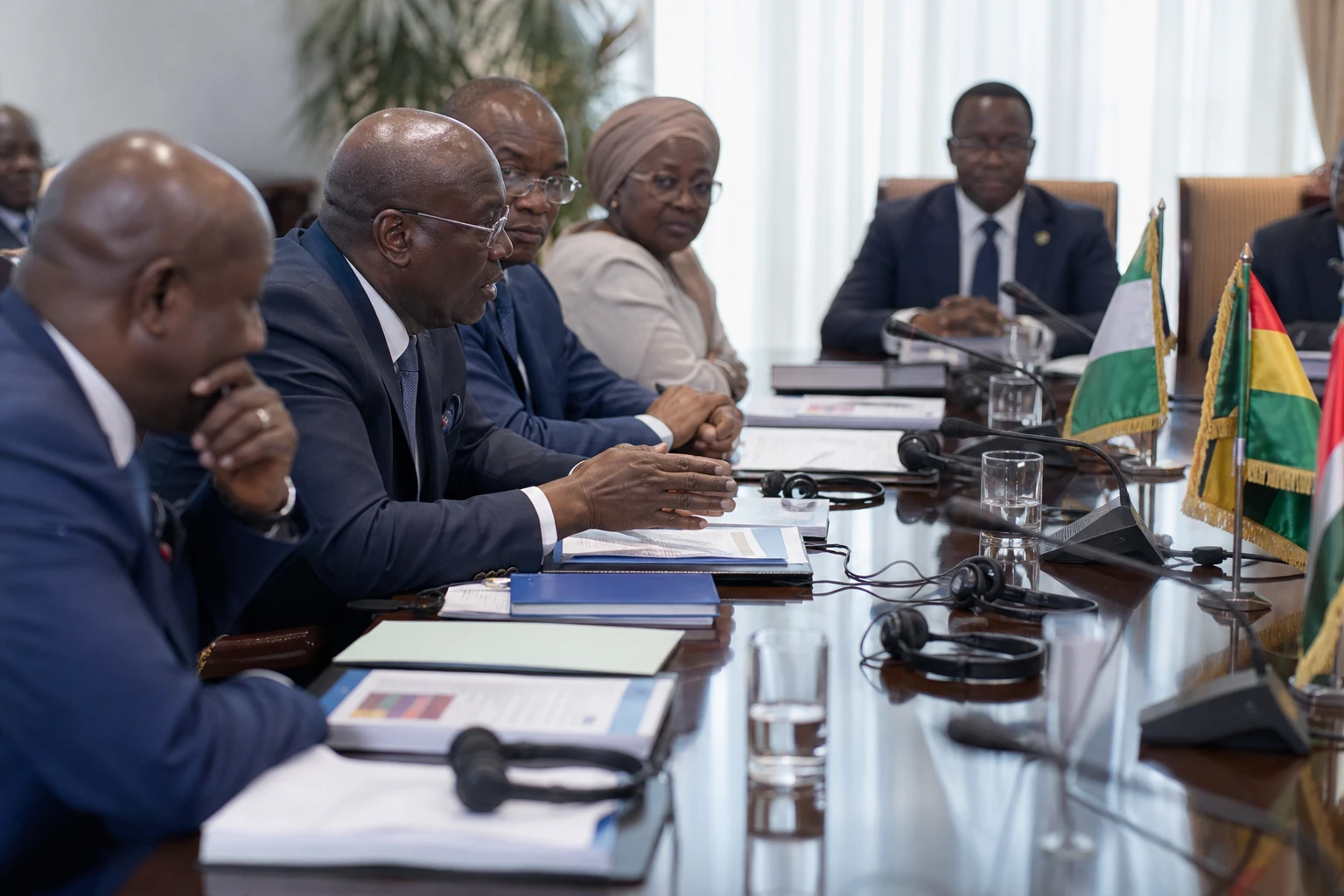
In Accra, a debate that goes beyond the length of a term
In Ghana, constitutional reform is not an abstract exercise reserved for lawyers. It concerns how power is built and then held to account in a democracy often cited as one of West Africa’s most stable. The central question is simple: should a president be given more time to govern, or should the country keep the tight rhythm of a four-year term that compels swift action?
The question is all the more sensitive because the country has entered a new political phase under John Dramani Mahama, re-elected at the end of 2024 and sworn in as president in January 2025. At the same time, the 1992 Constitution currently sets the minimum age for presidential candidates at 40. The proposed review, by contrast, envisages a lower threshold of around 35, signalling a desire to open up access to younger generations.
A review revived after years of waiting
The constitutional review did not begin yesterday. In Ghana, discussions about revising the basic law date back more than a decade. The commission established in 2010 had already undertaken extensive consultations, but several recommendations were left unimplemented. In 2025, a new committee took up the issue and received more than 600 contributions from citizens, organisations and institutions, demonstrating genuine public interest in reforming the country’s political rules.
On 22 December 2025, the committee submitted its final report to the president. The most widely discussed proposal was to extend the presidential term from four to five years, without allowing a third term. Other proposals addressed the organisation of the state, the balance between institutions and, above all, the role of politics in a system often seen as too heavily centred on the executive.
The process will be lengthy. The texts must be finalised and then examined by the relevant authorities. Provisions affecting the Constitution will subsequently have to go to a referendum. Ghana’s Electoral Commission also notes that a referendum is the prescribed means of approving or rejecting a constitutional amendment. The vote could be held alongside the 2027 local elections, according to the timetable cited by the authorities and the Ghanaian press.
Why five years? Why 35?
Supporters of reform argue that it would improve governance. Four years, they say, leave little time between taking office, launching programmes, making budget adjustments and starting a new campaign. A five-year term would provide more scope to implement reforms, particularly in a country where economic, industrial and budgetary projects require continuity. This is also the position taken by several participants in Ghana’s public debate, who see it as a way to reduce the constant race for re-election.
But the proposal has also drawn reservations. Civil society voices argue that the real issue is not the length of the term, but the quality of public spending, budgetary discipline and accountability. Franklin Cudjoe of the Imani Africa think tank summed up this criticism by calling it a “missed opportunity”: in his view, the country needs reforms on public money more than a simple adjustment to the electoral timetable. This points to a familiar tension in African constitutional reviews: modernising the state, yes, but without diluting citizen oversight.
The question of age is more symbolic than it might seem. Lowering the threshold to 35 would open the door to a younger generation of leaders in a country with a low median age, where urban voters, particularly in Accra and other major cities, often call for new faces. Yet the issue is not limited to youth. It also raises questions about candidate preparedness, parties’ ability to develop new talent, and the relationship between generational renewal and institutional experience.
The political and institutional stakes
In the opposition, some already suspect that the government is seeking to give itself more time. This concern is recurrent in West Africa, where constitutional revisions are sometimes seen as tools for prolonging power. In Ghana, however, that suspicion is counterbalanced by an important factor: reform would take time, involving parliamentary procedures, legal opinions and a referendum. In other words, even if the debate is political, translating it into institutional change would be neither quick nor automatic.
The national context also matters. Ghana has maintained an image as a robust electoral democracy, but the country is grappling with searching debates about justice, the balance of power and the role of the executive. Tensions surrounding the Supreme Court, widely discussed in 2025, served as a reminder that trust in institutions remains a sensitive issue. In this context, every constitutional reform is scrutinised not only for its content, but also for what it reveals about the relationship between those in power and the checks and balances on them.
Economically, the issue is a practical one for businesses, local authorities, civil servants and the informal sector. A longer term could provide greater predictability for public policy, multi-year budgets and investment. But if safeguards are weak, it could also create the opposite risk: more time in power does not guarantee greater effectiveness. Ghana’s debate is therefore about the quality of the state, not just the length of a term.
A signal for all of West Africa
Ghana is a member of ECOWAS, the Economic Community of West African States, whose members are seeking to reconcile regional integration with constitutional stability. In a sub-region marked in recent years by coups, military transitions and several controversial institutional revisions, Accra is trying to preserve a different path: change debated at the ballot box and within institutions.
The implications for the continent are real. Ghana’s review will say something about how a democratic country in West Africa adapts its rules without breaking with constitutional balance. It will also show whether political modernisation can take place without weakening citizen oversight. In the background, the issue forms part of a broader African debate on term limits, the renewal of elites and the ability of institutions to survive changes of government. In Accra, constitutional reform is therefore about more than a timetable. It is a test of democratic maturity.