Algeria
 Egypt
 Libya
 Morocco
 Sudan
 Tunisia
 Benin
 Burkina Faso
 Cabo Verde
 Côte d'Ivoire
 Guinea
 Guinea-Bissau
 Liberia
 Mali
 Mauritania
 Niger
 Nigeria
 Senegal
 Sierra Leone
 The Gambia
 Togo
 Cameroon
 Central African Republic
 Chad
 DR Congo
 Equatorial Guinea
 Gabon
 Republic of the Congo
 São Tomé and Príncipe
 Burundi
 Comoros
 Djibouti
 Eritrea
 Ethiopia
 Kenya
 Madagascar
 Malawi
 Mauritius
 Mozambique
 Rwanda
 Seychelles
 Somalia
 South Sudan
 Tanzania
 Uganda
 Angola
 Botswana
 Eswatini
 Lesotho
 Namibia
 South Africa
 Zambia
 Zimbabwe
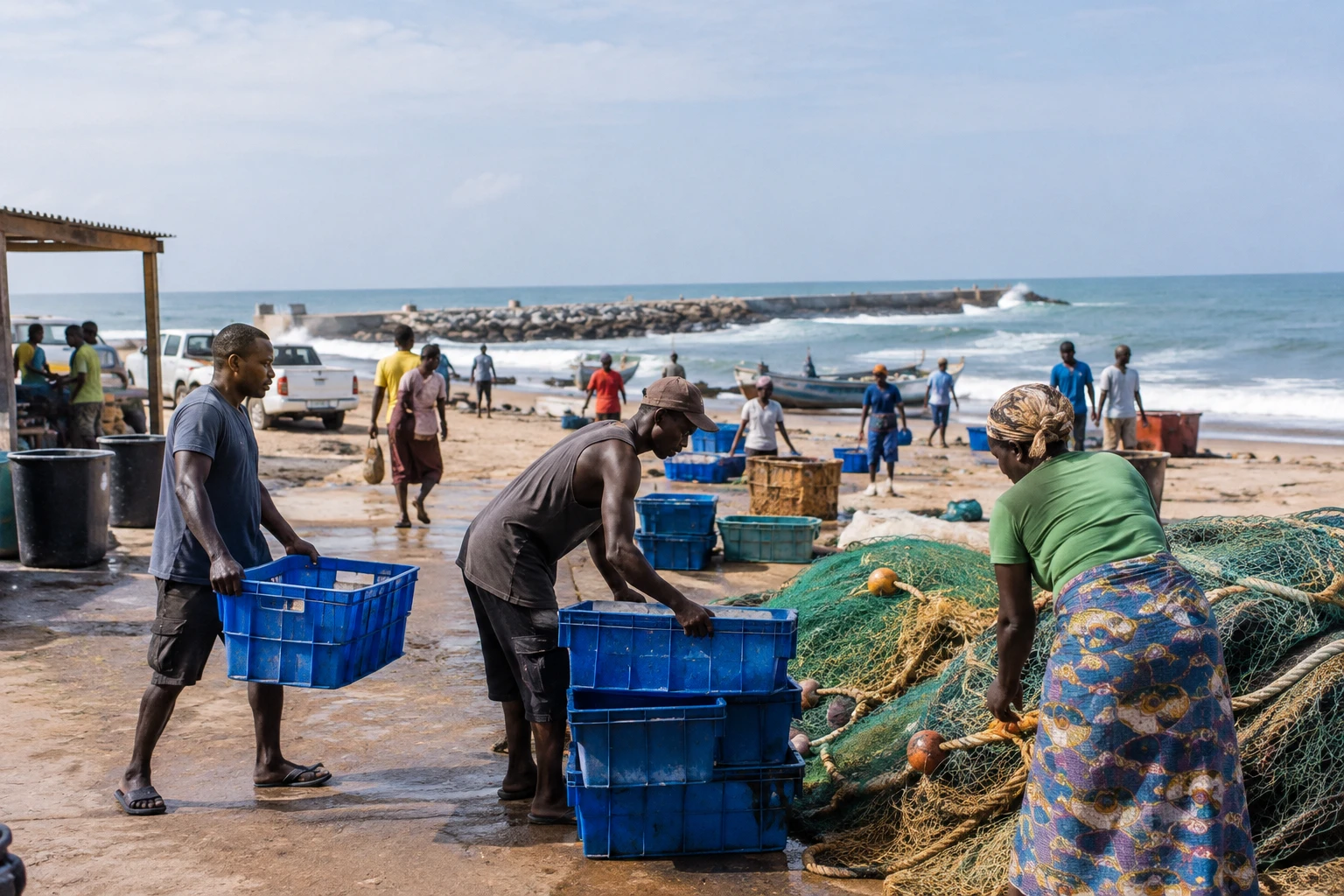
As the sea advances, the response is measured in more than metres of protected beach. In Ghana, coastal communities are also waiting to see whether the planned structures will safeguard their homes, livelihoods and the ecosystems on which they depend.
President John Dramani Mahama announced 685 million cedis in funding to launch coastal interventions under the WACA programme in Anloga on 7 November 2026. A separate announcement concerns Blekusu: 250 million cedis is planned in the 2027 budget to continue and complete the second phase of the local project. These are separate funding allocations, not a single sum already spent in full.
A strategic coastline under multiple pressures
Ghana has about 560 kilometres of Atlantic coastline. In several areas, erosion and flooding threaten homes, roads, public facilities and economic activity. In 2024, the International Monetary Fund estimated that the shoreline was retreating by between 1.5 and 4 metres a year, depending on the area. This national figure masks different local realities: the most exposed areas are not all losing land at the same rate.
The Volta Region, in the east of the country, is among the areas where the effects of waves and tides are particularly visible. In Fuveme and nearby communities, residents have suffered damage to homes and infrastructure. Fishing communities are also affected: erosion can reduce landing areas, undermine equipment and disrupt incomes already dependent on the seasons and the state of marine resources.
The coastline is not an economic periphery. It is home to ports, transport routes, industrial facilities and densely populated neighbourhoods. Pressure on land, waste discharge and inadequate sanitation services in some areas compound climate risks. The IMF’s assessment highlights these constraints, while research on Ghana’s coast also points out that shoreline change depends on currents, sediment supply and human interventions.
The issue extends beyond national borders. The WACA programme — the West Africa Coastal Areas Resilience Initiative — coordinates action in several countries in the region, which face interconnected coastal risks. For Ghana, the challenge is therefore both local and regional: to protect communities without shifting the problem to neighbouring stretches of coastline.
Structures, alongside ecosystem restoration
At Anloga, during the Hogbetsotso festival, Mahama announced 685 million cedis in funding to launch works under WACA. The president cited breakwaters, groynes and shoreline reinforcement structures. The plan also includes beach nourishment, stabilising dunes with vegetation, and restoring wetlands, lagoons and watersheds.
This combination matters. Structures can absorb wave energy and limit erosion in targeted areas. Dunes, wetlands and lagoons also help protect the coast and support ecosystems that benefit fisheries and biodiversity. But the design and maintenance of infrastructure matter as much as its construction: a poorly adapted structure can alter sediment movements and worsen erosion elsewhere.
The programme also includes measures to support livelihoods, particularly for women, young people and people with disabilities in the areas concerned. This component will need to translate into practical schemes. Fishers, traders and fish-processing workers do not face the same constraints; a one-size-fits-all form of assistance could therefore leave some coastal activities unsupported.
In Blekusu, in the Ketu South municipality, the second phase of the protection project is to continue with 250 million cedis allocated in the 2027 budget. According to information published by the Ghanaian authorities, the project includes coastal structures and dune restoration. The announcement responds to calls for continuity from traditional leaders and residents of the region.
From funding pledges to results on the ground
The announcements set a direction, but are not enough to measure the effectiveness of the response. The next steps are to publish timetables, award contracts, begin work in practice and ensure transparency over spending. In Blekusu, the funding announced for 2027 will also need to be coordinated with the project already under way, to avoid interruptions and clarify completion deadlines.
Local consultation will be crucial. Communities must be able to understand where the structures will be built, which areas will be affected and how any impacts on fishing or access will be taken into account. The authorities will also need to monitor areas on either side of the construction sites. Protecting one village cannot be considered a success if it increases the vulnerability of a neighbouring community.
Ghana has an institutional framework for this work, including the Ghana Hydrological Authority, which is responsible, among other things, for coastal engineering and managing water-related risks. Its monitoring of structures and shoreline change will be essential. Field data will make it possible to compare results with objectives and adjust interventions over time.
A regional challenge of resilience and responsibility
For West African countries, coastal erosion affects economies, habitats and heritage that extend along a shared maritime space. WACA offers a framework for co-operation, but the benefits will depend on co-ordination between states, local authorities, communities and technical partners. The choices made in Ghana can therefore inform regional debates on the respective roles of heavy infrastructure and ecosystem-based solutions.
The next test will be financial and operational: turning the announced sums into monitored construction projects, and then into lasting protection, without sacrificing local livelihoods or shifting the risk. For residents along the Volta and other coastal communities, success will be judged less by the amounts announced than by the stability of homes, incomes and landscapes in the years ahead.