Algeria
 Egypt
 Libya
 Morocco
 Sudan
 Tunisia
 Benin
 Burkina Faso
 Cabo Verde
 Côte d'Ivoire
 Guinea
 Guinea-Bissau
 Liberia
 Mali
 Mauritania
 Niger
 Nigeria
 Senegal
 Sierra Leone
 The Gambia
 Togo
 Cameroon
 Central African Republic
 Chad
 DR Congo
 Equatorial Guinea
 Gabon
 Republic of the Congo
 São Tomé and Príncipe
 Burundi
 Comoros
 Djibouti
 Eritrea
 Ethiopia
 Kenya
 Madagascar
 Malawi
 Mauritius
 Mozambique
 Rwanda
 Seychelles
 Somalia
 South Sudan
 Tanzania
 Uganda
 Angola
 Botswana
 Eswatini
 Lesotho
 Namibia
 South Africa
 Zambia
 Zimbabwe
A route that means far more than a journey
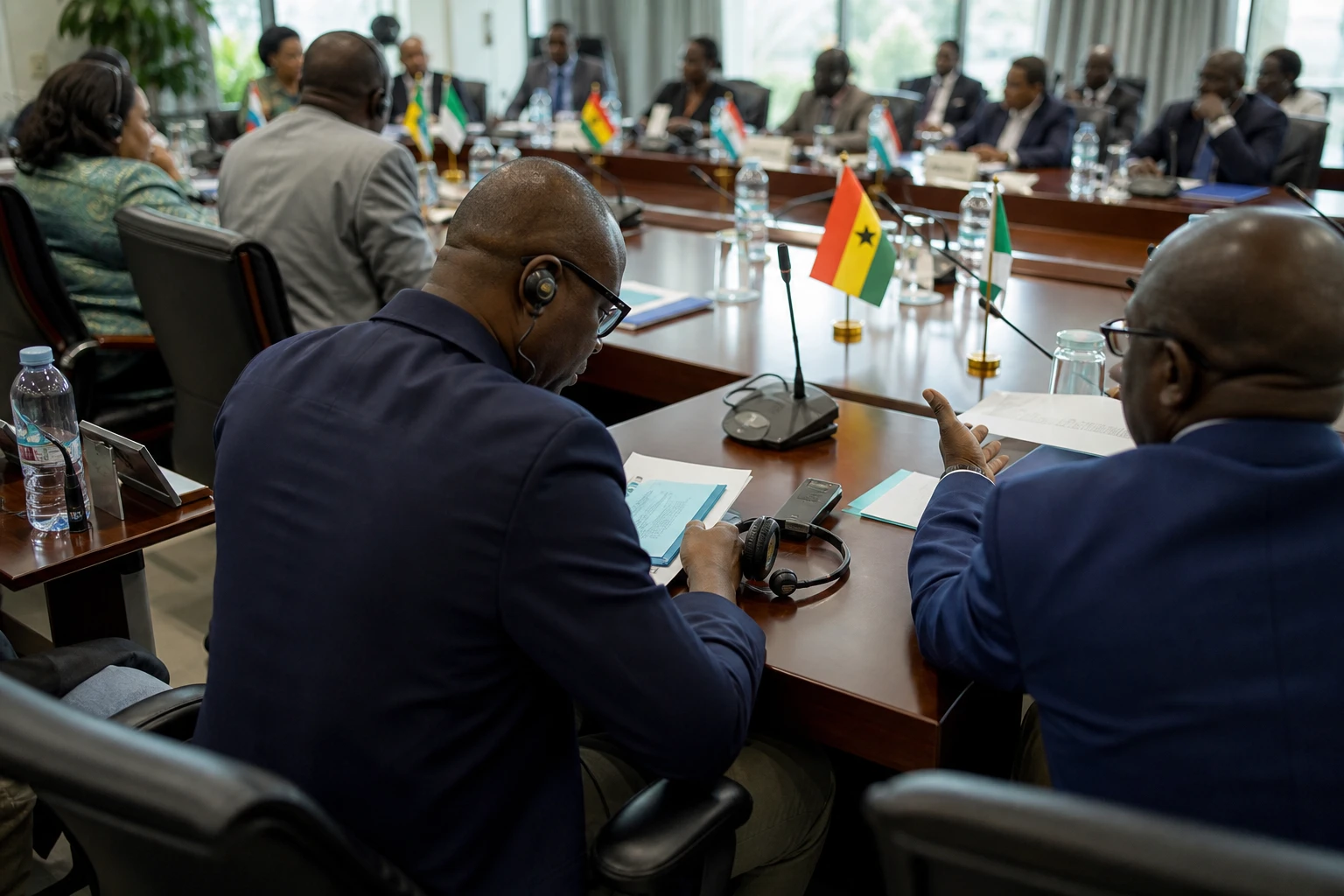
The road between Accra and Kumasi does more than connect two major cities. It carries part of Ghana’s economic lifeblood. When this corridor becomes congested, goods, workers, students and producers all pay the price in lost time. That is why the motorway project announced for this route is attracting so much attention in Accra and Kumasi, at the heart of Asante.
The project forms part of a broader strategy: the public « Big Push » programme, which the authorities have presented as a drive to catch up on major structural routes. The principle is simple: major routes first, local connections afterwards. In a country where the road network carries most domestic travel, this is no neutral choice. It affects the competitiveness of the formal sector, as well as the daily workings of the informal economy, which depends on quick access to markets, bus stations and dry ports.
The Ghana Highway Authority already classifies the Accra-Kumasi route as a main national road, under reference N6, with a length of 250 km in its reference network. The route therefore crosses a strategic area between the capital, the Ashanti Region and several production and trading zones.
What the authorities have announced
On 14 September 2026, Ghanaian President John Dramani Mahama announced that construction work on the Accra-Kumasi motorway was due to begin before Christmas 2026. The announcement was made at the handover of the project site, after the right of way had been cleared along around 175.6 to 198.7 km, according to sources published that day. The discrepancy reflects the precise scope adopted for the main road and its connecting routes, but both versions confirm the scale of the project.
The funding put forward by the executive stands at $2 billion. The funds are said to have been deposited in a dedicated account at the Bank of Ghana, with a pledge to pay contractors’ certificates as they are issued. The government also says it has not taken out a new loan to build up this sum. Another detail was provided: the finance minister said that all the resources required would be available by 31 December 2026.
Technically, the project has been described as a six-lane motorway, with two toll plazas, eight interchanges linking the towns and settlements along the route, four rest areas, breakdown trucks and surveillance cameras. Other features have also been announced: a design speed of 120 km/h, an intelligent traffic management system, and space set aside for a future railway line between Accra and Kumasi.
The timetable is nevertheless tight. Before construction can begin, the state must finalise the selection of the main contractor and clarify the contractual arrangements. The project’s overall cost is put at around $4 billion in information released to the public. In other words, the sum already secured would cover a substantial share, but not the entire project.
Why this route changes the national equation
For road users, the stakes are immediate. Today, the journey between Accra and Kumasi can take several hours, depending on traffic, roadworks and incidents. The authorities promise to cut the journey to around two hours. If that target is met, the time saved will be considerable for transport operators, agricultural producers, traders on the central corridor and families travelling between the two urban centres.
For Ghana’s economy, the benefits are broader still. Kumasi is a major commercial centre, while Accra concentrates political, financial and logistical functions. Goods from production areas in the country’s centre and north move between the two. A smoother road reduces transport costs, limits vehicle wear and tear and can make market supplies more predictable. In a country where rising logistics costs are quickly passed on to prices, the issue has a direct bearing on purchasing power.
Road safety is also part of the equation. The Accra-Kumasi route is known for its heavy traffic and accidents, like many major West African corridors. The announced facilities, including electronic tolls, cameras and rest areas, show that the project is aimed not only at speed, but also at managing traffic flows and reducing risky behaviour. That is, of course, provided maintenance continues after the road opens.
Finally, the institutional dimension deserves attention. The Ghanaian state has already deployed the military to clear the route, indicating highly centralised management. The armed forces’ engineering unit spent 24 weeks on clearing vegetation and preparing the right of way. This approach speeds up preparations, but also underlines that major road projects require close coordination between ministries, land authorities, local government and communities along the route. Traditional leaders, farmers and landowners affected by the corridor have agreed to give up land and crops. This is a real social cost, often barely visible in official announcements.
Significance beyond Ghana
The Accra-Kumasi motorway is not an isolated project. It fits into the logic of West African corridors linking ports, capitals and landlocked countries. African Development Bank documents note that the Accra-Kumasi route forms part of a broader network extending north through Ghana and, beyond that, towards Burkina Faso. In regional terms, it is more than a national road: it is a transit link.
This is also where the project connects with ECOWAS. Across the sub-region, efficient corridors remain essential to intra-community trade, the movement of goods and shorter delays at borders. Modernising a central route in Ghana could therefore boost trade with neighbouring countries, especially if customs interconnection and other infrastructure are developed as well. The country is also banking on the AfCFTA, the African Continental Free Trade Area, to turn its geographical position into a logistical advantage.
The next steps hinge on three specific milestones: selecting the contractor, completing the full financing package and actually launching construction before the end of 2026. If these steps proceed without obstruction, the motorway could become one of the most emblematic projects of Ghana’s new phase of public investment. If they run into delays, it will join the long list of road promises whose effects the region has already waited too long to see. For now, the challenge is clear: to transform a congested artery into infrastructure that underpins economic sovereignty.