Algeria
 Egypt
 Libya
 Morocco
 Sudan
 Tunisia
 Benin
 Burkina Faso
 Cabo Verde
 Côte d'Ivoire
 Ghana
 Guinea
 Guinea-Bissau
 Liberia
 Mali
 Mauritania
 Niger
 Nigeria
 Senegal
 Sierra Leone
 The Gambia
 Togo
 Cameroon
 Chad
 DR Congo
 Equatorial Guinea
 Gabon
 Republic of the Congo
 São Tomé and Príncipe
 Burundi
 Comoros
 Djibouti
 Eritrea
 Ethiopia
 Kenya
 Madagascar
 Malawi
 Mauritius
 Mozambique
 Rwanda
 Seychelles
 Somalia
 South Sudan
 Tanzania
 Uganda
 Angola
 Botswana
 Eswatini
 Lesotho
 Namibia
 South Africa
 Zambia
 Zimbabwe
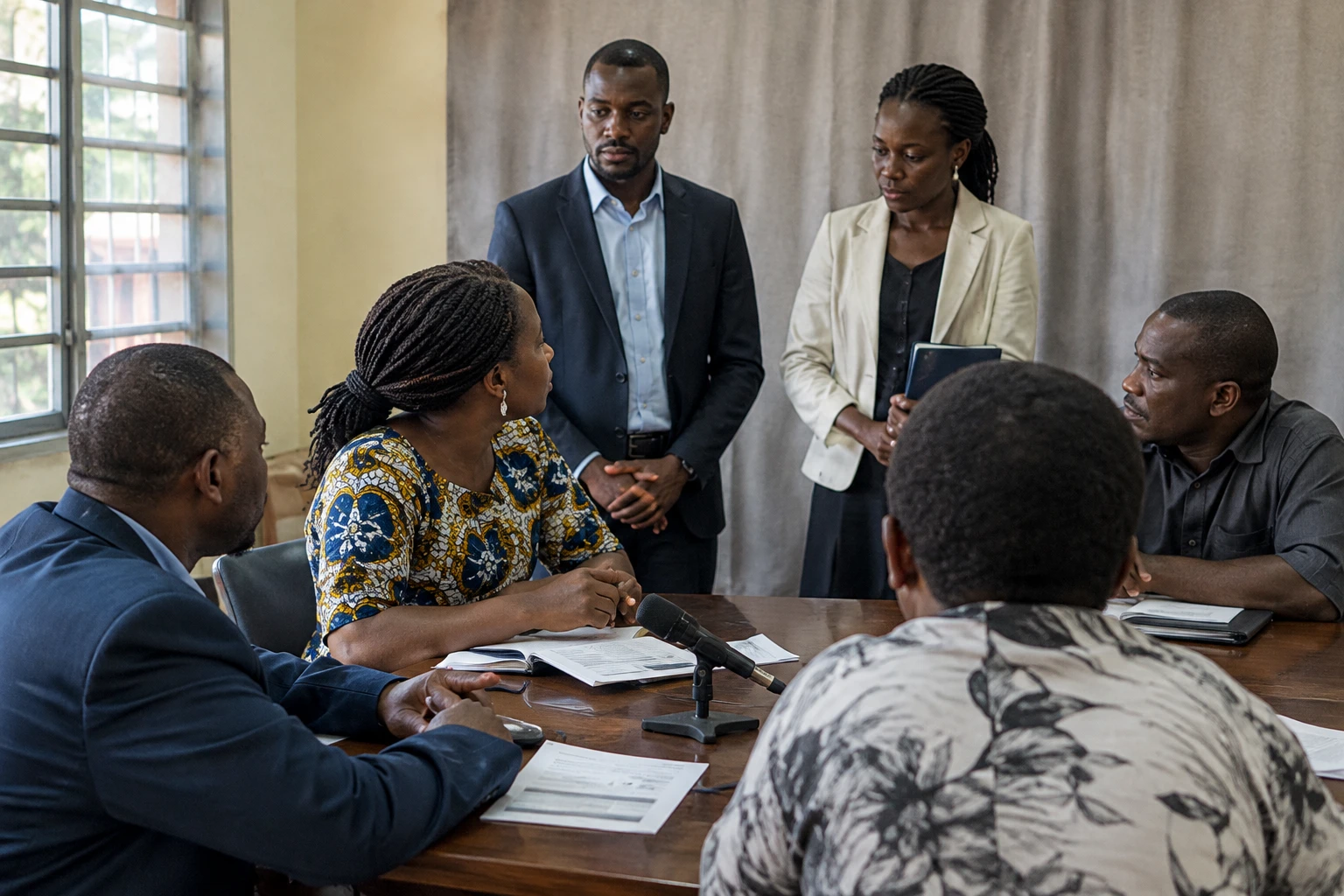
In Bangui, fuel prices have moved beyond the forecourt to become a test of the space allowed for public protest. After a partial mobilisation against the increase, civil society leaders were detained as they prepared to speak to the press.
A movement that goes beyond the price at the pump
On 1 October 2026, the Central African government raised the prices of petroleum products. For private consumers, petrol rose from 1,050 to 1,150 CFA francs per litre and diesel from 1,250 to 1,400 CFA francs, according to figures reported by the Central African press. The announced prices and civil society’s demands illustrate the scale of the disagreement.
The Central African Republic depends on external supply routes to bring in hydrocarbons. Transport constraints can therefore affect prices, but they also have an impact on daily journeys and the cost of delivering goods. In a country where many activities rely on road transport and small businesses, a rise at the pump does not affect motorists alone.
The Central African Republic is a member of CEMAC, the Economic and Monetary Community of Central Africa, which brings six states together in an economic and monetary union. Regional membership does not eliminate national supply challenges or their effects on purchasing power. The official overview of CEMAC’s six members places the country in this regional bloc.
In Bangui, the organisations I Gwé and the Observatory for Democratic Governance in the Central African Republic called for a “city lockdown” on 12 October. Radio Ndeke Luka described a capital city that slowed down in the morning, while some businesses reopened later. The mobilisation was therefore visible, but uneven across locations and activities. The report on how the day unfolded in Bangui describes this mixed participation.
Detentions ahead of a press conference
On Thursday 15 October, police detained leaders linked to the call in Bangui as they prepared a press conference on the movement and its next steps. Central African radio station Radio Ndeke Luka reported that arrests took place at the Saint-Jean-XXIII centre and that those concerned were taken to different places of detention, including the premises of the National Security Company and the central police station.
Accounts differ on the number of people arrested. Radio Ndeke Luka and Corbeau News Centrafrique identify four, while other reports mention five. In the absence of consistent independent confirmation of a fifth case, the total cannot be established with certainty. Radio Ndeke Luka’s report and the report by Corbeau News Centrafrique each describe four detentions.
The arrests came after organisations described as close to the government filed a complaint against the organisers of the day of protest, alleging a breach of public order. Radio Ndeke Luka reported this sequence of events. At this stage, the specific grounds for the detentions and the complaint’s legal outcome have not been publicly established by the information that has been cross-checked.
Civil society figures condemned the arrests and called for the release of those detained. The Republican Bloc for the Defence of the Constitution also condemned the operation. A special adviser to the president, Fidèle Ngouandjika, himself criticised the imprisonment of leaders who, in his words, are voicing public concerns about fuel. The government and the National Security Company had not provided an explanation at the time of the reports consulted.
The social cost and the question of civil liberties
The increase affects households in different ways. Taxi and motorcycle-taxi drivers have to contend directly with fuel costs. Vendors and small businesses, meanwhile, may face higher delivery charges or fewer customers if travel slows. For salaried workers and civil servants, the impact is also felt in the cost of commuting. These effects are plausible in light of the uses described, but their scale cannot be quantified from the information available.
The 12 October day of protest also showed that people do not all have the same capacity to stop working. A shopkeeper who closes loses a day’s takings; a driver who stays off the road gives up their income. Others may have chosen to work despite the call. Partial participation therefore means neither general support nor an absence of discontent: it also reflects immediate economic constraints.
By detaining organisers as they sought to hold a press conference, the authorities have put freedom of assembly and expression at the heart of the case. Criticism by opponents reflects their political assessment; it does not replace the establishment of facts through due process. The practical question is whether those detained can access lawyers, learn the grounds for their detention and legally challenge the measures taken.
A test for public dialogue in Central Africa
This episode brings together two issues that the authorities cannot treat separately for long: the cost of living and the rules governing protest. Higher prices may reflect supply or public finance constraints; their justification and effects would nevertheless benefit from transparent explanation, particularly regarding the structure of prices and any accompanying measures.
For the Central African Republic’s partners in CEMAC, the issue extends beyond the capital. Transport and supply chains link several Central African economies, while national pricing decisions directly affect households and local businesses. In Bangui, the next developments to watch are the legal situation of those detained, any official response and whether a forum for discussion is opened between the authorities, transport operators, traders and civic organisations.