Algeria
 Egypt
 Libya
 Morocco
 Sudan
 Tunisia
 Benin
 Burkina Faso
 Cabo Verde
 Côte d'Ivoire
 Ghana
 Guinea
 Guinea-Bissau
 Liberia
 Mali
 Mauritania
 Niger
 Nigeria
 Senegal
 Sierra Leone
 The Gambia
 Togo
 Cameroon
 Chad
 DR Congo
 Equatorial Guinea
 Gabon
 Republic of the Congo
 São Tomé and Príncipe
 Burundi
 Comoros
 Djibouti
 Eritrea
 Ethiopia
 Kenya
 Madagascar
 Malawi
 Mauritius
 Mozambique
 Rwanda
 Seychelles
 Somalia
 South Sudan
 Tanzania
 Uganda
 Angola
 Botswana
 Eswatini
 Lesotho
 Namibia
 South Africa
 Zambia
 Zimbabwe
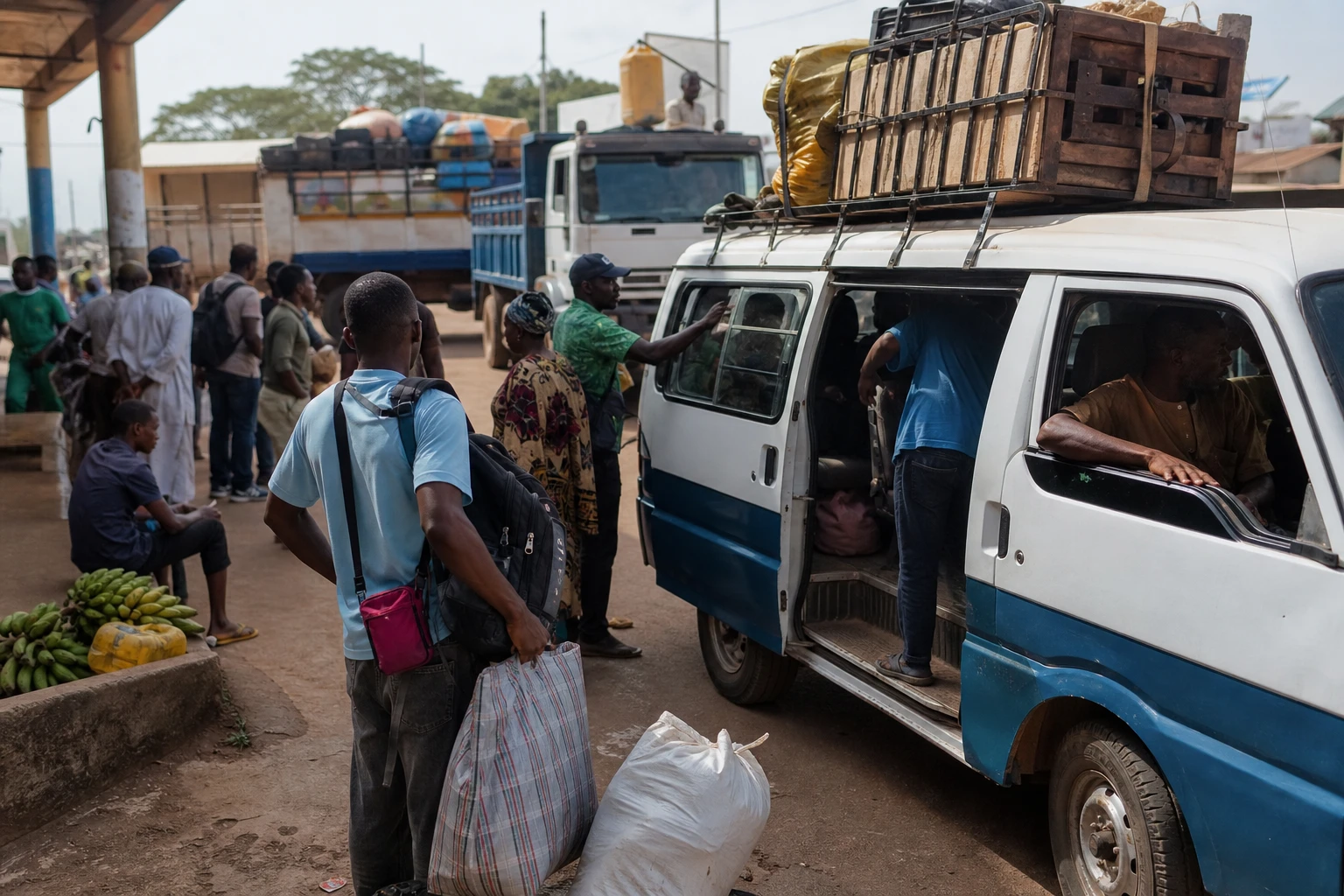
In Bangui, rising fuel prices do not stop at the petrol station. They are already reflected in the cost of journeys, goods and meals. For Central African households, every additional franc per litre adds to the cost of an economy in which transport plays a decisive role.
New prices in force from 1 October
The Central African government announced a further increase in the prices of petroleum products on Thursday, 1 October 2026. The price of a litre of petrol for private consumers is rising from 1,050 to 1,150 CFA francs. Diesel is increasing from 1,250 to 1,400 CFA francs.
Large-scale consumers face higher prices. They must now pay 1,500 CFA francs per litre of petrol and 1,650 CFA francs per litre of diesel. The measure took effect immediately, according to information reported by Radio Ndeke Luka and confirmed by several Central African media outlets.
The decision comes after a period of sharp volatility. In January 2023, the official price of petrol rose from 865 to 1,300 CFA francs, while diesel reached 1,450 CFA francs. A reduction in 2025 brought prices down to 1,050 francs for petrol and 1,250 francs for diesel.
The increase announced in October 2026 therefore does not yet bring prices back to 2023 levels. However, it reverses part of the previous reduction and revives concerns about the cost of living. According to an analysis by Sikafinance, the Central African Republic still has one of the highest pump prices in the Central African Economic and Monetary Community, CEMAC.
Transport bears the first shock
At Bangui’s bus stations, transport operators must choose between raising fares and reducing their margins. Vehicles linking the capital to its outlying districts and nearby towns are directly exposed to the increase in diesel and petrol prices.
The pressure also affects taxi drivers, freight operators and motorcycle taxi drivers. For them, fuel is a daily expense that is difficult to defer. An increase of 100 CFA francs for petrol and 150 francs for diesel can quickly alter the balance of a working day.
Transport operators do not always pass on the full increase. With incomes limited, a sharp rise in fares risks driving passengers away. Professionals are therefore caught between two constraints: keeping their businesses running and remaining affordable to customers.
The situation is even more sensitive for journeys between Bangui and other regions. Distances are long, roads are sometimes difficult and logistics costs are high. In rural areas, where alternatives to road transport are scarce, the bill can rise faster than in the centre of the capital.
Higher prices for goods, reaching the markets
Fuel is used at several stages of the commercial supply chain. It is needed to bring agricultural produce to Bangui, power wholesalers’ vehicles and make deliveries between districts. A rise at the pump can therefore be passed on gradually from transport operators to traders and then to consumers.
Products brought in from elsewhere in the country are particularly exposed. When the cost of a journey rises, sellers must choose between reducing their margins and raising prices. Perishable goods, such as vegetables, fruit and some fresh produce, may face additional pressure when transport delays increase.
The effects are not the same for all households. Employees with a stable income can sometimes absorb the increase temporarily. Informal-sector workers, small traders and families reliant on daily earnings have less room for manoeuvre.
The increase also affects businesses that use generators. In sectors where access to electricity remains unreliable, fuel is essential to the operation of shops, workshops, pharmacies, telecommunications services and small production units. The extra cost can therefore affect both operating expenses and selling prices.
A decision linked to imports and public finances
The Central African Republic does not produce oil and depends on imports to supply its domestic market. Shipments pass mainly through the port of Douala in Cameroon before being transported by road to Bangui.
This arrangement mechanically raises the final price. Transport from the Cameroonian coast, storage costs, logistical difficulties and security risks can all affect the price delivered to the capital. More distant provinces then face additional costs.
The government justifies the new price schedule by citing tensions in the international oil market and the need to support public revenues. The price structure includes the cost of purchasing the product, transport, distribution costs and taxes.
An audit report published by the Central African Ministry of Finance highlights the burden of fuel costs on households and businesses. The document also notes the limitations of the organisation of the downstream oil sector, meaning all activities from importation to sale to consumers.
A national and regional issue
The issue goes beyond the debate over the price displayed at petrol stations. It affects mobility, the supply of markets and small businesses’ ability to maintain operations. It also raises questions about the resilience of a landlocked country to external disruptions.
Within CEMAC, price differences between countries are explained by levels of oil production, subsidy policies, taxation and transport costs. The Central African Republic does not have the same resources as Cameroon, Gabon, the Republic of the Congo, Equatorial Guinea or Chad. It therefore remains more vulnerable to fluctuations in imports.
In the short term, changes in transport fares and food prices will be the main indicators of the measure’s impact. The authorities will also need to monitor supplies to the provinces, where shortages can fuel increases in informal prices.
The debate also concerns the balance between state revenues and protecting purchasing power. An increase may boost tax receipts, but it could also reduce consumption and raise costs for productive sectors. In Bangui and across the regions, the question will be whether this decision remains a one-off measure or ushers in a new period of sustained price rises.