Algeria
 Egypt
 Libya
 Morocco
 Sudan
 Tunisia
 Benin
 Burkina Faso
 Cabo Verde
 Côte d'Ivoire
 Ghana
 Guinea
 Guinea-Bissau
 Liberia
 Mali
 Mauritania
 Niger
 Nigeria
 Senegal
 Sierra Leone
 The Gambia
 Togo
 Cameroon
 Central African Republic
 Chad
 DR Congo
 Equatorial Guinea
 Gabon
 Republic of the Congo
 São Tomé and Príncipe
 Burundi
 Comoros
 Djibouti
 Eritrea
 Ethiopia
 Kenya
 Madagascar
 Malawi
 Mauritius
 Mozambique
 Rwanda
 Seychelles
 Somalia
 South Sudan
 Tanzania
 Uganda
 Angola
 Botswana
 Eswatini
 Lesotho
 Namibia
 South Africa
 Zambia
 Zimbabwe
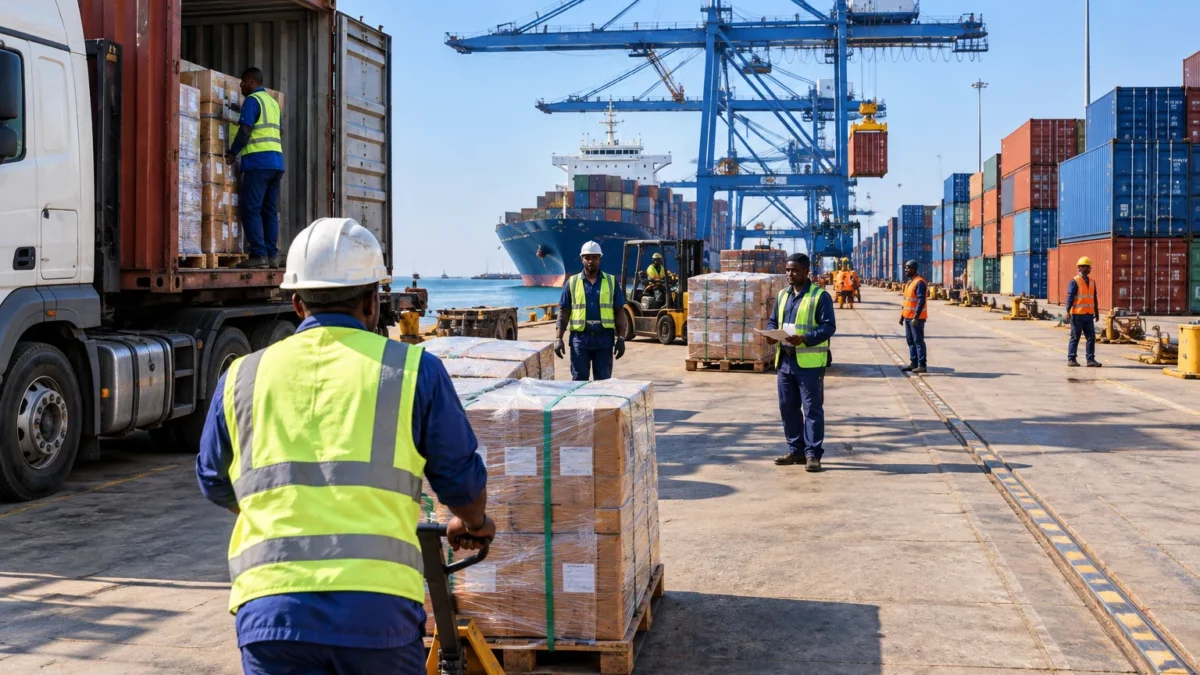
Duty-free access can open a door. On its own, it does not create factories, jobs or reliable roads. That is the challenge of the EU’s Everything But Arms scheme, as the European Union and China both seek to strengthen their trade with African countries.
Preferential access, but different conditions
Launched in 2001, Everything But Arms — or EBA — gives least developed countries duty-free, quota-free access to the European Union market for almost all products. Arms and ammunition are excluded. The scheme is part of the EU’s Generalised Scheme of Preferences, which also provides other forms of market access for developing countries.
In 2026, 33 African countries benefit from EBA, according to data on the EU scheme. Other countries on the continent access the European market through separate trade agreements or other tariff preferences. These frameworks are not interchangeable: their rules, products covered and origin requirements differ. Preferential access therefore does not mean that all African exports enter automatically without tariffs.
The regional context also matters. The African Continental Free Trade Area (AfCFTA) aims to facilitate trade between African countries. But a preference granted by an external partner replaces neither the integration of the continent’s markets nor investment in local processing.
Exports are growing, but benefits are not automatic
Figures published for 2025 put African merchandise exports to the European Union at €182 billion, or about 31% of the continent’s total goods exports. This estimate covers trade, not only sales made under the EBA scheme. The distinction is essential: the figure does not, on its own, measure the impact of the preferential scheme.
Exports include mineral fuels and agricultural products. Manufactured goods also feature in trade: furniture and toys produced in Rwanda and Cape Verde, or textiles from Madagascar. This variety shows that sales to Europe are not limited to raw materials. However, it does not in itself show how much added value is retained in each country or how many jobs are created.
Mozambique is cited among the leading African users of EBA. Available data on the scheme put its exports to the European Union at about €1.72 billion in 2025. Mauritania, Ethiopia and Senegal are also among the scheme’s users. These figures describe trade flows; they do not allow all sales to be attributed to the tariff preference alone.
For businesses, tariff savings can make a product more competitive in the European market. But they must still comply with rules of origin, meet applicable standards and ensure timely delivery. Large exporters are often better equipped to bear these costs than small businesses, co-operatives or producers located far from ports.
Logistics and processing determine who benefits
In landlocked countries, a tariff advantage can lose value if transport to a port is slow or expensive. Even coastal countries depend on efficient roads, railways, ports and customs procedures. Infrastructure and co-ordination at borders therefore have a direct impact on businesses’ access to markets.
The structure of supply chains matters just as much. Exporting a raw product and selling a processed one do not generate the same income or local jobs. For governments, the challenge is to link market access to production capacity, local suppliers and infrastructure. For communities, the benefits also depend on how income is distributed and on working conditions, not just on export growth.
The EU scheme does not remove these obstacles. It can offer trade stability, but that must be weighed against compliance requirements, the concentration of sales in a few products and sometimes limited access to credit. Benefits can therefore vary widely between an established exporting business and a small producer unable to reach export channels.
Competition between partners also hinges on market access
The European Union remains a major destination for African exports, while China has become the continent’s largest trading partner when overall trade is considered. These two figures do not measure the same thing: one concerns export destinations, the other total trade, which also includes imports. They therefore do not, on their own, identify a “number one” partner by every measure.
In June 2025, Beijing announced plans to extend duty-free treatment to all tariff lines for the 53 African countries with which China has diplomatic relations. The announcement opened a new phase in trade competition. It prompts African governments to compare the specific terms: products covered, rules of origin, effective access and the capacity to sell more processed goods.
For Brussels, the central argument is that it offers lasting preferential access. But the reach of this commitment depends on the rules in force and the predictability of the trade framework. An announced preference is not an order, and rising exports do not automatically lead to industrialisation.
At the continental level, the challenge is therefore less about choosing a partner than about strengthening the negotiating power of individual countries and regional groupings. Monitoring should focus on the actual use of preferences, the diversification of exported products and the share of processing carried out locally. This is what will show, beyond tariff announcements, whether trade can support more diverse economies.
For data on EBA and trade, see the overview of the European Generalised Scheme of Preferences in Africa, the EU’s official fact sheet on the Everything But Arms scheme and the EU trade fact sheet on Mozambique. China’s announcement on tariff preferences was reported by the Chinese embassy in the United Kingdom.