Algeria
 Egypt
 Libya
 Morocco
 Sudan
 Tunisia
 Benin
 Burkina Faso
 Cabo Verde
 Côte d'Ivoire
 Ghana
 Guinea
 Guinea-Bissau
 Liberia
 Mali
 Mauritania
 Niger
 Nigeria
 Senegal
 Sierra Leone
 The Gambia
 Togo
 Cameroon
 Central African Republic
 Chad
 DR Congo
 Equatorial Guinea
 Gabon
 Republic of the Congo
 São Tomé and Príncipe
 Burundi
 Comoros
 Djibouti
 Eritrea
 Ethiopia
 Kenya
 Madagascar
 Malawi
 Mauritius
 Mozambique
 Rwanda
 Seychelles
 Somalia
 South Sudan
 Tanzania
 Uganda
 Angola
 Botswana
 Eswatini
 Lesotho
 Namibia
 South Africa
 Zambia
 Zimbabwe
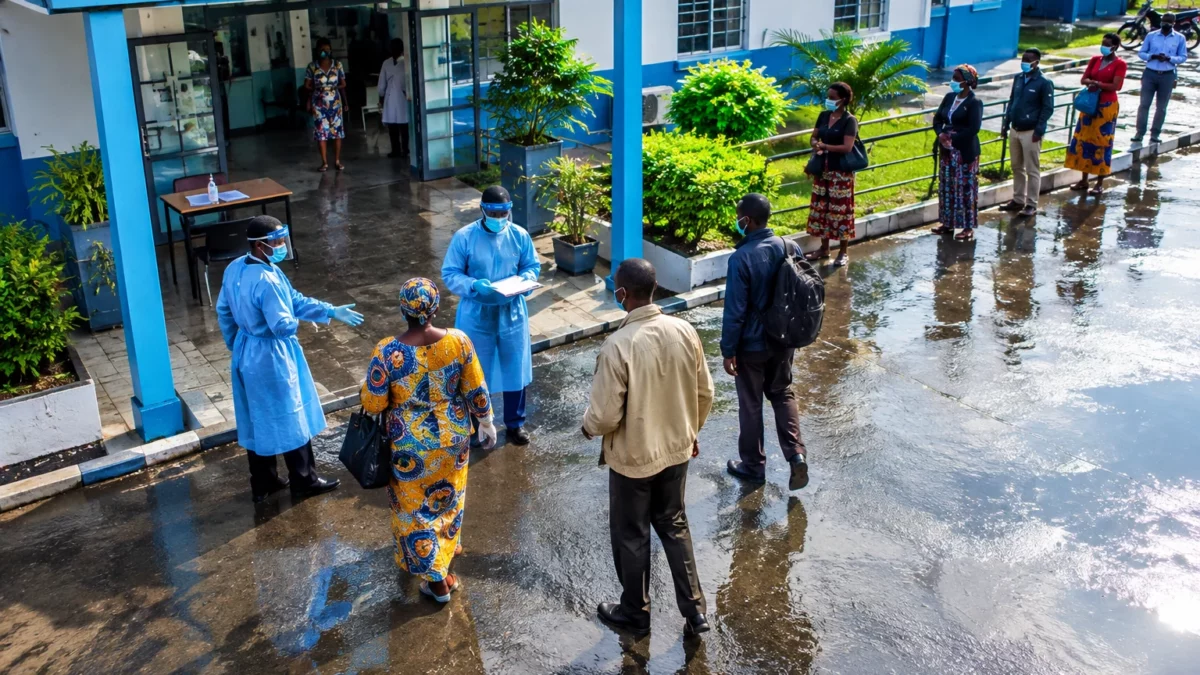
Vaccine production, mosquito net distribution and access to healthcare for migrants: this week’s health announcements are a reminder that public health security is shaped as much in laboratories as in local services. Several initiatives are moving forward, but their reach will depend on funding, implementation and their ability to reach the populations concerned.
Local production, without mistaking ambition for autonomy
In Zambia, the ZAMVAX project reached a milestone on 18 November with the start of construction of a facility in the Lusaka South Multi-Facility Economic Zone. The first phase represents an estimated investment of $24.1 million and aims for an annual capacity of 20 million doses of oral cholera vaccine. The Zambian government and national newspaper Zambia Daily Mail also reported that work had begun.
One point is essential: this first stage is described as a “fill-and-finish” facility, meaning the filling and packaging of a vaccine that has already been manufactured. It does not yet mean that all its components will be produced in Zambia. The origin of the antigens, the commissioning timetable and regulatory approvals remain to be clarified. The project is being developed by state-owned Industrial Development Corporation and its Chinese partner Jijia; the agreement provides for phased development.
This distinction does not diminish what is at stake. When an outbreak occurs, regional filling capacity can help reduce delays and dependence on global supply chains. But the promise will depend on effective skills transfer, access to raw materials and the viability of orders. The facility is being developed against a backdrop in which Zambia itself declared a cholera outbreak on 30 September 2026, after cases had been reported since July, according to a UNICEF update.
In Senegal, the Institut Pasteur de Dakar is also setting out an ambition to strengthen capacity by 2030 in vaccine production, research, diagnostics and training. Resuming production of the yellow fever vaccine is among the plans announced. These projects raise the same question across the continent: how can national initiatives become a reliable, regulated and accessible supply across countries?
Health systems under pressure, uneven responses
In the Democratic Republic of the Congo (DRC), the Ebola outbreak caused by the Bundibugyo virus remains a major emergency. As of 17 November, the World Health Organization reported 11,613 confirmed cases and 5,678 deaths, a crude case fatality rate of 48.9%. Transmission remained active in several health zones in the country. These figures, attributed to the WHO, differ slightly from totals published on other dates; they should therefore be read with their reporting date in mind, rather than as a final count.
The outbreak also highlights the limits of available solutions: vaccines used against other Ebola strains do not automatically protect against Bundibugyo. Vaccine and treatment trials are under way in the DRC. The WHO and the Africa Centres for Disease Control and Prevention (Africa CDC), the African Union agency responsible for health surveillance, are monitoring a crisis whose response depends on diagnosis, care, local trust and continuity of services. Movement restrictions or fear are no substitute for these resources, and may make people less likely to seek care.
In South Africa, humanitarian organisations say migrants are avoiding healthcare facilities following protests and intimidation targeting immigrants. According to Médecins Sans Frontières, some patients have stopped treatment, including for HIV or tuberculosis; pregnant women and children are also among those affected. These findings have been reported by the organisation and the South African press, rather than in a consolidated national tally. Interrupting treatment can harm patients and, for some communicable diseases, complicate prevention. Access to healthcare is thus a public health issue for communities as a whole.
By contrast, Eritrea received WHO validation on 16 November for eliminating trachoma as a public health problem. It becomes the 11th country in the WHO African Region to reach this threshold. The achievement follows more than two decades of interventions: surgery, antibiotics, facial cleanliness, environmental improvement and surveillance. “Elimination as a public health problem” does not mean the disease has disappeared entirely. Monitoring must continue to identify any resurgence.
Prevention tailored to local needs
In Kenya, a campaign launched on 19 November plans to distribute nearly 10.8 million insecticide-treated mosquito nets in 18 counties and 99 sub-counties affected by malaria. Some of the nets contain two active ingredients, in response to resistance among some mosquitoes to commonly used insecticides. According to the WHO, Kenya’s 2025-2026 Demographic and Health Survey found that 41% of households had at least one insecticide-treated net, compared with 54% in 2022. Distribution alone will therefore not be enough: actual use, replacement of nets and access to care remain crucial, particularly for children and pregnant women.
The same country presented a national report on antimicrobial resistance, a communications strategy and surveillance guidelines for abattoirs and livestock farms in Nairobi on 18 November. The “One Health” approach links human, animal and environmental health: the use of antibiotics in livestock, like their prescription in clinics, can contribute to resistance. The WHO estimates that about one in five confirmed bacterial infections in its African Region is resistant to antibiotics. The challenge now is to turn recommendations into more carefully managed prescribing and data that are tracked over time.
In Luanda, the African Union’s sixth specialised session on health, nutrition, population and medicines control opened on 16 November. The organisation is promoting coordination across these areas, as outbreaks, nutritional needs and funding constraints often intersect. For member states, the challenge goes beyond declarations: it is about connecting surveillance, regulation, prevention and care, including in regions far from capital cities.
The next step: delivering on commitments
These issues point to a common priority, but not a uniform response. Zambia is investing in initial industrial capacity; Senegal in an institute already involved in research and production; Kenya in targeted prevention and surveillance; and Eritrea in the continuation of community-based interventions. In the DRC, the urgent task is to contain a deadly outbreak, while in South Africa access to care also depends on the effective protection of migrants.
Across Africa, health sovereignty will not be measured by the number of announced factories. It will depend on operational capacity, regulation, sustained funding and cooperation between countries. For ZAMVAX, the next steps to watch are construction, approvals and confirmation of supply arrangements. For the other initiatives, the test will be just as concrete: continuous services and products available to populations, without disruption linked to where they live or their status.