Algeria
 Egypt
 Libya
 Sudan
 Tunisia
 Benin
 Burkina Faso
 Cabo Verde
 Côte d'Ivoire
 Ghana
 Guinea
 Guinea-Bissau
 Liberia
 Mali
 Mauritania
 Niger
 Nigeria
 Senegal
 Sierra Leone
 The Gambia
 Togo
 Cameroon
 Central African Republic
 Chad
 DR Congo
 Equatorial Guinea
 Gabon
 Republic of the Congo
 São Tomé and Príncipe
 Burundi
 Comoros
 Djibouti
 Eritrea
 Ethiopia
 Kenya
 Madagascar
 Malawi
 Mauritius
 Mozambique
 Rwanda
 Seychelles
 Somalia
 South Sudan
 Tanzania
 Uganda
 Angola
 Botswana
 Eswatini
 Lesotho
 Namibia
 South Africa
 Zambia
 Zimbabwe
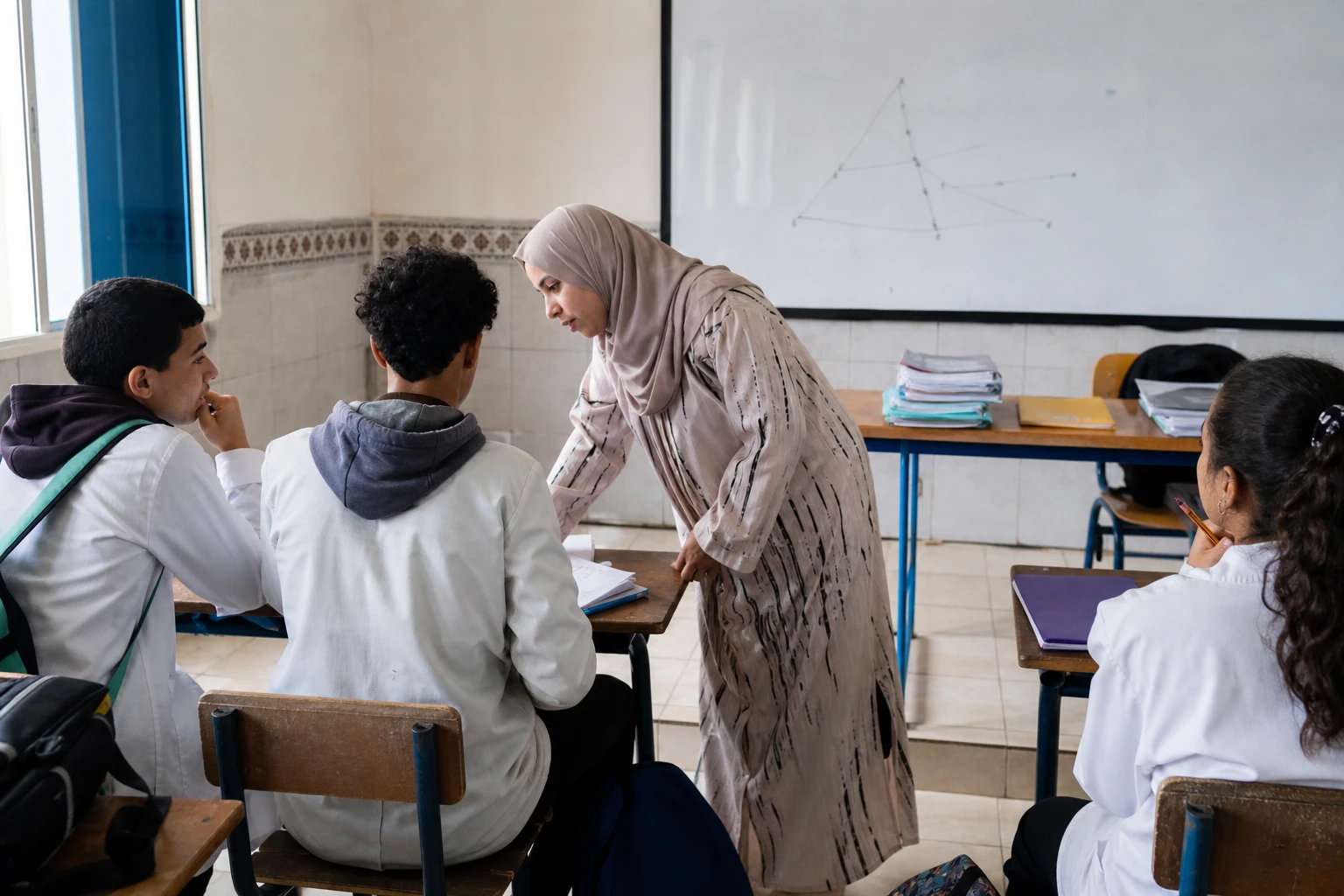
In Ceuta, the issue is not just about borders. It also concerns the care of hundreds of teenagers who arrived alone and in an emergency, and how Spain and Morocco can prevent a period of tension from becoming a human impasse.
In the Spanish enclave, migratory pressure is measured not only in figures. It is also reflected in overcrowded reception centres, pending cases and decisions that must be taken quickly without sacrificing safeguards. The case of unaccompanied minors who arrived irregularly in Ceuta in late July 2026 is now at the heart of the matter.
Brussels has opened a legal window, but not given carte blanche. The European Commission says a return to Morocco could be considered for some minors, provided each case is assessed individually and the child’s best interests are respected, with no collective or automatic returns. This position is in line with the European framework on returns, which protects vulnerable people and prohibits collective expulsions, as set out in Article 19 of the Charter of Fundamental Rights and the European Return Directive.
A border issue that extends beyond Ceuta
Ceuta is a Spanish autonomous city on the northern shore of the Strait of Gibraltar, facing Morocco. It is not merely an outpost of the European Union. It is a point of constant contact between European migration policies, the social realities of northern Morocco and bilateral cooperation between Rabat and Madrid.
On 30 July 2026, a large-scale arrival put the authorities under pressure. Spain’s Interior Ministry said it had identified 2,168 minors since the incident, while clarifying that this figure refers to minors identified by the national police and does not mean they are all still in Ceuta. The ministry also highlighted cooperation with Morocco in managing the situation.
At European level, the Commission voiced its support for Spain after the extraordinary meeting of interior ministers. Commissioner Magnus Brunner said at a press conference on 4 August that the Commission supported Madrid and wanted to work closely with Rabat on swift returns, in compliance with the applicable rules.
What the law says, and what it does not allow
The key question is not whether an unaccompanied minor can in principle be returned. EU law requires a different approach: each case must be assessed individually. Legal adulthood cannot be presumed, nor can vulnerability. Before making any decision, the authorities must verify the person’s age, family situation, reception arrangements on return and the possibility of appointing a legal representative or providing appropriate care.
This approach is not new. The European framework on returns already requires the child’s best interests to be a primary consideration. At the same time, the Charter of Fundamental Rights prohibits collective expulsions. In other words, a return is possible only if it is individualised, reasoned and subject to safeguards.
Morocco and Spain also have a longstanding bilateral framework. The agreement signed in Rabat on 6 March 2007 concerns preventing the irregular migration of unaccompanied minors, their protection and their coordinated return. It explicitly provides for assisted return to the family or guardianship institution in the country of origin, as well as social reintegration.
However, this framework has already met its limits in court. In 2021, Spain’s Supreme Court upheld a ruling that returns of minors from Ceuta to Morocco, carried out in August of that year, had not complied with the procedure set out in Spain’s Aliens Act. This case law remains important: it is a reminder that bilateral cooperation does not remove the need for judicial oversight or individual safeguards.
Rabat, Madrid and families face different stakes
For the Moroccan authorities, the stakes are twofold. On the one hand, they must prevent a temporary border movement from turning into a lasting political crisis. On the other, they must uphold the principle of child protection. Rabat has already reaffirmed its commitment to accepting the return of duly identified Moroccan minors, while presenting the issue as one of protection and institutional coordination. The Kingdom has also recently strengthened its national child protection system, creating a National Child Protection Agency in 2026.
For Spain, the issue is also administrative and territorial. Ceuta has limited capacity. When arrivals increase, reception, identification, accommodation and temporary schooling for minors become more difficult. The Spanish government must then balance emergency management with compliance with the law. The pressure is felt by social services, police, NGOs and education teams in the autonomous city.
For the minors themselves, the decision is not just a line in a file. It determines their accommodation, guardianship, family reunification or supervised return. In cases of this kind, the difference between a proper procedure and a rushed one can be decisive for years of a person’s life.
A local case, but a regional signal
At regional level, Ceuta remains a sensitive indicator of relations between the European Union and Morocco. Every border incident reignites debate over security cooperation, child protection and shared responsibility for migration routes in the western Mediterranean. In North Africa, the issue also touches on family mobility, smuggling networks and social policies on both sides of the strait.
The case is likely to continue to play out on two fronts. First, within the Spanish and Moroccan administrations, where the identification of minors and verification of their family circumstances will be decisive. Then, before the courts, if returns are challenged. The events of 2021 showed that in Ceuta, the border is never merely geographical. It is also legal, social and political. And that is precisely where the ability of both shores to address migration while keeping childhood, the law and cooperation in view will be tested.