
 Algeria
 Egypt
 Libya
 Sudan
 Tunisia
 Benin
 Burkina Faso
 Cabo Verde
 Côte d'Ivoire
 Ghana
 Guinea
 Guinea-Bissau
 Liberia
 Mali
 Mauritania
 Niger
 Nigeria
 Senegal
 Sierra Leone
 The Gambia
 Togo
 Cameroon
 Central African Republic
 Chad
 DR Congo
 Equatorial Guinea
 Gabon
 Republic of the Congo
 São Tomé and Príncipe
 Burundi
 Comoros
 Djibouti
 Eritrea
 Ethiopia
 Kenya
 Madagascar
 Malawi
 Mauritius
 Mozambique
 Rwanda
 Seychelles
 Somalia
 South Sudan
 Tanzania
 Uganda
 Angola
 Botswana
 Eswatini
 Lesotho
 Namibia
 South Africa
 Zambia
 Zimbabwe
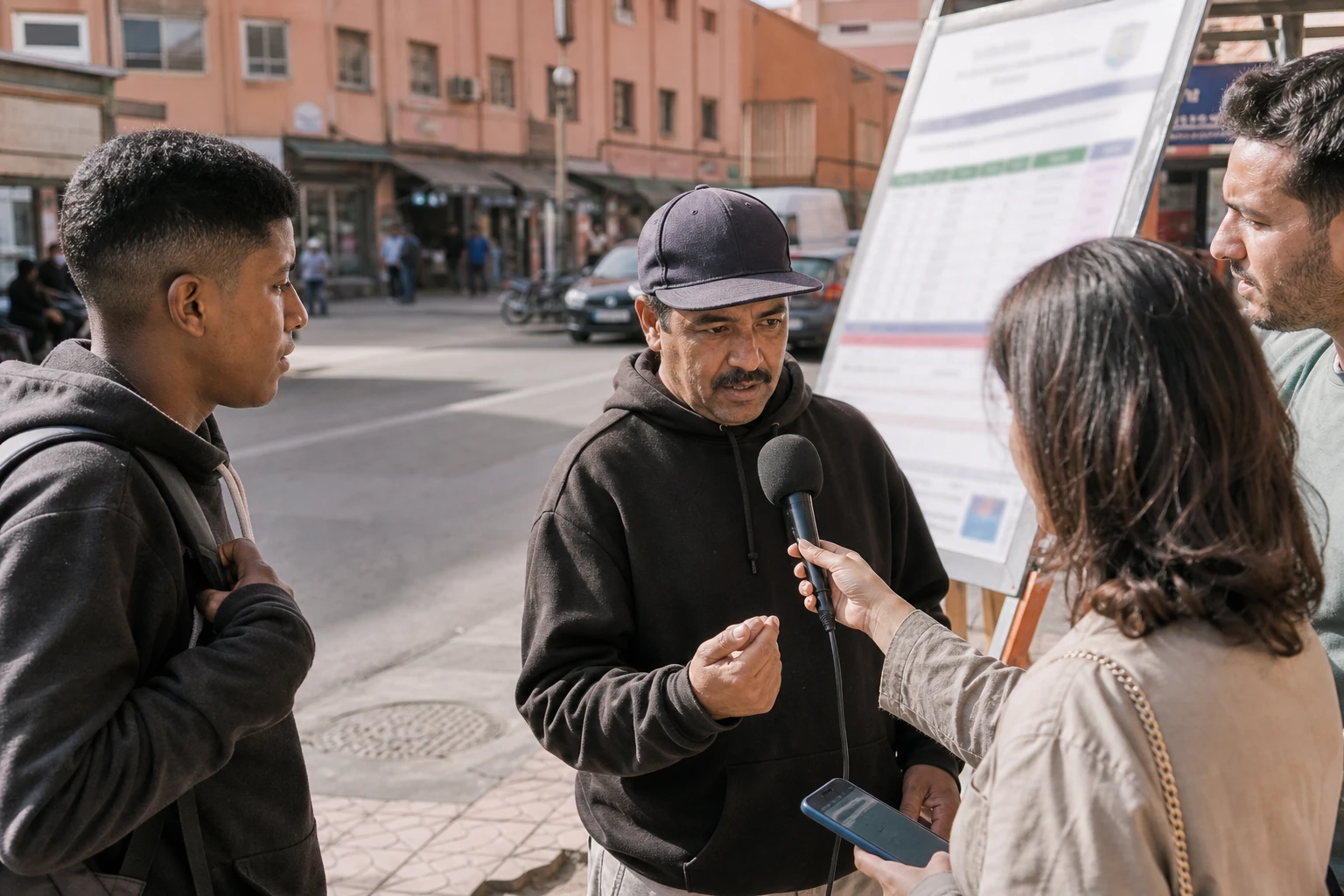
In Marrakech, the election campaign is also being fought around one face: Fatima Ezzahra El Mansouri, who is a minister, mayor and senior figure in the Party of Authenticity and Modernity (PAM). On 23 September 2026, she is once again seeking the votes of constituents in the Medina-Sidi Youssef Ben Ali constituency. But her local contest extends beyond the limits of the ochre city.
The vote will renew the House of Representatives, the lower house of Morocco’s Parliament. It comes after five years of a government led by the National Rally of Independents (RNI), in coalition with the PAM and the Istiqlal Party. For this majority, the election is a political test. For El Mansouri, it will also measure the strength of roots she has put down over more than a decade.
A career shaped between Marrakech and Rabat
Born in Marrakech on 3 January 1976, Fatima Ezzahra El Mansouri trained as a lawyer. She holds a law degree from the University of Montpellier. Her political career developed within the PAM, founded in 2008 and now one of the leading parties in Morocco.
In June 2009, she was elected head of the municipality of Marrakech, becoming the first woman to lead the city. Her first term ended in 2015. Six years later, she returned as president of the municipal council after the local elections on 8 September 2021.
This municipal foothold has given her direct experience of urban issues. Housing, mobility, public facilities and neighbourhood planning are central to residents’ concerns. The mayor’s office also offers particular political visibility in a city whose economy relies heavily on tourism, services, crafts and activities linked to major events.
In October 2021, King Mohammed VI appointed her Minister of National Territorial Planning, Urban Planning, Housing and City Policy in Aziz Akhannouch’s government. She thus holds a national executive office alongside a local mandate. This dual position bolsters her political strength, but also exposes her record to scrutiny on several fronts.
The official portal of the Moroccan government lists El Mansouri among the members of the executive. The PAM’s election platform, meanwhile, notes that she has previously been elected as an MP in several legislatures, including in 2011, 2016 and 2021.
The PAM seeks to turn government experience into votes
Since 2024, the PAM has been led by a collective leadership. Fatima Ezzahra El Mansouri coordinates its work with Mohamed Mehdi Bensaïd and Fatima Saadi. The arrangement followed Abdellatif Ouahbi’s departure as party leader.
The 2026 campaign has therefore given her a national role. She has promoted the PAM’s programme in several cities, including Marrakech, Tangier, Berkane, Dakhla and Benguerir. The party presents its project as a five-year road map focused on purchasing power, employment, housing and public services.
The PAM has announced five pacts and 20 commitments. It puts the additional spending envisaged between 2027 and 2031 at 350 billion dirhams, including 150 billion for purchasing power. It has also pledged to create at least one million net jobs during the next legislature.
These figures are part of the party’s political programme. Delivering on them will depend on the election result, the formation of the next majority and the state’s ability to finance the announced measures. The debate is therefore not only about promises. It is also about their timing, sources of funding and impact on daily life.
In Marrakech, voters can compare national pledges with the changes they can see in their municipality. Infrastructure and urban-renewal projects are arguments in favour of the municipal majority. But difficulties in accessing housing, disparities between neighbourhoods and pressure on public services give its opponents grounds for criticism.
A local candidacy under intense national pressure
The Medina-Sidi Youssef Ben Ali constituency is where El Mansouri’s election campaign begins. She was elected there in 2016 and 2021. Keeping the seat is an immediate priority. A defeat would weaken her ability to speak on behalf of the PAM after the vote.
The campaign has also revived a possibility followed by Moroccan observers: that a woman could be appointed head of government for the first time. El Mansouri’s institutional and party credentials have fuelled that prospect. However, it remains a political possibility, not an official candidacy for the premiership.
The constitutional framework also limits individual scenarios. Article 47 of the Constitution stipulates that the King appoints the head of government from the party that finishes first in elections to the House of Representatives, in light of its results. The next head of the executive will therefore depend first on the parties’ ranking and the balance of power that follows.
El Mansouri has also said, in a personal capacity, that she would not serve in a government led by the RNI if it finished first. This position raises questions about possible alliances after the vote. It also serves as a reminder that the outgoing coalition is not necessarily set to return on the same terms.
The PAM will also have to respond to criticism of its time in government. Like the other parties in the majority, it is associated with decisions taken since 2021. Voters can distinguish between municipal action, ministerial performance and the coalition’s shared responsibilities. This distinction will be particularly important in major cities, where social needs are acute and immediately visible.
An election watched beyond Morocco
The 23 September vote is part of a national trajectory, but its effects will extend beyond Morocco’s borders. Morocco plays an active role in African trade, investment, infrastructure and economic partnerships. The stability of its institutions and the direction of its next majority will therefore be watched by its partners across the continent.
For the PAM, the aim is to turn its presence in government and municipalities into electoral gains. For El Mansouri, the task is to show that a local base in Marrakech can support national ambitions. For voters, the choice will hinge above all on the credibility of the pledges and the parties’ ability to address concrete problems.
Election night will provide two answers. First, it will show whether Fatima Ezzahra El Mansouri keeps her seat in Marrakech. It will then indicate whether the PAM can shift the balance of the majority and influence the appointment of the next head of government. Her political test on 23 September 2026 will be played out on both the local and national stages.



