
 Algeria
 Libya
 Morocco
 Sudan
 Tunisia
 Benin
 Burkina Faso
 Cabo Verde
 Côte d'Ivoire
 Ghana
 Guinea
 Guinea-Bissau
 Liberia
 Mali
 Mauritania
 Niger
 Nigeria
 Senegal
 Sierra Leone
 The Gambia
 Togo
 Cameroon
 Central African Republic
 Chad
 DR Congo
 Equatorial Guinea
 Gabon
 Republic of the Congo
 São Tomé and Príncipe
 Burundi
 Comoros
 Djibouti
 Eritrea
 Ethiopia
 Kenya
 Madagascar
 Malawi
 Mauritius
 Mozambique
 Rwanda
 Seychelles
 Somalia
 South Sudan
 Tanzania
 Uganda
 Angola
 Botswana
 Eswatini
 Lesotho
 Namibia
 South Africa
 Zambia
 Zimbabwe
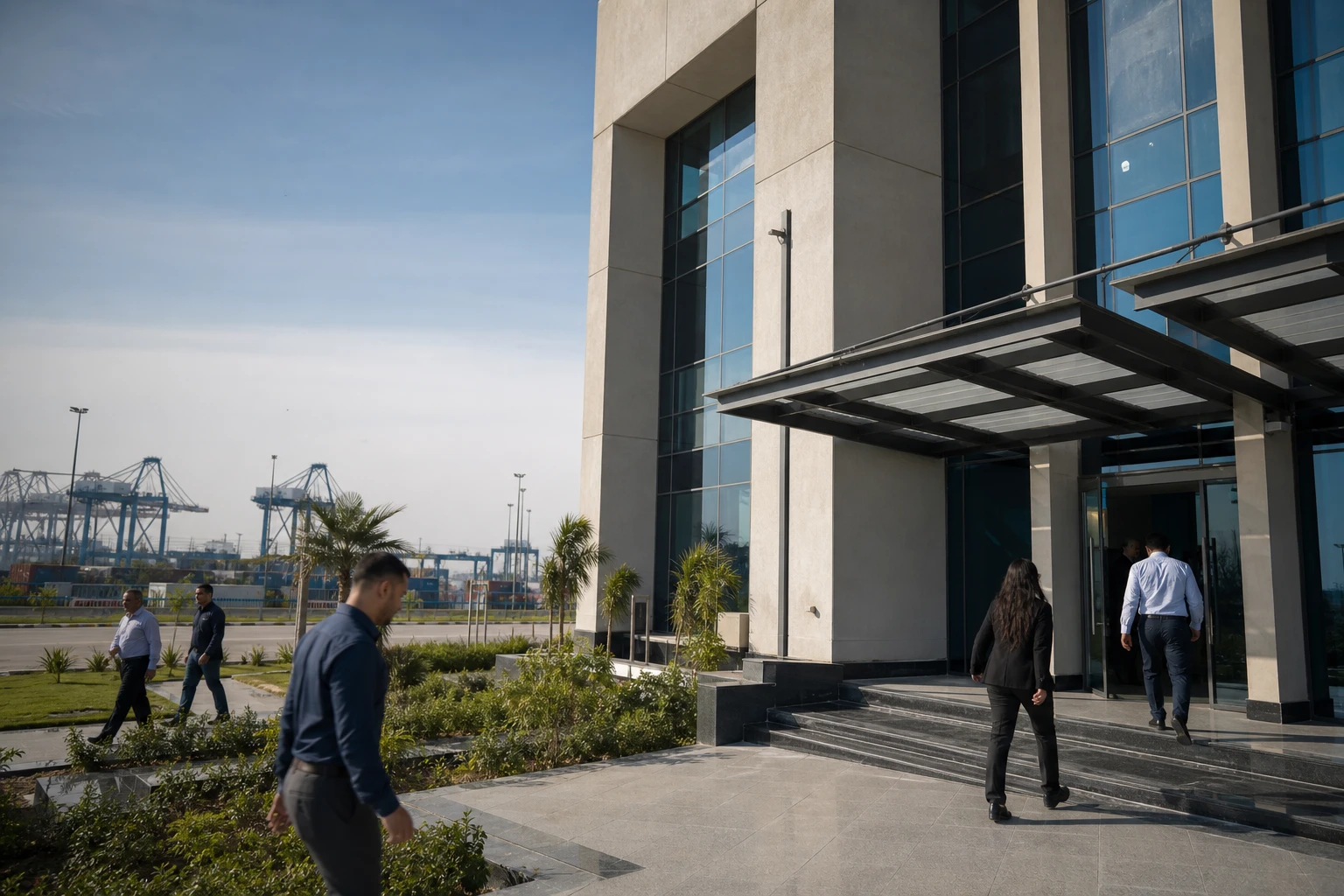
A new health manufacturing plant by the canal
In the Sokhna area, east of Cairo, Egypt’s health industry continues to expand. The country is no longer seeking only to meet its domestic market’s needs. It also wants to produce, export and play a greater role in African and regional supply chains. The arrival of a Chinese complex dedicated to medical products fits into this strategy, as Egypt further consolidates an industrial base that is rare on the continent.
This shift is not happening in isolation. Egypt is drawing on two complementary strengths: a largely domestic pharmaceutical industry and a logistics geography linking the Red Sea, the Suez Canal and markets in Africa, the Middle East and Asia. The Suez Canal Economic Zone, known by the acronym SCZONE, was designed specifically to attract export-oriented factories. Sokhna is one of its most active hubs.
What the Chinese project entails
The project announced in Egypt is based on an investment of $67 million by Jieya Egypt Health, a subsidiary linked to China’s Tongling Jieya Biologic group. It is to be established in the Sokhna integrated zone and cover about 160,000 sq m. According to the information released, the complex is to produce single-use medical products and consumables, create about 450 direct jobs and reach an annual capacity of 8.1 billion units. Industrial operations are expected to begin within two years.
The choice of Sokhna is no coincidence. The zone already hosts several foreign projects and has direct access to the canal’s port and logistics infrastructure. SCZONE highlights its ability to attract industries with a strong export focus. In practice, this can reduce shipping times, pool industrial services and bring production closer to international trade routes.
The industrial site in question is also within the area developed by TEDA Egypt, one of the main Chinese-Egyptian developers in the region. This structure shows that the investment is not simply an isolated workshop. It adds to an ecosystem in which Chinese partners already have a visible presence in the country’s free zones and industrial parks.
An Egyptian industry already largely localised
The stakes are broader than a single project. Egypt says it meets about 91% of its pharmaceutical needs locally. The Egyptian Drug Authority, or EDA, has reiterated this level of self-sufficiency several times in 2026, presenting it as the result of an industrial localisation policy, a robust private sector and a more structured regulatory framework.
This industrial base gives Egypt a relative advantage in Africa. The country has a substantial pharmaceutical market, active regulation and a production sector that goes beyond simple assembly. The government and the EDA are now emphasising higher-value products, vaccines, active pharmaceutical ingredients and medical devices. New foreign investments are also aligned with this direction.
Exports offer an indication of this move up the value chain. According to the Egyptian Cabinet, as reported by the public press, pharmaceutical exports rose by 65.6% between 2019 and 2024 to reach $447.1 million. Other official and trade-monitoring sources put the 2024 figure at a very similar level, at around $448.7 million. The trend is therefore clear, even if the figures vary slightly according to accounting methods.
Why the project matters to Cairo
For Cairo, the new Chinese investment serves several objectives at once. It boosts the appeal of SCZONE, supports import substitution and creates an additional base for exports. It also helps the state show that it can attract capital to sensitive sectors such as health, while maintaining its focus on local content and the transfer of know-how.
This project should also be viewed through the value chain. Single-use medical products are not medicines in the strict sense, but they have become essential to the work of hospitals, clinics, laboratories and healthcare campaigns. Local production reduces reliance on imports, cushions logistics shocks and can lower public procurement costs. For urban hospitals and facilities in the provinces alike, the impact could be tangible and rapid.
The signal is also diplomatic. Beijing remains a leading industrial partner for Egypt, particularly in the economic zones linked to the Suez Canal. Cairo, in turn, is seeking to attract investments that serve its industrial transformation strategy, rather than limiting itself to extraction or major construction projects. This approach of co-industrialisation has become central to the Chinese-Egyptian relationship.
A reach across Africa beyond the Egyptian market
The project extends beyond Egypt’s borders because the country has positioned itself at the heart of several continental initiatives. Egypt is notably the first African Union member state to have joined the African Pooled Procurement Mechanism, or APPM, led by Africa CDC. The mechanism aims to make the procurement of health products more predictable, affordable and better coordinated across the continent.
This position gives the new investment particular significance. If the factory meets its targets, it will serve not only the Egyptian domestic market. It could also supply African procurement networks, at a time when many countries are still seeking to secure stocks of medical devices and reduce their external dependence. Egypt is thus seeking to establish itself as a regional hub between the Mediterranean, the Red Sea and Africa.
The key issue now is execution. Construction timelines, the actual extent of technology transfer, the proportion of imported inputs and export markets will all be decisive. This is where the difference will lie between a conventional industrial announcement and a lasting capacity to produce health goods at scale for Egypt and part of the African market.



