Algeria
 Libya
 Morocco
 Sudan
 Tunisia
 Benin
 Burkina Faso
 Cabo Verde
 Côte d'Ivoire
 Ghana
 Guinea
 Guinea-Bissau
 Liberia
 Mali
 Mauritania
 Niger
 Nigeria
 Senegal
 Sierra Leone
 The Gambia
 Togo
 Cameroon
 Central African Republic
 Chad
 DR Congo
 Equatorial Guinea
 Gabon
 Republic of the Congo
 São Tomé and Príncipe
 Burundi
 Comoros
 Djibouti
 Eritrea
 Ethiopia
 Kenya
 Madagascar
 Malawi
 Mauritius
 Mozambique
 Rwanda
 Seychelles
 Somalia
 South Sudan
 Tanzania
 Uganda
 Angola
 Botswana
 Eswatini
 Lesotho
 Namibia
 South Africa
 Zambia
 Zimbabwe
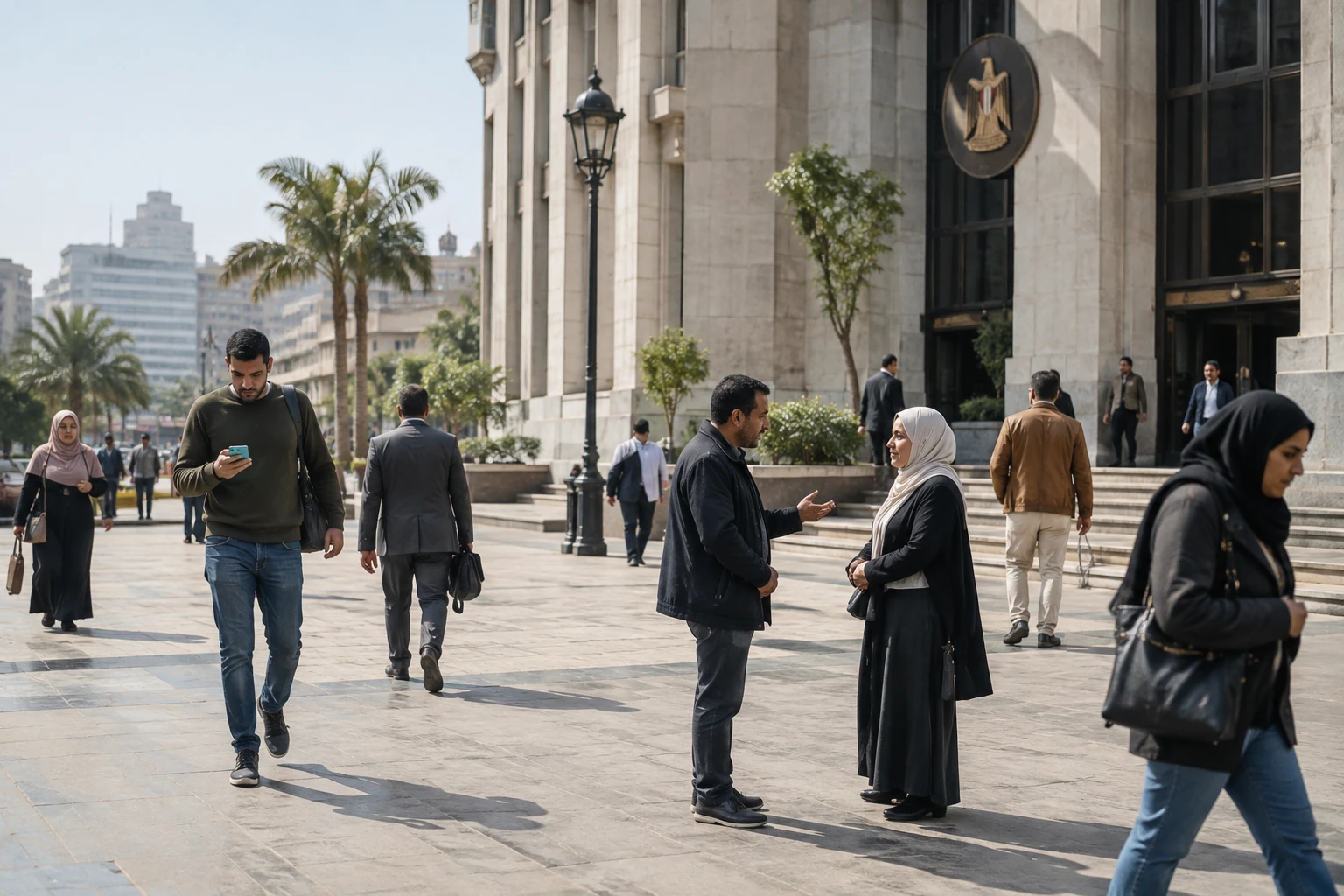
In Egypt, the question is not only whether Abdel Fattah al-Sisi will leave the presidency in 2030. It is also about who could succeed him, and under what rules. On 17 October 2026, the head of state reaffirmed his departure date while proposing that the Military Academy take part in training future officials.
A declared deadline, but a managed succession
The announcement comes in a country where the army holds a central place in institutions and economic life. Since the fall of the monarchy in 1952, most Egyptian presidents have come from its ranks. Sisi himself, a former chief of the armed forces, came to power after Mohamed Morsi was ousted in 2013, then was elected in 2014.
The Constitution set two six-year presidential terms, but its 2019 revision introduced an exception allowing Sisi to stand again and remain in office until 2030. The president now says he will not seek to extend his rule beyond that deadline and does not want to amend the constitutional text. The International Commission of Jurists’ analysis of the 2019 constitutional revision notes that it changed the length of terms and expanded the army’s constitutional role.
But the departure announcement comes with a proposal that raises another question. Sisi described a 30-month training programme at the Military Academy for candidates aged 40 to 50 who hold a doctorate. The number of participants could reach 1,000. According to the president, the aim would be to prepare officials to lead the state. He also said he would not leave office before the candidates were ready.
The programme does not, in itself, designate a successor. It does, however, make the military institution an announced participant in preparing future leaders. The independent Egyptian newspaper Al Manassa reports that the proposed scheme would be introduced through a bill, and that those trained would subsequently be subject to voters’ choice. The precise scope of this selection will therefore depend on the criteria adopted and the legislation passed.
The weight of military institutions
The initiative forms part of a trajectory in which the army’s role extends beyond national defence. It plays an important political and economic role, while major infrastructure projects have increased its visibility. The new administrative complex in the capital, east of Cairo, is one example. Succession is therefore as much a question of civilian institutions as of the balance within the state apparatus.
On 20 October, the independent outlet Mada Masr noted that public statements about the departure timetable had varied, between an end of the term explicitly set for 2030 and a vaguer formulation referring to “the last day” in power. This discrepancy is a reminder that a presidential statement is not, by itself, an institutional guarantee. The legislation, selection criteria and conditions under which political competition can take place will need to be monitored.
The pledge also comes amid continuing sensitivities around political participation and the space available to independent media. The authorities present their security policies as necessary for stability. Human rights organisations, meanwhile, denounce persistent restrictions on freedoms and opposition. The balance between these views does not alter the central point: the credibility of a transition will depend on public, enforceable and verifiable rules, rather than a single statement.
An economy under pressure, with uneven effects
Succession is being prepared as the economy weighs on Egyptians’ daily lives. Difficulties in securing external financing, the rising cost of living and the state’s needs make economic policy particularly consequential for households. Employees in the formal sector, small businesses and workers in the informal economy do not experience inflation or budget decisions in the same way. Nor do residents of Cairo and new urban centres have the same priorities as those in rural governorates.
Foreign partners remain attentive to the country’s financial stability. In June 2025, the European Parliament approved €4bn in macro-financial assistance, in the form of loans and tied to economic and political conditions. The European Commission is required, among other things, to report on progress concerning the rule of law and human rights. The European Parliament sets out the package and its conditions. This support may help cover financing needs, but it does not automatically resolve the difficulties felt by the population.
A question that reaches beyond Egypt
The announced timetable is also of interest to Egypt’s neighbours. The country is a major North African actor and a member of the African Union, but it does not belong to a regional economic community comparable to ECOWAS or SADC. Its political and financial stability matters for trade, Mediterranean balances and continental governance discussions. It also matters to African partners watching the role of armies in political transitions.
For now, the 17 October 2026 statement sets a political deadline, not the terms of a transfer of power. The next milestones will be the possible introduction of the bill, publication of the training criteria and guarantees given to candidates and voters. It is these actions, rather than the departure pledge alone, that will determine whether change in Egypt is real.