Algeria
 Libya
 Morocco
 Sudan
 Tunisia
 Benin
 Burkina Faso
 Cabo Verde
 Côte d'Ivoire
 Ghana
 Guinea
 Guinea-Bissau
 Liberia
 Mali
 Mauritania
 Niger
 Nigeria
 Senegal
 Sierra Leone
 The Gambia
 Togo
 Cameroon
 Central African Republic
 Chad
 DR Congo
 Equatorial Guinea
 Gabon
 Republic of the Congo
 São Tomé and Príncipe
 Burundi
 Comoros
 Djibouti
 Eritrea
 Ethiopia
 Kenya
 Madagascar
 Malawi
 Mauritius
 Mozambique
 Rwanda
 Seychelles
 Somalia
 South Sudan
 Tanzania
 Uganda
 Angola
 Botswana
 Eswatini
 Lesotho
 Namibia
 South Africa
 Zambia
 Zimbabwe
A new digital corridor between the Red Sea and the Mediterranean
On the map of global data flows, Egypt occupies a distinctive position. The country already links several routes between Asia, Europe and Africa, and each new connection strengthens its role as a hub. At a time when the movement of digital traffic depends on a handful of narrow passages, the ability to multiply routes has become an issue of economic sovereignty as much as technical performance.
On Wednesday 2 September, Telecom Egypt and Greek company Power Sub Link signed a memorandum of understanding to build an approximately 200-kilometre submarine cable between Sharm el-Sheikh and Taba, in Sinai. The Egyptian operator says the cable is expected to enter service in the fourth quarter of 2027 and will have a design capacity of around five petabits per second. The project will also extend north-eastwards the architecture already built around the Red2Med corridor, which links the Red Sea to the Mediterranean via several landing points.
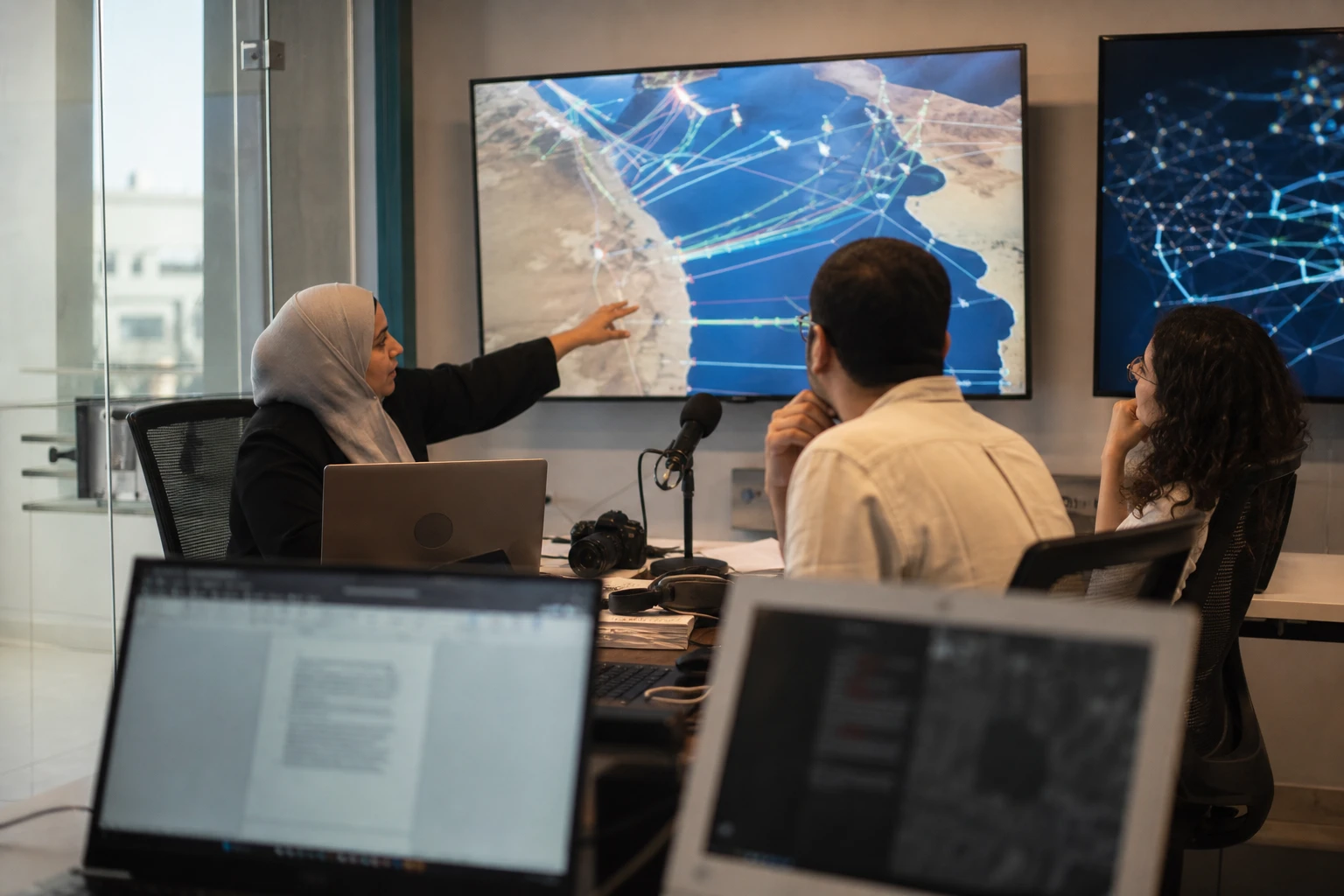
Egypt is not starting from scratch. The Submarine Cable Map platform currently lists 20 systems landing in Egypt, while five more are under construction. The map published by the National Telecommunications Regulatory Authority confirms this exceptional density. In other words, Egypt is not merely a country crossed by cables. It has become an interconnection hub.
Why Taba matters to Egypt’s network
The new cable will extend Telecom Egypt’s Red Sea Subsea Festoon Cable System to Taba. This will create a continuous link between Suez, Zaafarana, Ras Gharib, Sharm el-Sheikh and Taba. In the operator’s view, this chain creates more backup routes and reduces reliance on a single axis. This is essential in a region where communications do not pass only through major urban centres, but also through highly exposed transit points.
Telecom Egypt describes the link as a repeaterless cable, meaning it will have no intermediate repeater. The choice is intended to limit signal loss and improve the network’s overall performance. The company also highlights greater resilience for operators that use Egypt as a route between European, African, Asian and Middle Eastern markets. In practice, this means less dependence on a single corridor and more options for routing traffic in the event of an incident.
This strategy is part of a broader trajectory. Since 2023, Telecom Egypt has expanded its infrastructure-sharing offers, including WeConnect, an ecosystem that gives partners more flexible access to the country’s submarine infrastructure. The company is relying on a clear commercial proposition: attract international traffic, sell capacity and turn Egypt’s geography into a digital asset.
A response to the vulnerability of the Red Sea corridor
The new project is attracting attention in part because the Red Sea remains one of the most sensitive points in global traffic. In February 2024, several cables there suffered breaks, including AAE-1 and EIG, according to information released at the time by operators and reported by the international press. In September 2025, further disruptions again affected cables in the area and slowed internet services in Asia and the Middle East. These episodes served as a reminder that an incident in this corridor can have repercussions well beyond the area concerned.
The problem is structural. The ICPC, the leading international organisation on submarine cable protection, says around 15 cables pass through the Bab el-Mandeb Strait alone, at the southern entrance to the Red Sea. When so much infrastructure is concentrated in one passage, even the smallest fault, whether deliberate or accidental, can have knock-on effects. Operators must then reroute traffic, increasing latency and reducing service quality.
In this context, the decision to multiply links around Sinai is significant. For Egypt, the first priority is to secure its own flows. But the country is also seeking to capture a larger share of the value generated by data transit. The stakes are financial, since revenues from international customers and Telecom Egypt’s networks already account for a substantial part of its business. They are also strategic: the more landing points and alternative routes a country controls, the more weight it carries in discussions with major global operators.
An Egyptian and African issue
The cable’s significance extends beyond Egypt. In North Africa, Egypt acts as a gateway for a substantial share of the data that crosses the continent. This position is of interest to African businesses and international platforms alike. It can facilitate market connectivity, support data centres and improve the continuity of digital services for regional operators.
The message at a pan-African level is clear: the infrastructure battle is no longer confined to terrestrial networks. It is also being fought on the seabed, at landing stations and through the ability to organise backup routes. For the African Union, coastal economies and landlocked countries that depend on these backbones, the central question remains the same: how can more robust, diverse connectivity be built that is less vulnerable to regional shocks?
Egypt clearly wants to remain at the heart of this architecture. With the cable between Sharm el-Sheikh and Taba, Cairo is not merely investing in a new line. It is consolidating a role: that of a key digital gateway between three continents. What happens next will depend on the deployment timetable, construction work in Sinai and the country’s ability to turn its geographical advantage into lasting transit power.