Algeria
 Libya
 Morocco
 Sudan
 Tunisia
 Benin
 Burkina Faso
 Cabo Verde
 Côte d'Ivoire
 Ghana
 Guinea
 Guinea-Bissau
 Liberia
 Mali
 Mauritania
 Niger
 Nigeria
 Senegal
 Sierra Leone
 The Gambia
 Togo
 Cameroon
 Central African Republic
 Chad
 DR Congo
 Equatorial Guinea
 Gabon
 Republic of the Congo
 São Tomé and Príncipe
 Burundi
 Comoros
 Djibouti
 Eritrea
 Ethiopia
 Kenya
 Madagascar
 Malawi
 Mauritius
 Mozambique
 Rwanda
 Seychelles
 Somalia
 South Sudan
 Tanzania
 Uganda
 Angola
 Botswana
 Eswatini
 Lesotho
 Namibia
 South Africa
 Zambia
 Zimbabwe
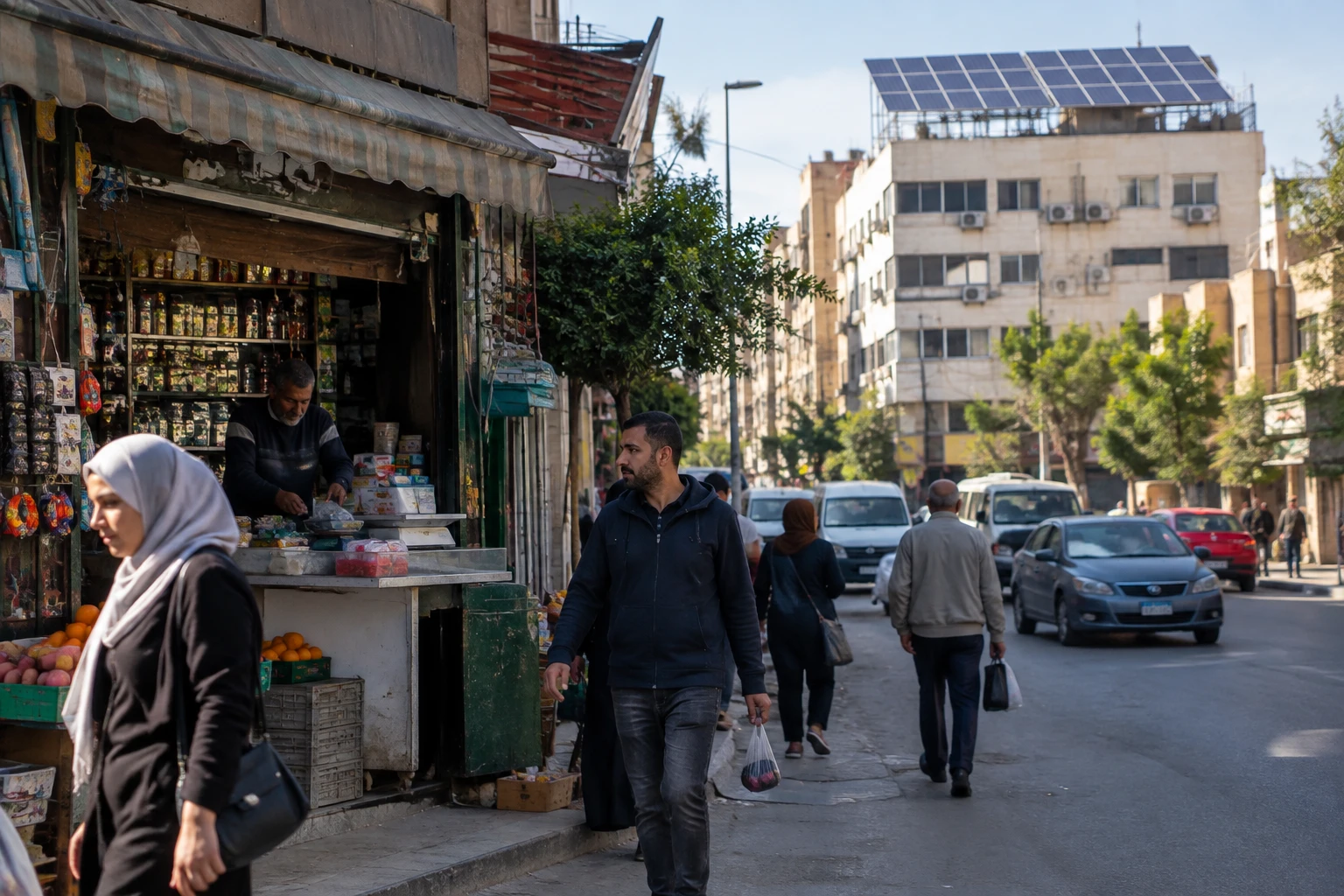
In Egypt, producing more solar and wind power depends on more than announced projects. It also requires patient capital, guarantees and grids capable of absorbing that output. A new agreement between Scatec and the European Bank for Reconstruction and Development (EBRD) aims to address part of this challenge.
A platform to share risk and finance several projects
Signed on 22 October 2026, the agreement establishes an investment vehicle dedicated to renewable energy in Egypt. Norwegian developer Scatec will hold 60% and the EBRD 40%. The bank has committed to mobilising up to $221 million, including about $170 million in equity. The balance is to take the form of project-level guarantees, according to the two partners and EBRD documents.
The vehicle is to take stakes in several projects already developed or in preparation. It will hold 40% of Obelisk, 51% of Shadwan and about 60% of Dandara, also known as the first phase of Egypt Aluminium, and Energy Valley. Other minority investors could also participate in some assets.
Scatec will remain the projects’ main developer. The company will retain responsibility for development, construction and management of the facilities. The platform is therefore intended to open a new financing channel without transferring operational control of the projects to the EBRD.
Egypt’s challenge: generating and transmitting electricity
The partnership forms part of a national ambition to increase the share of renewables. The Egyptian government is targeting more than 42% renewables in the energy mix by 2030, and more than 60% by 2040. However, the power plants, storage capacity and transmission infrastructure needed to integrate this output into the grid still have to be built.
The projects address several needs. Obelisk combines solar power and batteries. Energy Valley also plans substantial solar capacity and storage. Batteries can store some of the electricity generated during the day and feed it back when solar output falls. Their effectiveness nevertheless depends on grid connections and the terms for selling the electricity.
The announced targets are therefore not yet achieved results. Construction schedules, full financing, permits and grid upgrades will determine these assets’ actual contribution. For consumers and businesses, the practical goal is a more reliable power supply and less exposure to imported fossil fuels. That will also depend on the final cost of electricity and the grid’s ability to transmit power beyond generation sites.
Financial cooperation moves up a gear
The EBRD and Scatec already work together in Egypt. The bank took part in financing solar power plants at Benban, then in their refinancing through green bonds in 2022. In June 2025, it also joined the African Development Bank and British International Investment to finance the Obelisk hybrid project. The EBRD is therefore no longer just a lender: through this platform, it is also becoming a shareholder in a vehicle bringing together several projects.
This change makes it possible to spread financing needs across different assets rather than negotiating each investment separately. It could also help Scatec free up capital to continue expanding. But the agreement does not eliminate risks: timelines, construction costs, future revenues and the availability of infrastructure remain decisive. A development bank’s participation does not, in itself, guarantee that every project will be completed.
This model could appeal to other institutional investors, who are often attentive to regulatory stability and predictable revenues. For Egypt, attracting this capital is part of a trajectory in which the state is seeking to expand power capacity while strengthening the role of private operators. However, the shareholding structure alone does not show how benefits, risks or local gains will be distributed.
A North African, then continental, issue
The arrangement initially concerns Egypt and is not a mechanism led by a regional organisation. It nevertheless sits within a North African context in which states are seeking to diversify power generation and energy projects could eventually raise the question of interconnections. The Arab Maghreb Union exists as a regional framework, but this agreement is not linked to it. The EBRD instead says the platform could later expand into other markets in the southern and eastern Mediterranean.
At African Union level, the case illustrates a broader challenge: turning energy transition targets into projects that are financed, connected to the grid and useful to national economies. The African Development Bank has already helped finance Obelisk, but it has not been named as a shareholder in this new platform. The progress of construction and the strengthening of Egypt’s grid will need to be monitored to assess whether this financing model genuinely accelerates renewable electricity generation.
Section: Economy