Algeria
 Libya
 Morocco
 Sudan
 Tunisia
 Benin
 Burkina Faso
 Cabo Verde
 Côte d'Ivoire
 Ghana
 Guinea
 Guinea-Bissau
 Liberia
 Mali
 Mauritania
 Niger
 Nigeria
 Senegal
 Sierra Leone
 The Gambia
 Togo
 Cameroon
 Central African Republic
 Chad
 DR Congo
 Equatorial Guinea
 Gabon
 Republic of the Congo
 São Tomé and Príncipe
 Burundi
 Comoros
 Djibouti
 Eritrea
 Ethiopia
 Kenya
 Madagascar
 Malawi
 Mauritius
 Mozambique
 Rwanda
 Seychelles
 Somalia
 South Sudan
 Tanzania
 Uganda
 Angola
 Botswana
 Eswatini
 Lesotho
 Namibia
 South Africa
 Zambia
 Zimbabwe

For Egypt, Red Sea security is not only an offshore concern: it also affects maritime traffic, Suez Canal revenues and relations with its Gulf partners. The Egyptian parliament’s vote opens the possibility of military assistance to Saudi Arabia, without announcing the dispatch of troops.
Authorisation with limits, not a deployment order
On 26 October 2026, the House of Representatives gave President Abdel Fattah al-Sisi a mandate to take the necessary measures to support Saudi Arabia if Riyadh requests its help. The parliamentary statement specifies that any measures must be coordinated between the two countries and aim to defend Saudi territory, sovereignty and holy sites against external aggression. The statement, reported by Ahram Online, says the authorisation secured a two-thirds majority.
The vote concludes three closed-door sessions held on 18, 19 and 26 October. It follows a request from the president and a decision by the National Defence Council, which met on 18 October. In Egypt, the constitution requires consultation with this council and approval by two-thirds of MPs before the armed forces can be sent abroad on a combat mission. The procedure provides a political framework for possible intervention; it specifies neither its form nor its duration or resources.
Cairo has presented the proposed mission as defensive. Al-Sisi said Egyptian action would not target Yemen. As of the date of the vote, parliament had announced neither the departure of troops nor an officially confirmed Saudi request in its statement. The mandate therefore authorises a decision at a later date, but does not in itself constitute a deployment. Euronews also notes that no public details have been given about the form of assistance.
The Bab el-Mandeb Strait, an Egyptian concern
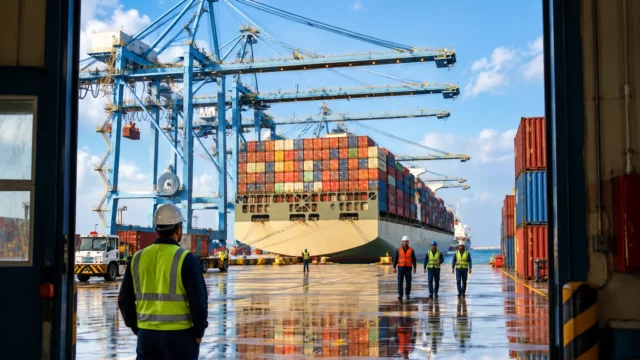
The crisis is unfolding along a maritime route linking the Gulf of Aden to the Red Sea and then the Suez Canal. Bab el-Mandeb, a narrow passage at the southern entrance to the Red Sea, is vital to this trade route. Attacks on ships or infrastructure in the region can divert traffic and undermine the revenue Egypt earns from the canal. The consequences therefore extend beyond relations between Cairo and Riyadh: they affect shipping companies, ports and Egyptian economic activity.
This vulnerability became tangible during disruptions to maritime traffic in the Red Sea. Al Jazeera reports that Houthi attacks near Bab el-Mandeb disrupted navigation and weighed on canal revenues. For the Egyptian economy, a sustained fall in ship traffic could reduce foreign-currency inflows. The effects would then extend well beyond the maritime sector, in a country that must finance its imports and preserve its foreign-exchange reserves.
The issue thus puts Cairo in a difficult position. Defensive assistance could address Saudi security concerns and protect maritime routes. But military involvement also carries risks for Egyptian forces and could expose the country to retaliation or escalation. These concerns were raised in parliament: MPs called for more details about the mission and its limits, according to the independent Egyptian outlet Al Manassa.
Strategic solidarity and political caution
Saudi Arabia is an important partner for Cairo. The two states co-operate on regional issues and maintain economic and financial ties. The vote confirms this closeness while leaving the executive with room to decide. For the leadership, the challenge is to support an ally without turning a general authorisation into an open-ended military commitment. For the Egyptian public, questions also concern the cost of an operation and its possible consequences for national security and the economy.
The precedent in Yemen weighs on this calculation. Egypt took part in the coalition led by Riyadh in 2015, notably with naval assets, but its combat role remained limited. The experience is a reminder that a mission announced as limited can become part of a wider conflict. The current issue is nevertheless distinct, with the Egyptian government emphasising the defence of Saudi territory and ruling out attacks on Yemen.
The parliamentary debate also reveals a lack of transparency. The sessions were held behind closed doors and the resolution gives no details about the resources under consideration, their cost or the duration of any potential mission. Some MPs expressed concern about these unknowns, while others backed the principle of solidarity with Riyadh. This disagreement does not alter the outcome of the vote, but it underlines how important the practical terms of any commitment will be.
Regional implications to watch
Egypt is in North Africa, but this decision draws it into a balance of power that also involves the Arabian Peninsula and the maritime routes linking the Indian Ocean to the Mediterranean. The main regional economic organisation in North Africa is the Arab Maghreb Union, of which Egypt is not a member. The issue therefore has less to do with a North African integration mechanism than with collective Arab security and stability in the Red Sea.
At continental level, the stakes are tangible: a prolonged disruption to maritime routes would affect trade and coastal economies far beyond Egypt. The 26 October vote does not, however, settle the question of intervention. The next developments to watch are a possible formal request from Riyadh, the nature of any assistance decided by Cairo and the continuation of diplomatic initiatives. The Egyptian government says it prioritises de-escalation; the implementation of the mandate will show how that priority fits with its stated military solidarity.