Algeria
 Libya
 Morocco
 Sudan
 Tunisia
 Benin
 Burkina Faso
 Cabo Verde
 Côte d'Ivoire
 Ghana
 Guinea
 Guinea-Bissau
 Liberia
 Mali
 Mauritania
 Niger
 Nigeria
 Senegal
 Sierra Leone
 The Gambia
 Togo
 Cameroon
 Central African Republic
 Chad
 DR Congo
 Equatorial Guinea
 Gabon
 Republic of the Congo
 São Tomé and Príncipe
 Burundi
 Comoros
 Djibouti
 Eritrea
 Ethiopia
 Kenya
 Madagascar
 Malawi
 Mauritius
 Mozambique
 Rwanda
 Seychelles
 Somalia
 South Sudan
 Tanzania
 Uganda
 Angola
 Botswana
 Eswatini
 Lesotho
 Namibia
 South Africa
 Zambia
 Zimbabwe
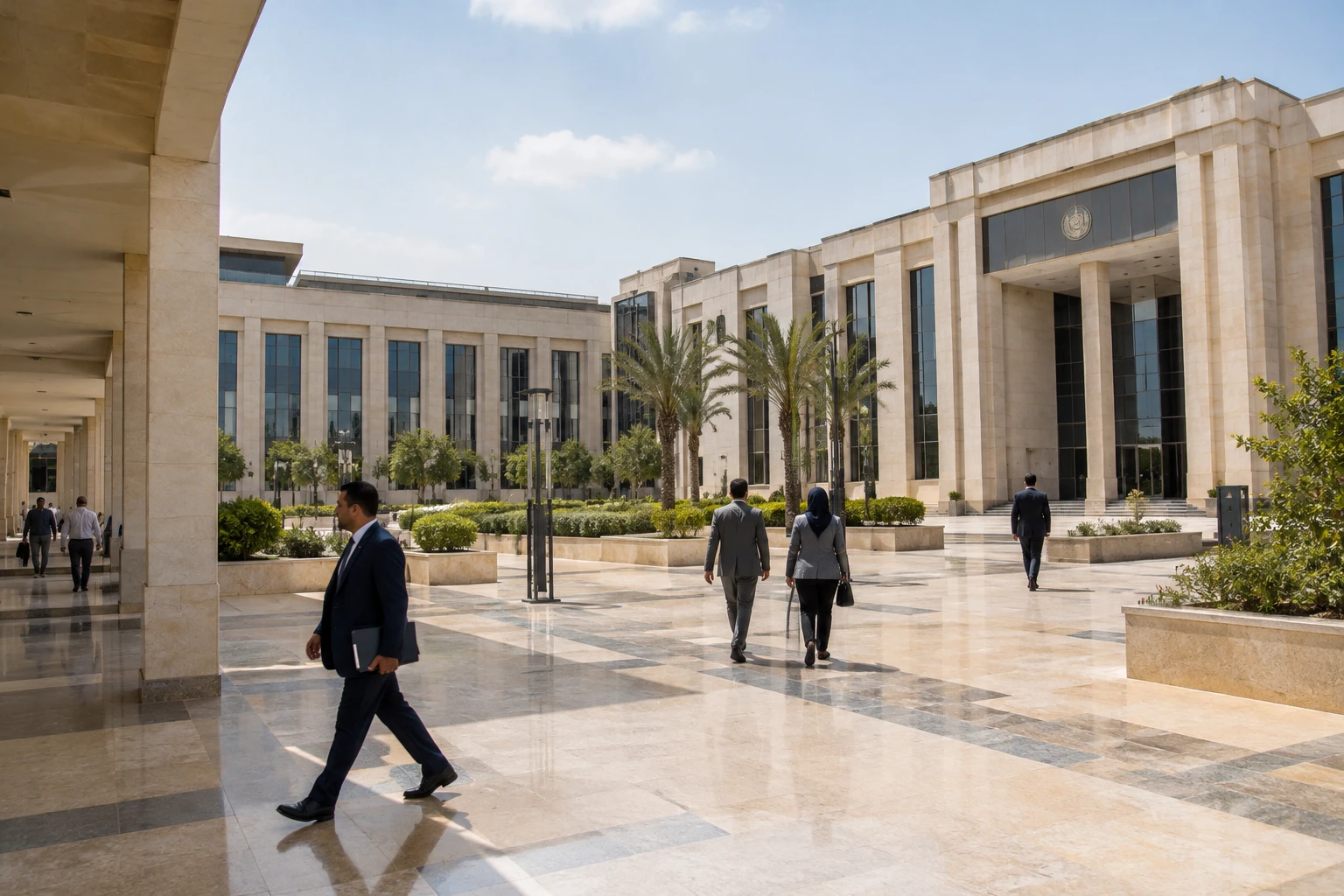
In Egypt, the question of what comes after Abdel Fattah al-Sisi is now framed by two points raised by the president: an end to his term in 2030 and the training of future officials at the Military Academy. The first is a commitment he has made. The second raises an institutional question: who will set the conditions for access to the highest offices, and how will citizens be able to choose their leaders?
A presidential pledge within an already revised constitutional framework
On 17 October 2026, at a ceremony at the Egyptian Military Academy, al-Sisi said his term would end in 2030 and that the Constitution would not be amended to extend it. The Egyptian agency MENA and the independent Egyptian media outlet Al-Manassa reported the statement. The president presented the decision as settled. It nevertheless remains a political pledge: its effect will depend, among other things, on adherence to the constitutional and electoral timetable.
The context has brought this commitment under particular scrutiny. Elected in 2014 after leading the army, al-Sisi was re-elected in December 2023 with 89.6% of the vote, according to official results reported by the Associated Press. The 2019 constitutional amendment extended the presidential term from four to six years and opened the way to a third term. His announced departure in 2030 would therefore mark the end of 16 years at the head of state.
This trajectory unfolds in an Egypt where civilian and military institutions are closely intertwined. Since the ousting of President Mohamed Morsi in 2013, the armed forces have played a major role in political and economic life. The holding of elections is not, by itself, enough to measure the degree of political competition: the conditions under which candidates, parties, media and voters can participate must also be considered.
Thirty months of training, but rules still to be written
The announced plan would provide 30 months of training for potential candidates for public office at the Military Academy. According to information reported by MENA, a committee including parliamentarians, political figures and specialists is expected to work on selection and the legal framework. The president referred to holders of doctoral degrees, although the final arrangements have yet to be set out in a published law.
Al-Sisi has presented the programme as preparation for running the state, not just for the presidency. The positions potentially concerned would also include government and parliamentary posts, and governorships. But training people for public responsibilities is not the same as defining who may stand for election. At this stage, available reports do not describe a rule that would legally reserve presidential candidacy for graduates of this course.
This is where the institutional issue lies. If the training remains one option among others, open under transparent criteria, it could be presented as a means of preparing people for public administration. If it becomes, in practice, a preferred condition for access to positions of power, it could shift part of the political choice towards prior selection. Any legislation, admission criteria and the role of voters will therefore be decisive.
Access also matters socially. Requiring a doctorate and limiting the programme to people in a certain age bracket, as several reports of the announcement indicate, would direct recruitment towards people who are already highly educated and established in their careers. This does not yet say who will be admitted, or whether alternative routes will exist. Young local officials, grassroots elected representatives and people from less-represented sectors cannot be considered excluded without an official text; their place will need to be clarified.
The army’s influence and the state of political competition
The choice of the Military Academy gives the project significance beyond technical training. The institution is under the authority of the armed forces, while the proposed programme would concern civilian positions. For state officials, this setting could foster a shared understanding of administrative mechanisms. For political actors outside the state apparatus, it raises questions about the neutrality of the selection process and the balance between expertise, institutional loyalty and pluralism.
Critics of Egyptian governance point to a restricted political space. In its 2026 report on Egypt, Human Rights Watch describes continuing restrictions targeting critics and civil society, as well as parliamentary elections held in 2025 in a repressive environment and without genuine competition, according to its analysis. This is the assessment of the human rights organisation; it informs the debate on pluralism, but does not on its own establish the arrangements for the new programme.
The pledge to leave office in 2030 therefore comes in a context where trust will depend on more than the announced date. It will also rest on whether competing candidates can emerge, campaign and take part in the vote on fair terms. The presidential announcement does not yet specify how those trained would be selected as candidates, or what the link would be between this path and the popular vote.
A regional issue to watch over time
For North Africa, the issue concerns the transfer of power in a country central because of its population, its position at the crossroads of Africa and the Middle East, and its regional diplomatic role. Egypt is a member of the African Union and the Arab Maghreb Union, although the latter is not a space for political integration comparable to more active regional communities elsewhere on the continent. Its institutional development will be watched by African partners, particularly on questions of stability and political representation.
The next concrete step will be the possible publication of a text: it will need to specify the admission conditions, the committee’s powers and the status of graduates. It will then be necessary to observe whether the course remains a training pathway or becomes a de facto route to national office. For now, the 2030 commitment and the Academy plan must be distinguished: the first is a statement by the president; the second is a programme yet to be defined and regulated.