
 Algeria
 Libya
 Morocco
 Sudan
 Tunisia
 Benin
 Burkina Faso
 Cabo Verde
 Côte d'Ivoire
 Ghana
 Guinea
 Guinea-Bissau
 Liberia
 Mali
 Mauritania
 Niger
 Nigeria
 Senegal
 Sierra Leone
 The Gambia
 Togo
 Cameroon
 Central African Republic
 Chad
 DR Congo
 Equatorial Guinea
 Gabon
 Republic of the Congo
 São Tomé and Príncipe
 Burundi
 Comoros
 Djibouti
 Eritrea
 Ethiopia
 Kenya
 Madagascar
 Malawi
 Mauritius
 Mozambique
 Rwanda
 Seychelles
 Somalia
 South Sudan
 Tanzania
 Uganda
 Angola
 Botswana
 Eswatini
 Lesotho
 Namibia
 South Africa
 Zambia
 Zimbabwe
When summer electricity depends on an unstable barrel
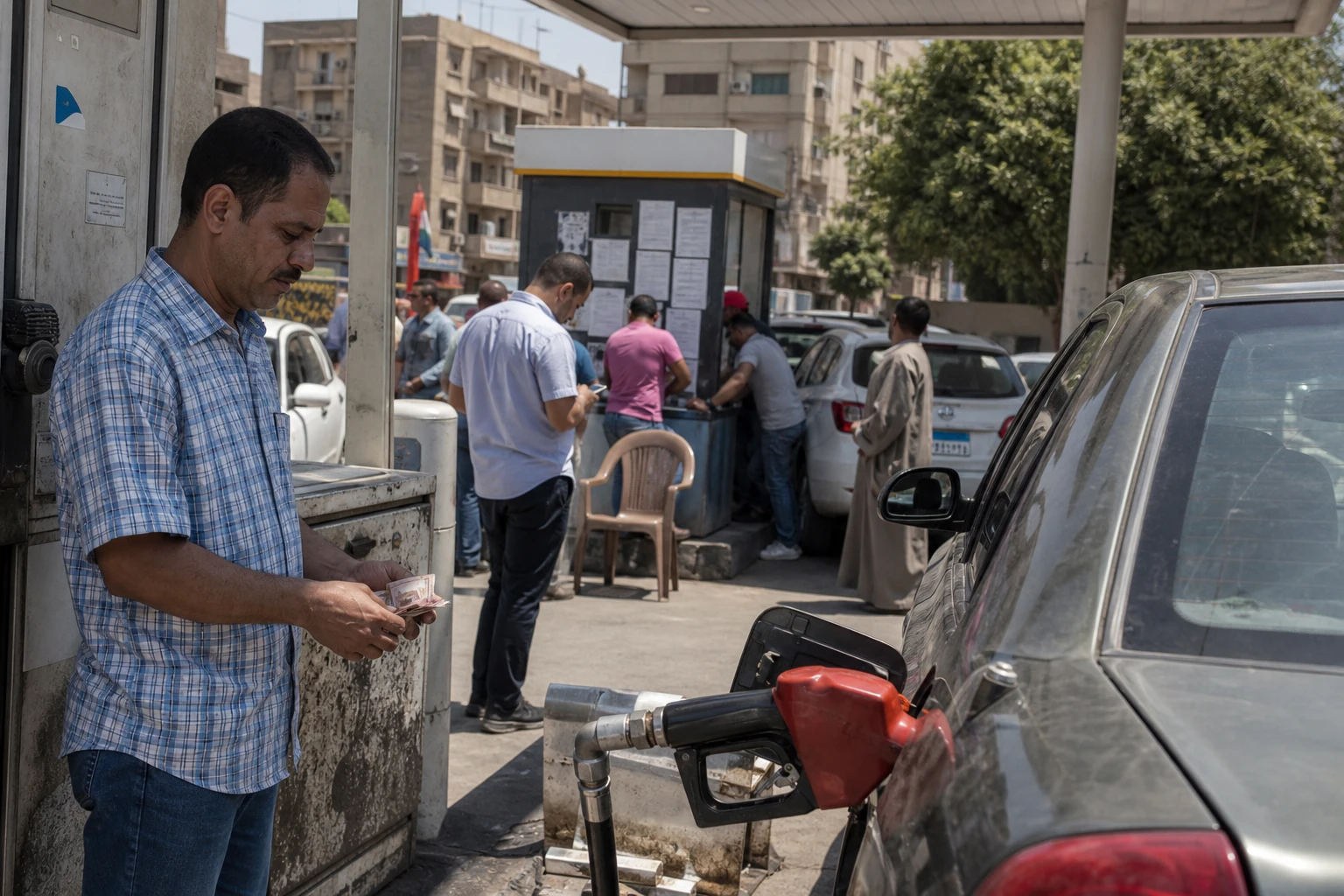
In Egypt, the issue of fuel is not simply a matter of the price at the pump. It affects the state’s energy bill, transport costs, the stability of the electricity grid and, ultimately, Egyptian households’ budgets. In a country where demand rises sharply in summer, every move in the global oil market carries more weight than it might seem.
It is in this context that the government is defending a cautious approach. Prime Minister Moustafa Madbouly justified the decision not to lower local prices immediately after a temporary retreat in Brent, arguing that a policy that changes too often undermines the clarity of government action. Since then, markets have reminded Egypt that a fall in crude prices can be brief, especially when tensions in the Middle East affect prices.
The message is clear: Cairo would rather cushion sudden swings than pass every global shock on to domestic prices. This approach also reveals a deeper constraint. Egypt remains dependent on fuel imports and must contend with high foreign currency needs, even as the hot season increases energy consumption.
A short-term strategy, but also an energy shift
The debate involves several institutions. The Central Bank, the Ministry of Finance and the Ministry of Petroleum are regularly called upon to secure supplies, while the automatic fuel pricing committee has now returned to a quarterly schedule. Reinstated after a period of high volatility, this mechanism is intended to limit ad hoc decisions and bring local prices closer to international trends without a sudden shock for consumers.
The government already raised the prices of several petroleum products in March 2026, in a context Cairo described as exceptional on global markets. The decision showed how limited the executive’s room for manoeuvre is: supporting public finances, preserving stocks and avoiding a social backlash. In Egypt, fuel is not just a budget item; it underpins urban transport, the distribution of goods and some of the informal activities on which many families depend.
This caution is also explained by the regional calendar. Tensions around the Strait of Hormuz, a key passage for oil and gas flows, are keeping markets on edge. Brent has recently traded above $85 a barrel, after falling sharply a few weeks earlier. For a net importer, this instability makes any predictable pricing policy difficult. Above all, it forces the state to balance protecting purchasing power against supporting public finances.
At the same time, Cairo is accelerating its structural response. Moustafa Madbouly has highlighted renewable energy projects, both solar and wind, as well as the El Dabaa nuclear power plant in Marsa Matrouh governorate, on the northern coast. The reactor vessel for the plant’s second unit was installed in early July 2026, a symbolic milestone for a project that the authorities say they intend to bring gradually into operation from 2028.
This direction is not incidental. It reflects a desire to reduce dependence on imported fuels and secure the grid’s supply, especially when electricity demand rises. Egypt is also promoting the development of natural gas, with the aim of protecting its energy sovereignty over the medium term. But the country faces a handicap: domestic gas production has stagnated in recent years, notably because of the slowdown at Zohr, its major offshore field in the eastern Mediterranean.
This decline has had a direct consequence: a large-scale return to liquefied natural gas imports. For the state, this means greater pressure on foreign currency, increased sensitivity to global prices and tighter constraints on budget planning. For businesses, it pushes up energy costs and can weigh on competitiveness. For households, it means a harsher price environment, even when the authorities try to smooth its effects.
What this episode says about Egypt and the region
Ultimately, the issue goes beyond the immediate oil market. Egypt is seeking to reorganise its energy model at a time when North Africa is becoming a strategic space for hydrocarbons, electricity cables, gas interconnections and decarbonisation projects alike. The country wants to remain a regional player able to influence flows between the Mediterranean, the Middle East and Europe.
In this equation, Egypt’s executive is advancing on several fronts at once. It is offering short-term reassurance about fuel stocks, preparing to resume an automatic pricing mechanism and investing in more sustainable production capacity. This three-pronged approach says much about the situation: the state cannot simply react to Brent’s fluctuations; it must also rebuild its domestic safety margins.
The continental implications are real. Across Africa, major importing countries are watching this episode closely, as it shows how an energy transition can be launched amid heavy dependence on hydrocarbons. Egypt also illustrates a dilemma shared by several African economies: how to protect the population without blocking investment, how to stabilise prices without abandoning reform, and how to transform the energy system without waiting for a hypothetical calm in global markets.
What happens next will depend on three very concrete factors: the course of the conflict in the Middle East, the next meeting of Egypt’s fuel pricing committee and the country’s ability to raise its gas production. Between these three variables, Cairo is navigating a delicate situation. For North Africa, it is a useful indicator of how states can try to regain control of their energy security.



