Algeria
 Libya
 Morocco
 Sudan
 Tunisia
 Benin
 Burkina Faso
 Cabo Verde
 Côte d'Ivoire
 Ghana
 Guinea
 Guinea-Bissau
 Liberia
 Mali
 Mauritania
 Niger
 Nigeria
 Senegal
 Sierra Leone
 The Gambia
 Togo
 Cameroon
 Central African Republic
 Chad
 DR Congo
 Equatorial Guinea
 Gabon
 Republic of the Congo
 São Tomé and Príncipe
 Burundi
 Comoros
 Djibouti
 Eritrea
 Ethiopia
 Kenya
 Madagascar
 Malawi
 Mauritius
 Mozambique
 Rwanda
 Seychelles
 Somalia
 South Sudan
 Tanzania
 Uganda
 Angola
 Botswana
 Eswatini
 Lesotho
 Namibia
 South Africa
 Zambia
 Zimbabwe
A road, early-morning hours and lives still learning
In the Egyptian countryside, the journey to work often begins before dawn. This is where a silent part of the country’s economy plays out: agricultural workers, makeshift journeys and improvised vehicles. When an accident occurs, it reveals more than a road tragedy. It also highlights the vulnerability of transport for workers in rural areas, where speed often takes precedence over safety.
Ismailia Governorate, in north-eastern Egypt, lies at the heart of an important rural and logistical corridor between the Nile Delta and the Suez Canal zone. In this region, as in other agricultural provinces, seasonal journeys to farms still rely heavily on pick-up trucks and minibuses, sometimes overloaded, particularly in the informal sector. This is no marginal reality: it affects the daily lives of thousands of families and the working conditions of a labour force that is often young.
What is known about the Ismailia crash
At least 18 people were killed on Tuesday when two pick-up trucks carrying agricultural workers collided on a road in Ismailia Governorate, according to a medical source cited by AFP and reported by local media. The same source said most of the victims were teenagers aged 13 or 14. An Egyptian media outlet also reported the deaths of two 10-year-old girls. A 16-year-old survivor said she had been asleep at the time of the crash, after getting up at 5am to go to work.
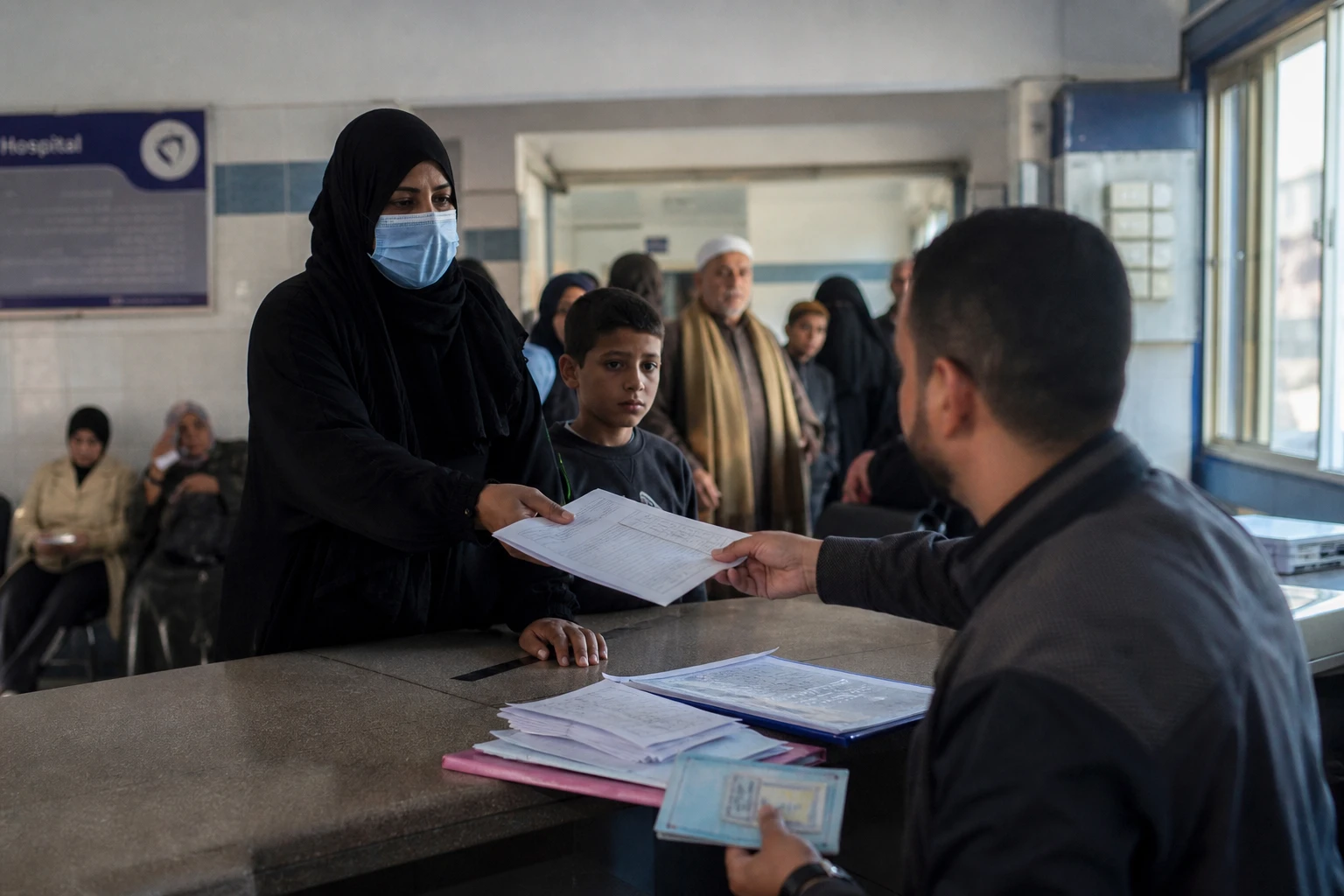
The passengers came mainly from two villages in the Nile Delta and were travelling to a farm to work, according to a security source cited by the same news reports. Families later gathered outside al-Qassasin Hospital in Ismailia, waiting for information about the injured and the dead. The health ministry initially reported 47 casualties, including about 30 injured, before medical and local sources clarified the death toll. President Abdel Fattah al-Sisi ordered an investigation into the cause of the crash.
This kind of tragedy is not isolated. Egypt has seen several fatal collisions involving vehicles transporting workers to farms or fishing sites. In February 2026, 18 people were again killed in a crash on the 30 June axis, near Port Said, while travelling to fish farms. In June 2025, 19 people were killed in a collision in Lower Egypt involving a minibus carrying workers. The pattern repeats: long journeys, unsuitable vehicles, overloading and inadequate checks.
Child labour, informality and road safety: the same knot
The Ismailia crash cannot be viewed solely as a road accident. It is part of a precarious labour economy in which children still play a significant role. According to the International Labour Organization, 1.3 million children work in Egypt. An ILO country brief, based on the 2023 national survey, puts the figure at 4.2 million working children, 3.7 million of them in hazardous or illicit activities. These figures convey the scale of the problem behind the names and ages made public after the crash.
The phenomenon is particularly pronounced in the countryside. UNICEF notes that children in rural areas, especially in Upper Egypt, are twice as likely to be engaged in child labour. In a country where agriculture remains a major employer and informality dominates many sectors, the line between helping the family, seasonal work and exploitation is often blurred. The ILO also says that the informal economy accounts for 67% of employment in Egypt, according to its analyses, with agriculture and transport among the sectors most exposed.
On the ground, this changes everything. For families, early work is often a response to income pressures. For employers, it means an available, poorly protected workforce that is easy to transport. For the state, it is a question of oversight, inspection and social safety nets. And for children, it means a combination of risks: overcrowding, extreme hours, fatigue, road accidents and absenteeism from school. The Ismailia crash is a reminder that rural transport safety is also a child-protection policy.
A national warning with regional echoes
Egypt does have tools to respond. The country launched a national plan to combat the worst forms of child labour for 2018-2025, with ILO support, and CAPMAS launched a national survey on child labour in 2023. But the central problem remains implementation: labour inspections, enforcement of transport rules, actual school attendance and economic alternatives for rural households. Until the chain holds, the measures will remain partial.
Across the continent, the case of Egypt feeds into a wider debate in several African countries: how can child labour be reduced without undermining rural incomes? How can agricultural transport networks be modernised without excluding small employers and seasonal workers? North Africa, like other regions of the continent, faces the same difficult balance between the informal economy, safe travel and social protection. The next steps to watch will be the findings of the investigation announced by the presidency, followed by concrete measures on the transport of agricultural workers and checks on child labour.
The tragedy also says something about the social trajectory of Egypt today. The country is seeking to formalise more of its economy, strengthen its social protection systems and make its infrastructure safer. But in Delta villages and rural outskirts, reality moves more slowly than announcements. This is where the gap between stated public policy and the lives of those who set off to work before sunrise becomes clear.