Algeria
 Libya
 Morocco
 Sudan
 Tunisia
 Benin
 Burkina Faso
 Cabo Verde
 Côte d'Ivoire
 Ghana
 Guinea
 Guinea-Bissau
 Liberia
 Mali
 Mauritania
 Niger
 Nigeria
 Senegal
 Sierra Leone
 The Gambia
 Togo
 Cameroon
 Central African Republic
 Chad
 DR Congo
 Equatorial Guinea
 Gabon
 Republic of the Congo
 São Tomé and Príncipe
 Burundi
 Comoros
 Djibouti
 Eritrea
 Ethiopia
 Kenya
 Madagascar
 Malawi
 Mauritius
 Mozambique
 Rwanda
 Seychelles
 Somalia
 South Sudan
 Tanzania
 Uganda
 Angola
 Botswana
 Eswatini
 Lesotho
 Namibia
 South Africa
 Zambia
 Zimbabwe
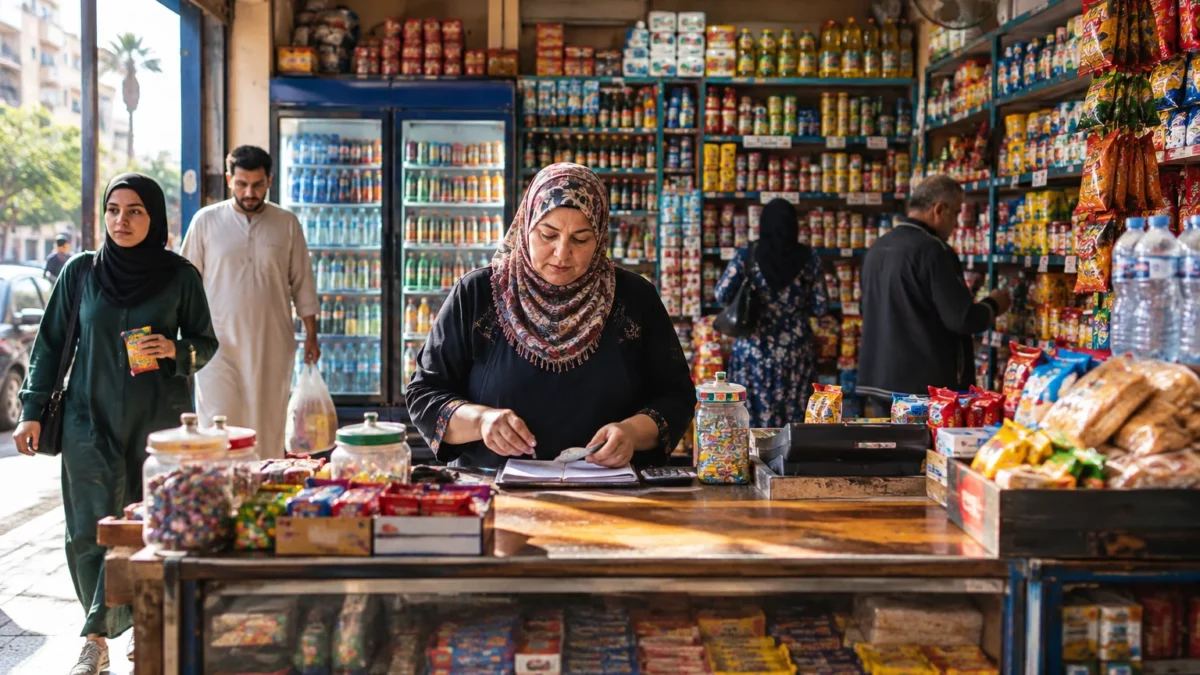
For a small Egyptian business, securing a few thousand dollars can determine whether it buys equipment, increases its stock or remains at a standstill. A new international financing package aims to widen these opportunities, but its effectiveness will depend on how local players distribute it.
A multi-stage credit chain
The European Bank for Reconstruction and Development (EBRD) has signed a loan of up to $100m to the National Bank of Egypt (NBE), the country’s largest bank. The project summary, published on 18 November 2026, says the funds will be used to finance micro, small and medium-sized enterprises (MSMEs).
The loan comprises a committed tranche of $75m and a second tranche of $25m, which remains optional. It has a maximum term of four years, including a one-year grace period, followed by semi-annual repayments. The EBRD said the financing had been signed. The optional tranche, therefore, is not an amount that has already been disbursed.
The mechanism involves three players. The EBRD lends to the NBE, which must then transfer the funds to licensed private microfinance institutions. These organisations will in turn lend to eligible businesses across Egypt. This intermediary channel is aimed at small businesses that are often less well served by conventional bank lending.
The programme focuses on women-led businesses and those located outside the main urban centres. But the announcement does not yet specify the share reserved for these groups, the interest-rate terms applied to partner institutions or the number of businesses that could receive financing.
A growing sector under scrutiny
The financing comes as the market has expanded. According to Egypt’s Financial Regulatory Authority (FRA), outstanding microfinance reached 74.4bn Egyptian pounds at the end of the second quarter of 2026, up 14% year on year. Women accounted for about 52.8% of beneficiaries, or nearly 1.8 million people, but 45.4% of the amounts financed.
The figures show both the importance of women’s participation and a gap between their share of beneficiaries and their share of the sums lent. However, they do not, on their own, show whether the loans fund income-generating activities or whether the businesses concerned can repay them without difficulty.
The regulatory framework is tightening at the same time. On 12 November, the FRA extended until 11 October 2027 the suspension of new applications to establish and license microfinance and consumer credit companies. The measure also applies to associations and foundations seeking microfinance authorisation. Institutions already licensed remain in operation.
This decision gives the EBRD loan particular significance: rather than bringing new lenders into the market, it provides additional resources to existing institutions. This could support their lending capacity, but also makes the quality of their borrower selection and the monitoring of their financial soundness crucial.
Practical stakes for small businesses
For microenterprises, access to finance is not simply a matter of the amount available. Repayment schedules, collateral requirements and the cost of credit matter just as much. A financing facility for intermediaries does not automatically guarantee affordable terms for end borrowers. The NBE and its partner institutions will therefore need to explain how they will turn this credit line into accessible offers.
The focus on women addresses an imbalance measured by the FRA: they make up a larger share of beneficiaries than of outstanding loans. But the published data do not detail differences between regions, business sectors or company sizes. Monitoring the loans actually granted will show whether women entrepreneurs and businesses far from major centres receive a meaningful share of the resources.
The NBE, which is owned by the Egyptian state, has a network of more than 700 branches and says it has around 22 million customers. It has worked with the EBRD since 2012. Its role here will be less that of a direct lender to each small business than that of a banking intermediary connecting an international lender with specialist institutions.
An operation linked to African trade
The EBRD says it has invested nearly €17bn in 245 projects in Egypt since beginning operations in the country in 2012. The loan is therefore part of a long-term presence, with a stated aim of widening access to finance. Even so, results will be measured by the amounts actually distributed and the businesses served, not just by the sum announced.
Egypt is a member of the Common Market for Eastern and Southern Africa (COMESA), a regional grouping that aims, among other things, to facilitate trade between its member states. Better access to credit for small businesses can support local activity and, for those trading across borders, their ability to seize regional opportunities. The operation does not, however, include an explicit cross-border component.
The next step will be to monitor implementation: any activation of the $25m tranche, the selection of licensed institutions and the terms offered to borrowers. In a market where new licences remain suspended until October 2027, the practices of existing players will determine whether this financing sustainably widens access to credit for Egypt’s small businesses.