
 Algeria
 Libya
 Morocco
 Sudan
 Tunisia
 Benin
 Burkina Faso
 Cabo Verde
 Côte d'Ivoire
 Ghana
 Guinea
 Guinea-Bissau
 Liberia
 Mali
 Mauritania
 Niger
 Nigeria
 Senegal
 Sierra Leone
 The Gambia
 Togo
 Cameroon
 Central African Republic
 Chad
 DR Congo
 Equatorial Guinea
 Gabon
 Republic of the Congo
 São Tomé and Príncipe
 Burundi
 Comoros
 Djibouti
 Eritrea
 Ethiopia
 Kenya
 Madagascar
 Malawi
 Mauritius
 Mozambique
 Rwanda
 Seychelles
 Somalia
 South Sudan
 Tanzania
 Uganda
 Angola
 Botswana
 Eswatini
 Lesotho
 Namibia
 South Africa
 Zambia
 Zimbabwe
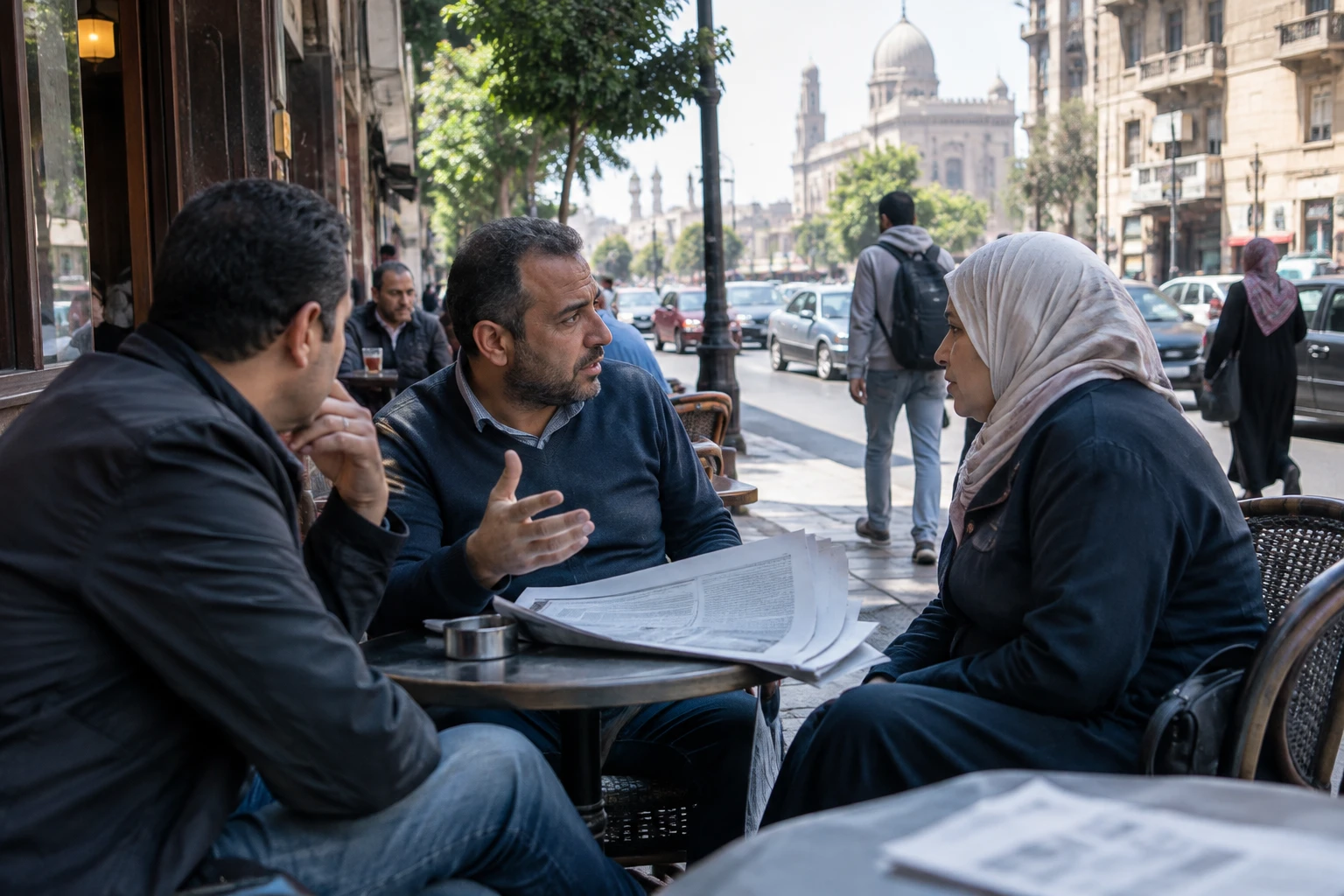
For Egypt, military assistance to Saudi Arabia would not be a distant decision: it would affect Red Sea security, maritime trade and the cost of a new overseas commitment. Egypt’s parliament has chosen to extend its examination, without yet authorising President Abdel Fattah al-Sisi to respond to a possible request from Riyadh.
Authorisation under consideration, no deployment decided
Meeting in an extraordinary session, MPs postponed the next stage of the debate until Monday 26 October. The vote concerns an authorisation allowing the head of state to provide military support if Saudi Arabia requests it. As of 20 October, no Egyptian deployment had been announced in response to this request.
The parliamentary timetable therefore means neither a refusal nor a definitive green light. It leaves the central question open: what form would the assistance take, with what objectives, for how long and subject to what limits? The uncertainty matters for soldiers who might be deployed, but also for citizens who would bear the cost indirectly.
Egypt’s National Defence Council said on 18 October that it supported the measures necessary to protect Saudi security. This official position does not, however, specify the operational format of any assistance. The Egyptian presidency made the Council’s statement public, while the US news agency Associated Press also reported the decision and the request for parliamentary authorisation.
The Red Sea, a direct concern for Cairo
The tensions are part of the escalation of the conflict in Yemen. Since 2015, Saudi Arabia has led a coalition supporting Yemen’s internationally recognised government against the Houthis, a movement that controls the capital, Sanaa, among other areas. The conflict has seen periods of varying intensity and attempts at de-escalation, but fighting has recently spread to coastal areas of the Red Sea.
Attacks targeting Saudi territory have strengthened calls for assistance from Riyadh. The casualty figures and operational details reported in connection with the strikes have not all been established by independent sources. It is therefore important to distinguish these reports from verifiable political facts: the Egyptian president has requested authorisation, and MPs have adjourned their discussions until 26 October.
Geography explains Cairo’s concern. The Red Sea connects the Suez Canal to the Bab el-Mandeb strait, a maritime passage between Yemen and the Horn of Africa. Prolonged insecurity along this route could disrupt shipping and weigh on canal revenues, a strategic resource for Egypt. The effects would not be limited to the authorities: ports, carriers, businesses and workers linked to trade could also be affected.
Egypt is a member of COMESA, a common market bringing together countries in eastern and southern Africa, and of the African Union. These bodies do not decide on a military operation in Saudi Arabia. They nonetheless underscore that the crisis also concerns maritime route security and regional trade, beyond bilateral relations between Cairo and Riyadh.
The Yemen precedent and the limits of any commitment
The debate revives a weighty precedent. Egypt joined the coalition led by Riyadh at the start of the 2015 intervention. But the support being discussed today is presented as defensive, and the scope of any potential mission remains to be defined. This distinction is crucial: protecting Saudi territory does not automatically entail taking part in operations in Yemen.
President al-Sisi has defended solidarity with Saudi Arabia, an ally of Cairo, while saying that Egypt was not seeking to attack another country. This political line does not remove the practical questions. A mission could expose Egyptian military personnel to risks, commit costly resources and draw the country more deeply into a conflict whose outcome remains uncertain.
The Egyptian Social Democratic Party, an opposition party represented in parliament, has asked its MPs to abstain. It is calling for clearly defined objectives, information on the mission’s duration and scale, and an assessment of its human and financial risks. This reservation reflects a practical concern: diplomatic solidarity alone does not establish the cost of a commitment for taxpayers and the armed forces.
Parliamentary oversight therefore remains at the forefront. A general mandate could leave the executive with considerable discretion; more detailed conditions would place greater limits on any subsequent decision. The postponement allows discussions to continue, but the exact wording of the text and the safeguards adopted still need to be clarified.
A regional signal to watch
26 October will mark another stage, not necessarily the last. It will be important to see whether MPs vote, what limits they place on the authorisation and whether Riyadh then makes a specific request. In the meantime, any announcement of troops or an operational mission must be distinguished from statements of political support.
For North Africa and the countries bordering the Red Sea, Egypt’s choice goes beyond the relationship between two capitals. It weighs the defence of a strategic partner, the security of maritime routes and the risk of widening the war. Parliament’s decision will show how far Cairo intends to translate its solidarity into military resources — and under what oversight.
To cross-check the facts, consult the report on the parliamentary postponement, the statement by Egypt’s National Defence Council, the Associated Press dispatch on the Council’s position and the official list of COMESA member states.



