Algeria
 Libya
 Morocco
 Sudan
 Tunisia
 Benin
 Burkina Faso
 Cabo Verde
 Côte d'Ivoire
 Ghana
 Guinea
 Guinea-Bissau
 Liberia
 Mali
 Mauritania
 Niger
 Nigeria
 Senegal
 Sierra Leone
 The Gambia
 Togo
 Cameroon
 Central African Republic
 Chad
 DR Congo
 Equatorial Guinea
 Gabon
 Republic of the Congo
 São Tomé and Príncipe
 Burundi
 Comoros
 Djibouti
 Eritrea
 Ethiopia
 Kenya
 Madagascar
 Malawi
 Mauritius
 Mozambique
 Rwanda
 Seychelles
 Somalia
 South Sudan
 Tanzania
 Uganda
 Angola
 Botswana
 Eswatini
 Lesotho
 Namibia
 South Africa
 Zambia
 Zimbabwe
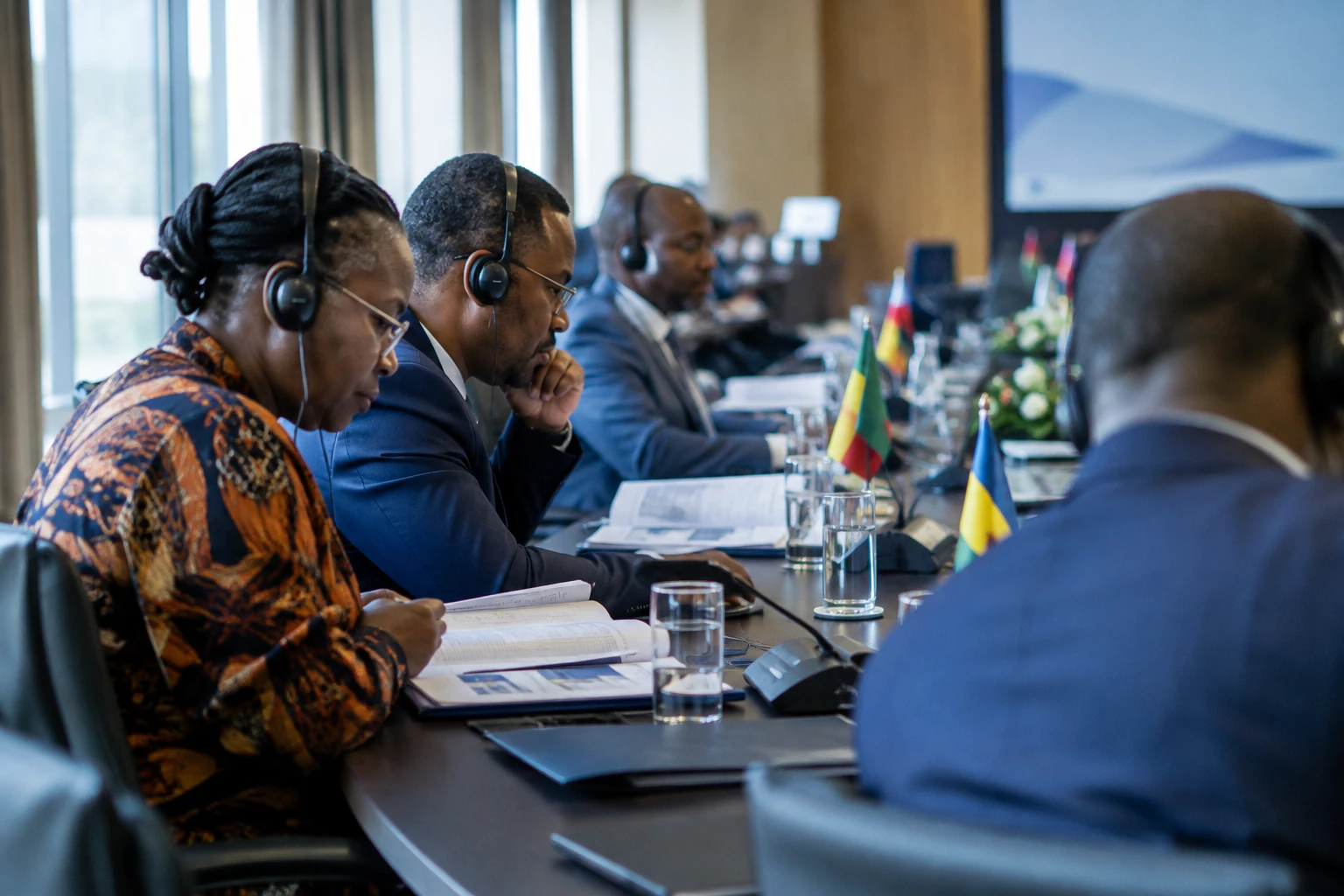
A $500m loan can provide liquidity quickly. By itself, it does not show whether a state can fund its spending sustainably without increasing its debt burden. For Egypt, the operation brings a delicate balance back into focus: maintaining access to markets while reducing financial vulnerabilities.
A targeted operation involving bonds already listed
Egypt’s Ministry of Finance announced on 3 November 2026 that it had raised $500m by reopening two existing bond issues. The operation comprises $150m of securities maturing in 2030 and $350m in 2033, giving an average maturity of about five years. Egyptian media reported the same amounts and maturities. The ministry did not make public, in the information consulted, the rates achieved in the operation. Ahram Online and EgyptToday also reported the announcement.
A reopening involves selling additional securities attached to bonds that have already been issued. This allows the state to avoid creating a new debt line and to rely on contractual terms already in place. The approach reduces some of the costs associated with an entirely new issue. It does not, however, guarantee either a favourable rate or sufficient demand: the price still depends on investor interest and the risk they attribute to the country.
Larger bond issues are generally easier for investors to trade with one another. Increasing their outstanding amount can therefore improve their liquidity on the secondary market, where securities are resold after issuance. But this mechanism alone does not make it possible to conclude that Egypt secured cheaper financing. Without a disclosed coupon or yield, that assessment cannot be verified.
Economic recovery, but financing needs persist
Egypt’s context combines improving indicators with significant exposure to external shocks. The authorities announced growth of 5.1% for the 2025/2026 fiscal year, which ended on 30 June 2026, compared with about 4.4% the previous year. The national urban inflation rate stood at 13.9% in September 2026. These figures point to an improvement, without removing pressure on public finances or the difficulties facing household purchasing power. Egypt’s State Information Service published the growth figure, while an economic tracker compiling data from the Central Bank and CAPMAS confirms September’s inflation rate.
The International Monetary Fund also notes that the recovery remains exposed to regional instability. In its 2026 review, it cites, in particular, the risks that a prolonged disruption to Red Sea traffic would pose to Suez Canal revenues, tourism and capital inflows. For Egypt, these foreign-currency earnings are important: they help fund imports and meet external needs. A fall in revenues can therefore make recourse to international financing more pressing. The IMF’s review of Egypt describes these risks and the financing context.
Since 2024, economic reforms have included liberalising the exchange rate, monetary adjustments and measures aimed at attracting investment. The IMF-backed programme is accompanied by support from other international partners. This financing can bolster reserves and support the balance of payments. In return, fiscal reforms and cuts to some subsidies directly affect households and businesses, particularly when energy prices and the cost of imported goods rise.
Public debt: the cost is also felt in the budget
The $500m raised does not reduce debt: it provides the state with resources in exchange for new repayment obligations. The practical effect will depend on how the funds are used, their cost and the government’s ability to refinance future maturities. The ministry presents the operation as a way to diversify financing instruments and markets. This strategy spreads borrowing sources, but does not remove the risk associated with accumulating debt.
The IMF notes that Egypt’s gross financing needs remain high in the short term and that the country’s banks hold a significant share of sovereign debt. This close relationship can help the state place its securities on the domestic market. It also creates shared exposure: public finances and the banking system can be weakened at the same time if financing conditions tighten.
The government has also used various instruments in recent years: sovereign sukuk, social bonds and Samurai bonds, issued on the Japanese market. This diversification can broaden the investor base and serve different objectives. It does not remove the need to compare the maturities, currencies and guarantees associated with each borrowing instrument. Borrowing in dollars exposes public finances in particular to exchange-rate fluctuations, since debt service must be paid in foreign currency.
A signal watched beyond Egypt’s borders
The operation comes as Egypt says it plans about $3bn in international bond issues for the 2026/2027 fiscal year, subject to market conditions and demand. The announced reopening can therefore be read as a test of the authorities’ access to investors, rather than proof of a lasting return to cheap financing. The yields achieved, upcoming issues and changes in foreign-currency revenues will help determine its significance.
For Egyptians, the issue extends beyond bond markets. The cost of debt service weighs on the budgetary room available for public services, investment and social assistance. Aggregate growth alone does not show how its benefits are distributed among households, businesses and regions. At the same time, maritime disruptions affect national revenues linked to the canal and can make imports more expensive, with effects that reach beyond the capital, Cairo.
At regional level, Egypt’s situation is a reminder of how sensitive North African economies are to trade routes and tensions in the Middle East. Egypt is a member of the African Union and the Arab Maghreb Union, although the latter is not the main framework for its regional economic relations. Traffic through the Red Sea and the Suez Canal, meanwhile, has an impact that extends far beyond national borders. What happens next will therefore depend as much on budget management in Cairo as on developments in maritime trade and international borrowing conditions.