Senegal’s ICS eyes organic fertilisers
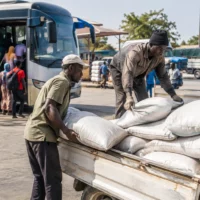
Industries chimiques du Sénégal is testing organic fertilisers with ISRA and plans to market them from the next agricultural season. Volumes, prices and production arrangements remain…
 Algeria
 Angola
 Benin
 Botswana
 Burkina Faso
 Burundi
 Cabo Verde
 Cameroon
 Central African Republic
 Chad
 Comoros
 Côte d'Ivoire
 Djibouti
 DR Congo
 Egypt
 Equatorial Guinea
 Eritrea
 Eswatini
 Ethiopia
 Gabon
 Ghana
 Guinea
 Guinea-Bissau
 Kenya
 Lesotho
 Liberia
 Libya
 Madagascar
 Malawi
 Mali
 Mauritania
 Mauritius
 Morocco
 Mozambique
 Namibia
 Niger
 Nigeria
 Republic of the Congo
 Rwanda
 São Tomé and Príncipe
 Senegal
 Seychelles
 Sierra Leone
 Somalia
 South Africa
 South Sudan
 Sudan
 Tanzania
 The Gambia
 Togo
 Tunisia
 Uganda
 Zambia
 Zimbabwe
Industries chimiques du Sénégal is testing organic fertilisers with ISRA and plans to market them from the next agricultural season. Volumes, prices and production arrangements remain…
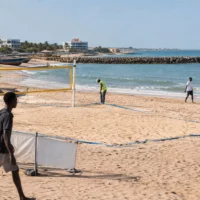
Youth Olympic Games events in Saly are drawing attention to a coast that supports sport, tourism and fishing. Protection works address immediate needs, but managing Senegal’s…
Senegal plans to invest $24.9bn to cut emissions and strengthen climate adaptation by 2035. The plan’s success will depend on donors, private capital and concrete projects…
The national Compact aims to mobilise $4.5bn in investment in water and sanitation between 2026 and 2030. Beyond the announcements, actual funding, network maintenance and access…
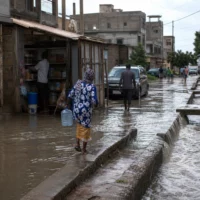
After deadly rains on 4 October, Senegal announced a CFA franc 921.7bn flood strategy. In Dakar, residents are waiting for better-designed drainage networks, maintained infrastructure and…
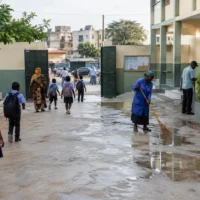
Classes resumed on 12 October in most Senegalese schools after heavy rain delayed the start of term. But 7% of schools remain affected, raising concerns over…
After heavy rain in Dakar, Senegal’s government has announced 921 billion CFA francs to improve drainage, protect exposed areas and move beyond emergency response.
Heavy October rains filled several facilities in Guédiawaye and disrupted Dakar’s suburbs. The episode has reignited debate over the maintenance, capacity and sustainable management of water…
Heavy rains hit Dakar, Kaolack and Matam, causing floods, building collapses and several deaths. Rescue operations continue as the death toll remains provisional.
After heavy rain, Dakar is facing blocked roads and flooded neighbourhoods. The Senegalese government has activated an emergency plan, mobilised rescue services and assessed risks to…
Heavy rain flooded Dakar and several regions of Senegal, disrupting transport and causing several deaths. With 142 mm recorded in 24 hours, the episode has revived…
In Senegal’s groundnut basin, Faidherbia albida is gradually disappearing from fields. In Diohine, farmers and researchers warn of the threat to soil fertility and stable harvests.
In Thiawlène, a former illegal dump in Rufisque has been turned into a community ecological zone. Sorting, composting and recycling are changing residents’ habits and reducing…
Protected as a geographical indication, Casamance madd is gaining value and opening up to exports. But the sector is still held back by artisanal processing and…
In the Serer village of Diohine, residents are reviving communal fallowing to slow the impoverishment of the land. This collective practice helps the soil regenerate in…
In Linguère and Koungheul, Senelec is launching new solar projects backed by batteries, confirming storage’s growing role in Senegal’s energy strategy.
Facing land degradation, Senegal is turning to digital tools and indigenous knowledge to improve the monitoring of forests and soils.
In Dakar, Maket is organising the resale of second-hand luxury clothing and accessories. The startup is betting on anonymity, quality and circular fashion to attract urban…
In the Sine Saloum and Casamance, a Senegalese start-up is converting traditional pirogues to electric motors, cutting costs, noise and pollution.
In Dakar, Modou Fall walks the streets dressed in plastic to denounce pollution and highlight the urgency of enforcing Senegal’s environmental laws.
In Casamance, Mariama Sonko champions women’s access to land, local seeds and savings. Her journey shows how agroecology can strengthen the autonomy of rural women in…