Algeria
 Egypt
 Libya
 Morocco
 Sudan
 Tunisia
 Benin
 Burkina Faso
 Cabo Verde
 Côte d'Ivoire
 Ghana
 Guinea
 Guinea-Bissau
 Liberia
 Mali
 Mauritania
 Niger
 Nigeria
 Sierra Leone
 The Gambia
 Togo
 Cameroon
 Central African Republic
 Chad
 DR Congo
 Equatorial Guinea
 Gabon
 Republic of the Congo
 São Tomé and Príncipe
 Burundi
 Comoros
 Djibouti
 Eritrea
 Ethiopia
 Kenya
 Madagascar
 Malawi
 Mauritius
 Mozambique
 Rwanda
 Seychelles
 Somalia
 South Sudan
 Tanzania
 Uganda
 Angola
 Botswana
 Eswatini
 Lesotho
 Namibia
 South Africa
 Zambia
 Zimbabwe
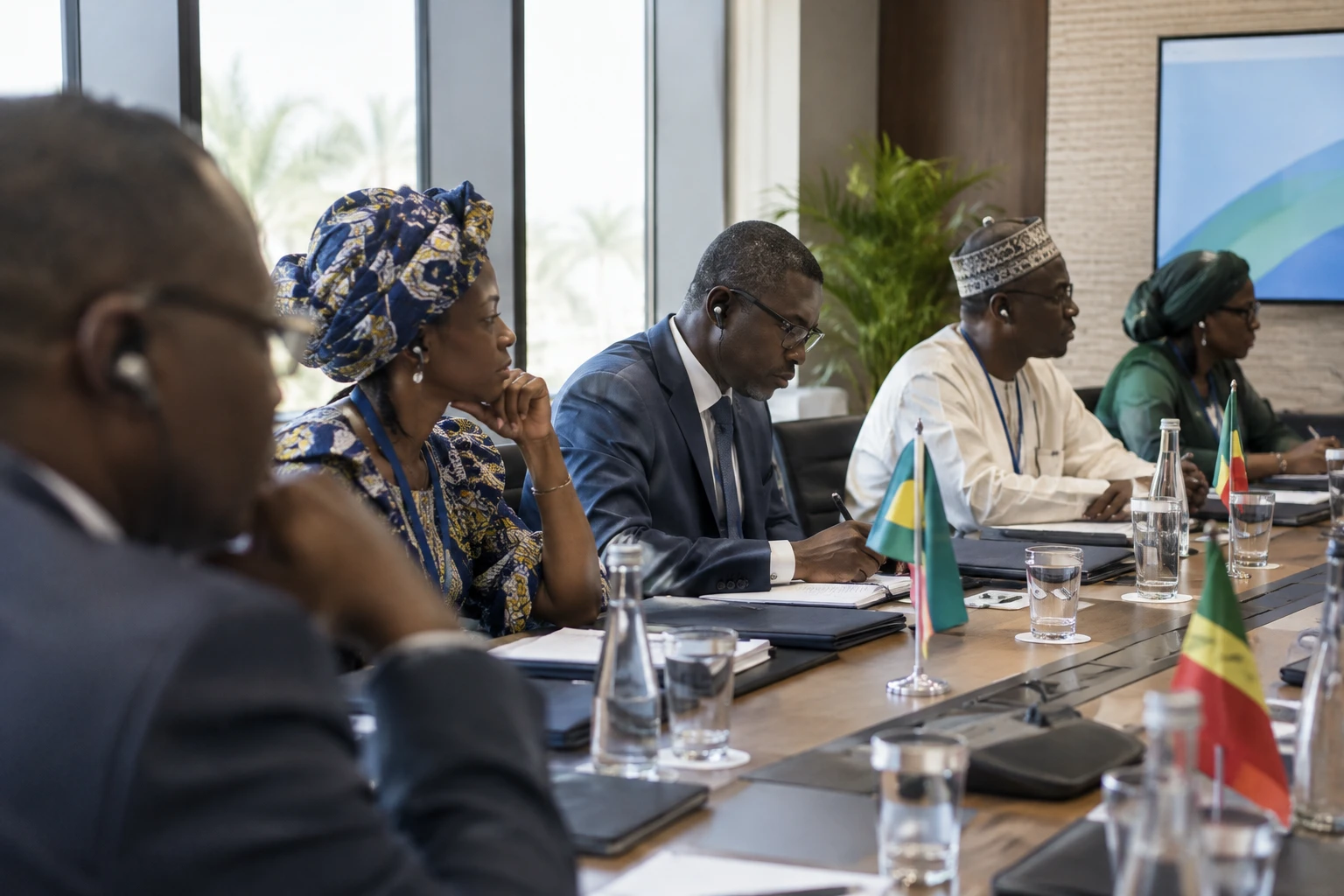
In Dakar, water security is at stake as much in taps as in fields and neighbourhoods exposed to flooding. Senegal wants to raise $4.5bn over 2026-2030 to turn these needs into sustainable investment. But the announcement raises a central question: how much of this funding will actually be secured, and which areas will see the benefits?
A financial target to turn into projects
The 2026-2030 National Water Security Compact aims to mobilise $4.5bn for water and sanitation. The Compact document, prepared by Senegal’s Ministry of Water and Sanitation, presents this as a collective effort involving the state, the World Bank, the African Development Bank, bilateral partners and the private sector. It is therefore an investment target, not a sum already raised or disbursed.
Minister Cheikh Tidiane Dièye announced this ambition on 20 October in Dakar, at a workshop preparing for the United Nations Water Conference. The Presidential Water Pact, which the authorities are expected to launch, is also intended to make the national mobilisation part of the Senegal 2050 Agenda. Funding arrangements, project timelines and the allocation of responsibilities will be crucial to measuring progress.
The Compact sets targets for 2030. These include expanding access to water and sanitation, reducing network losses and improving wastewater treatment. To make these commitments verifiable, the document provides for indicators and monitoring mechanisms. Regular publication of results will make it possible to distinguish between announcements, committed funding and infrastructure actually brought into service.
A resource shared by cities, rural areas and neighbouring countries
Pressure is particularly evident in the Dakar-Mbour-Thiès triangle, where population, economic activity and demand for drinking water are concentrated. The World Bank estimated in 2022 that withdrawals could rise by 30 to 60% by 2035. It also noted agriculture’s dependence on surface water during periods of low rainfall, while groundwater is exposed to over-extraction and pollution.
Needs vary from place to place. In urban centres, the challenges include continuity of service, network expansion and sanitation. In rural areas, they also include maintaining boreholes and water quality. In the Senegal River Valley, farmers depend on water for irrigation, but trade-offs between agriculture, household consumption and ecosystem protection become more sensitive when rainfall is scarce.
Water security also extends beyond Senegal’s borders. The Senegal River is managed in cooperation with Mauritania, Mali and Guinea through the Senegal River Basin Development Authority (OMVS), which coordinates, among other things, the use of shared infrastructure. Senegal also participates in the Gambia River Basin Development Organization (OMVG). These regional frameworks make coordination between states essential for agricultural use, water supply and energy production.
Funding institutions and maintenance too
The announced sum alone does not guarantee a more reliable service. Results will depend on project selection, costs over time and the ability to fund operations and maintenance. New infrastructure can increase supply, but it will not automatically address network losses, resource pollution or access difficulties faced by some households.
The Compact therefore combines investment with institutional reforms. The World Bank stresses that water security requires better coordination between sectors and changes to the rules governing water and sanitation services. For Senegalese people, practical assessment will hinge on water quality and reliability, access to sanitation facilities and reduced risks from wastewater or flooding.
Funding choices also matter. The Compact plans to mobilise public and private resources, as well as development partners. It will be important to track the actual contribution from each, the conditions attached to funding and any costs borne by users. Clear information on contracts, timelines and results will help assess whether investment meets priorities defined in Senegal.
An international event, with results to monitor
The timetable gives this strategy regional and international significance. Senegal will co-host the United Nations Water Conference with the United Arab Emirates, scheduled for 8-10 December 2026 in Abu Dhabi. The meeting is intended to help accelerate progress towards the United Nations Sustainable Development Goal on water and sanitation. For Dakar, it offers a platform to highlight national priorities and cooperation on transboundary basins.
The diplomatic gathering will not, however, replace the monitoring of projects in Senegal. The next steps to watch are implementation of the Compact, confirmation of funding, the launch of the Presidential Pact and publication of results. The test will also be territorial: benefits must reach the capital as well as secondary cities and rural areas, without pitting household water needs against those of agriculture.
In West Africa, where several rivers cross national borders, water management depends as much on infrastructure as on cooperation and data sharing. Senegal’s experience will be watched at this scale—not as a one-size-fits-all model, but to see how a country brings together funding, access to services, agriculture and shared resource governance.