
 Algeria
 Egypt
 Libya
 Sudan
 Tunisia
 Benin
 Burkina Faso
 Cabo Verde
 Côte d'Ivoire
 Ghana
 Guinea
 Guinea-Bissau
 Liberia
 Mali
 Mauritania
 Niger
 Nigeria
 Senegal
 Sierra Leone
 The Gambia
 Togo
 Cameroon
 Central African Republic
 Chad
 DR Congo
 Equatorial Guinea
 Gabon
 Republic of the Congo
 São Tomé and Príncipe
 Burundi
 Comoros
 Djibouti
 Eritrea
 Ethiopia
 Kenya
 Madagascar
 Malawi
 Mauritius
 Mozambique
 Rwanda
 Seychelles
 Somalia
 South Sudan
 Tanzania
 Uganda
 Angola
 Botswana
 Eswatini
 Lesotho
 Namibia
 South Africa
 Zambia
 Zimbabwe
An organisation under pressure, a summit under scrutiny
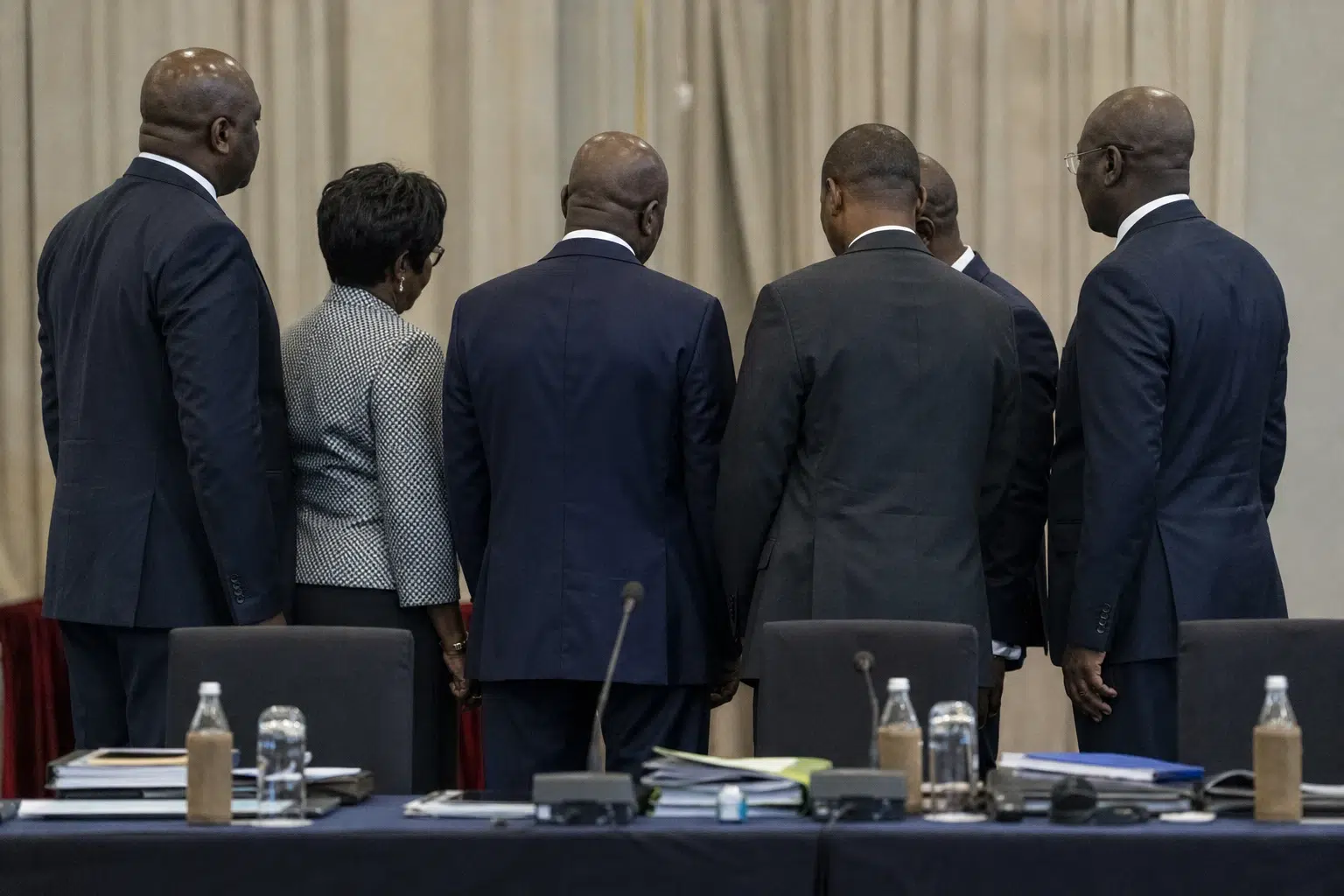
In Freetown, ECOWAS was not merely seeking to fill its seats. Above all, it was trying to answer a simple but weighty question: how can it remain useful to member states beset by coups, rising armed threats and political distrust? The 69th ordinary summit, held on 19 July 2026 in Sierra Leone, took place amid an urgent need to restore credibility. Sierra Leonean President Julius Maada Bio, who chaired the meeting, called for “profound change” within the organisation, at a time when it is seeking to reorganise after a period of severe institutional upheaval.
The Economic Community of West African States, founded to facilitate economic integration and the free movement of people, must now contend with an environment far harsher than the one it faced at its inception. The announced withdrawal of Burkina Faso, Mali and Niger, three members of the Alliance of Sahel States, has weakened its political unity, while terrorist attacks continue to weigh on coastal states as well as the Sahelian region. At the same time, the region is nevertheless making progress on some practical projects, such as energy interconnections and security cooperation mechanisms.
Birame Diop, a military profile for institutional renewal
The summit’s main signal came from the ECOWAS Commission. Heads of state appointed Senegalese general Birame Diop as its president for the next four years. He succeeds Gambian statesman Omar Alieu Touray. The appointment did not surprise observers, as Birame Diop was the only candidate for the post.
The new Commission president brings a rare background to the role. Dakar appointed him Minister of the Armed Forces in 2024, and he left the portfolio in June 2026 during a new government reshuffle. The Senegalese presidency later confirmed, in the government line-up published on 1 June 2026, that Yankoba Diémé had taken over the ministry. Before that, Birame Diop had led Senegal’s armed forces as chief of the general staff, then served from 2021 to 2024 as military adviser to the UN Department of Peace Operations. The UN had already described him as an officer with extensive experience, who had also served on the mission in Congo in 2002-2003, in the east of the Democratic Republic of the Congo.
This background partly explains the choice made by the heads of state. ECOWAS wants a leader able to speak on security, but also on administration, diplomatic mediation and multilateral coordination. In a region where military, electoral and economic agendas overlap, a former senior military official could help bring greater discipline to a regional body often accused of moving too slowly. But the choice also carries high expectations: authority alone will not be enough. Results on the ground will be needed.
Security, funding and cooperation: the three fronts of the battle
In Freetown, the summit stressed the importance of the regional Standby Force, the collective military mechanism ECOWAS wants to make operational in response to terrorism and cross-border crises. This is not a new issue. As early as 2024, the region’s defence and finance ministers had met in Abuja to discuss its activation and funding, showing that the challenge is not only military: it is also budgetary, political and logistical.
The summit also took a broader view of security. Leaders know the threat is not confined to the Sahel. It is spreading towards coastal countries, disrupting trade, driving up transport costs, diverting public resources and forcing states to weigh security spending against social needs. For the population, this means less safe roads, disrupted markets and greater pressure on basic services. For governments, the question is different: they must cooperate without appearing to surrender sovereignty.
In this context, cooperation with the AES countries remains a major political test. ECOWAS speaks of dialogue, interconnection and coordination against common threats. The three Sahelian states, for their part, have long denounced an organisation they consider too distant from security realities on the ground. The new Commission will therefore have to tread a fine line: maintaining bridges without obscuring the political rupture. This requires method, but also patience.
The Nigeria-Morocco gas pipeline, a symbol of integration with tangible results
The Freetown summit also approved another strategic project: the Nigeria-Morocco gas pipeline. According to the official statement circulated after the meeting, heads of state endorsed the intergovernmental agreement governing the project, presented as an energy corridor of about 6,800 kilometres. It is intended to link Nigeria to Morocco, running along several countries on Africa’s Atlantic coast, with the stated ambition of eventually connecting to the European gas network.
This decision is significant. It places ECOWAS within a drive to develop major infrastructure, as states in the subregion seek projects capable of generating revenue and jobs and creating interconnections. For Nigeria, a major gas producer, the challenge is to turn energy wealth into a diplomatic and industrial lever. For Morocco, the project is a way to anchor a continental corridor that strengthens its position as a crossroads. For the countries along the route, the impact will depend on the terms of financing and governance, and on the benefits delivered locally.
Senegalese President Bassirou Diomaye Faye took over the rotating ECOWAS presidency at the end of the summit. His election reflects hopes for leadership able to speak both to Sahelian capitals and coastal countries, as well as to public opinion weary of repeated crises. Dakar thus inherits a particular political responsibility: to show that a reformed ECOWAS can still influence security, the economy and the movement of people.
The summit’s continental significance ultimately lies in this mix of caution and ambition. On the one hand, the organisation is trying to repair its divisions. On the other, it continues to invest in major projects, such as energy and collective security. The future will probably be decided there: in ECOWAS’s ability to prove over the coming months that its institutional reforms can produce visible effects, not just statements.



