Algeria
 Egypt
 Libya
 Morocco
 Sudan
 Tunisia
 Benin
 Burkina Faso
 Cabo Verde
 Côte d'Ivoire
 Ghana
 Guinea
 Guinea-Bissau
 Liberia
 Mauritania
 Niger
 Nigeria
 Senegal
 Sierra Leone
 The Gambia
 Togo
 Cameroon
 Central African Republic
 Chad
 DR Congo
 Equatorial Guinea
 Gabon
 Republic of the Congo
 São Tomé and Príncipe
 Burundi
 Comoros
 Djibouti
 Eritrea
 Ethiopia
 Kenya
 Madagascar
 Malawi
 Mauritius
 Mozambique
 Rwanda
 Seychelles
 Somalia
 South Sudan
 Tanzania
 Uganda
 Angola
 Botswana
 Eswatini
 Lesotho
 Namibia
 South Africa
 Zambia
 Zimbabwe
In Ituri, Ebola is never just a health issue
In the east of the Democratic Republic of the Congo, an outbreak never unfolds in isolation. It encounters fragile roads, population displacement, highly mobile mining areas and public trust often tested by repeated crises. This combination gives the 17th Ebola virus disease outbreak a significance far beyond the number of people who have fallen ill.
As of 15 July 2026, the World Health Organization reported 2 124 confirmed cases and 828 deaths in the DRC, with active transmission in 38 health zones across five provinces, including Ituri, North Kivu, South Kivu, Haut-Uele and Tshopo. Africa CDC, for its part, declared the outbreak a public health emergency of continental security on 18 May, citing the risk of regional spread.
An outbreak declared in spring, then accelerated by mobility in the east
The outbreak was declared on 15 May 2026 by Congolese and Ugandan authorities after Ebola of the Bundibugyo strain was confirmed. The strain is important to specify: it belongs to the ebolavirus family, but at this stage does not have the same specific countermeasures as the Zaire strain, which is often better known to the general public. The WHO also stressed that this was a public health emergency of international concern, given that the situation already involved two countries and a densely connected cross-border area.
The first known outbreak began in Ituri, in an environment where travel to and from Uganda, movements linked to mining activities and insecurity make contact tracing difficult. Africa CDC emphasised this from the outset, citing intense mobility, insecurity and proximity to other states in the Great Lakes region. The risk is therefore not only medical. It is also logistical, social and cross-border.
The figures that matter and what they say about the Congolese response
The toll is changing rapidly. On 9 June, Radio Okapi had already reported 515 confirmed cases and 91 deaths, citing the National Public Health Institute. On 12 July, the same outlet reported 43 new cases and 24 additional deaths in Ituri and North Kivu. Then, on 15 July, a new official update cited 1 926 confirmed cases and 702 deaths. Finally, on 17 July, the WHO published an even higher update, reporting 2 124 cases and 828 deaths as of 15 July. This rapid rise reflects not only the spread of the outbreak, but also intensified surveillance, testing and laboratory confirmation.
In July, the DRC’s Public Health Emergency Operations Centre reported that imported cases had been confirmed as far as Tshopo, including in Kisangani, widening the area under close watch. One of the most concerning signs remains the impact on healthcare workers: as early as May, the WHO had reported deaths among health workers in Mongbwalu. This weighs heavily in an Ebola outbreak. When healthcare workers fall ill, trust falters and the system is weakened.
What this crisis means for Congolese people and the region
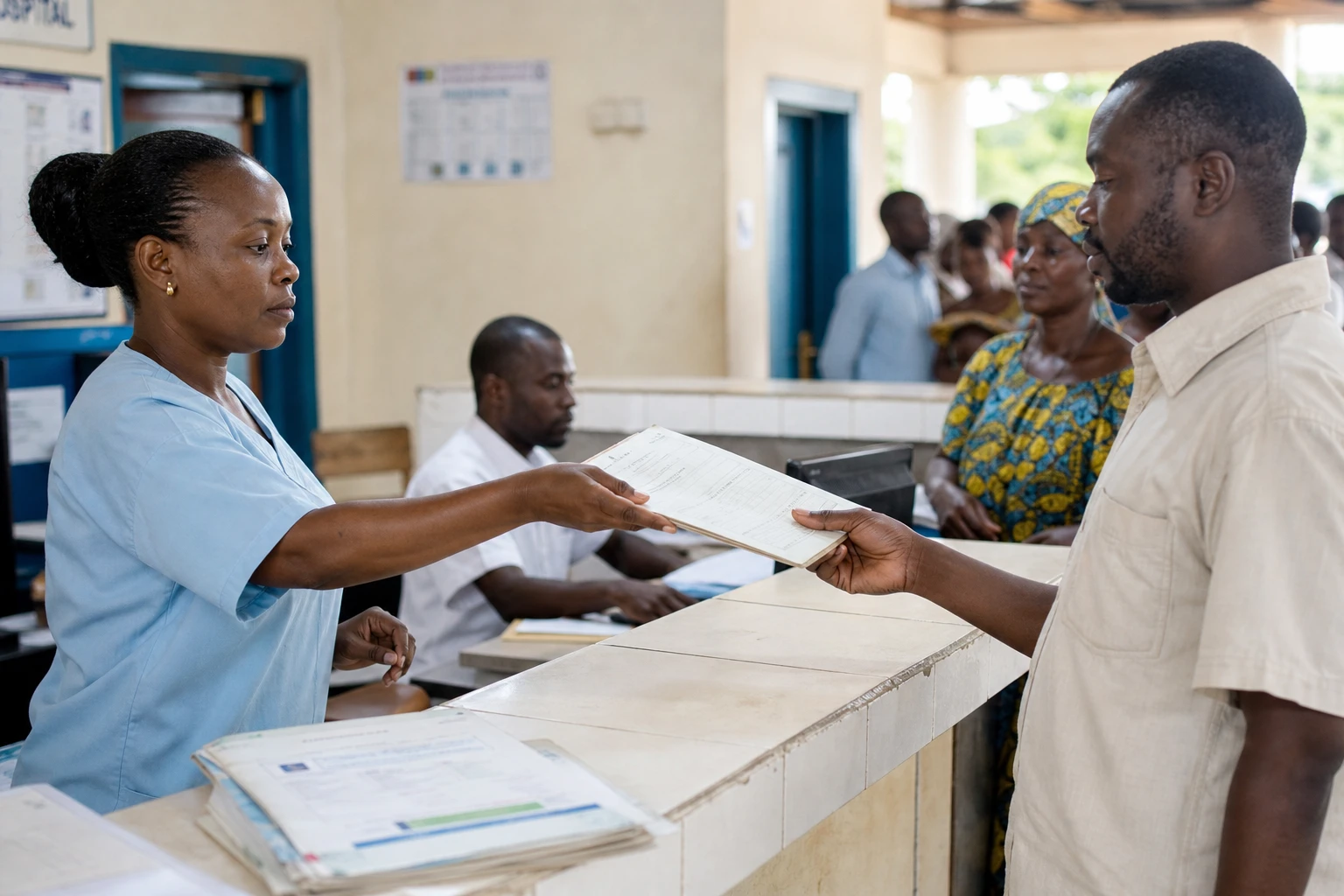
For people in affected areas, the immediate challenge is to reach a treatment centre quickly, be isolated in time, trace contacts and then return to normal life. For families, the disease disrupts funeral rites, movement between villages and daily incomes. For the authorities, it requires balancing public health measures with the continuation of economic life in a part of the country already battered by armed violence and internal displacement. In practice, the response is taking place as much in treatment centres as in markets, schools, churches and transport routes.
The case of the DRC also underscores a continental reality: public health crises in Central Africa almost never remain within national borders. That is precisely why Africa CDC has taken the lead on regional coordination, working with health ministries, the WHO and technical partners. The end of the outbreak in Uganda, announced on 28 July after 42 days without a new case, brought relief to the DRC’s neighbour, but did not end the need for vigilance on the Congolese side. As long as health zones in the DRC remain affected, the threat remains cross-border.
The pan-African significance is clear. This outbreak is testing the continent’s ability to detect cases early, share information swiftly and support the countries most at risk without waiting for an international alert. It also raises questions about health system preparedness in highly mobile regions, from the Great Lakes corridor to more distant borders. In the DRC, the immediate challenge is therefore not just to count cases. It is to break chains of transmission before they spread to other provinces, and then to other countries. Once again, that is where the difference lies between a contained emergency and a prolonged regional crisis.