Algeria
 Egypt
 Libya
 Morocco
 Sudan
 Tunisia
 Benin
 Burkina Faso
 Cabo Verde
 Côte d'Ivoire
 Ghana
 Guinea
 Guinea-Bissau
 Liberia
 Mali
 Mauritania
 Niger
 Nigeria
 Senegal
 Sierra Leone
 The Gambia
 Togo
 Cameroon
 Central African Republic
 Chad
 Equatorial Guinea
 Gabon
 Republic of the Congo
 São Tomé and Príncipe
 Burundi
 Comoros
 Djibouti
 Eritrea
 Ethiopia
 Kenya
 Madagascar
 Malawi
 Mauritius
 Mozambique
 Rwanda
 Seychelles
 Somalia
 South Sudan
 Tanzania
 Uganda
 Angola
 Botswana
 Eswatini
 Lesotho
 Namibia
 South Africa
 Zambia
 Zimbabwe
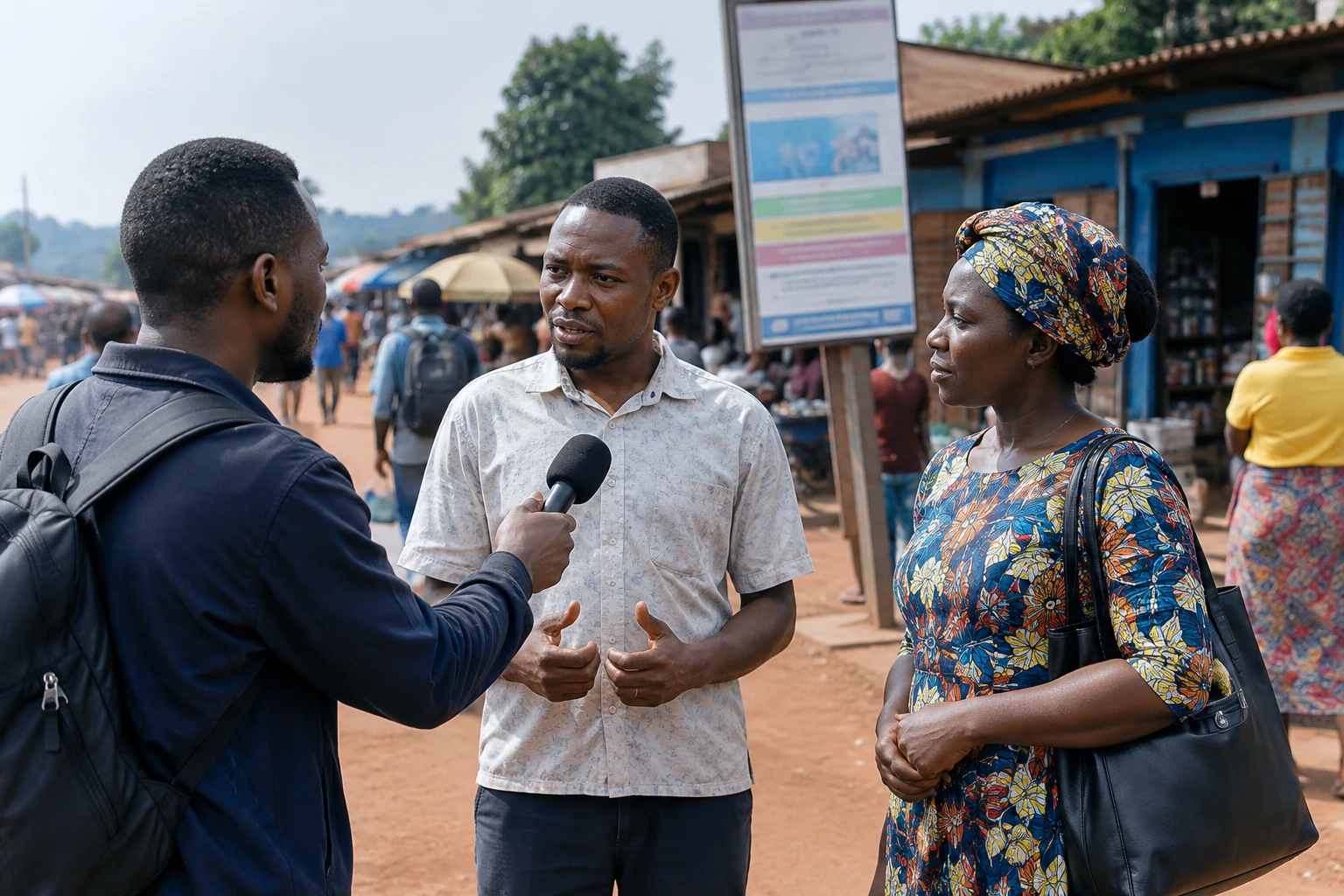
When a trade route empties or a border post slows down, an epidemic does not remain confined to treatment centres. In eastern Democratic Republic of the Congo, the response to Ebola is also disrupting travel, trade and household incomes.
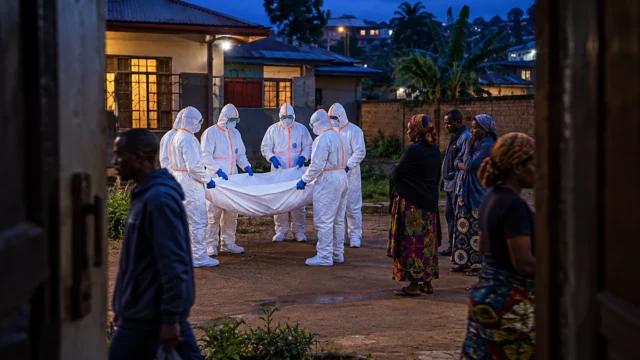
This economic pressure is adding to a major health emergency. Declared on 15 May 2026, the 17th Ebola outbreak in DR Congo is caused by the Bundibugyo virus. As of 13 October, Congolese authorities had reported 9,066 confirmed cases and 4,381 deaths, according to figures reported by the Associated Press. The World Health Organization is also monitoring the spread of the outbreak, which affects several provinces in the east of the country.
In the east, public health and trade are linked
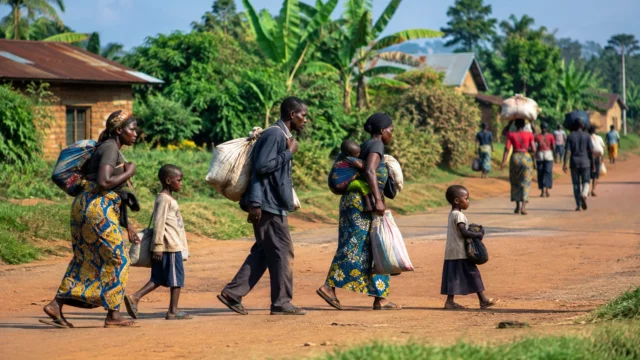
The outbreak is centred in a region where the movement of people and goods connects cities, rural areas and neighbouring countries. Ituri and North Kivu, in particular, trade with Uganda. For small traders, transporters and market vendors, a travel restriction can quickly reduce daily earnings.
Closing a border crossing or stepping up checks is intended to limit the risk of transmission. But it can also lengthen journeys, disrupt supplies and undermine businesses that depend on cross-border trade. Goods may sometimes continue to move while travel by people is restricted: the economic impact therefore depends on the measures actually implemented at each crossing point.
DR Congo’s Minister of Foreign Trade, Julien Paluku, had put trade between DR Congo and Uganda at nearly $800m a year. This figure, cited in earlier public statements, illustrates the importance of the trading relationship but does not measure losses caused by the outbreak. No verified tally of cumulative losses is available here.
The World Bank has said satellite imagery could help identify a decline in activity in affected areas. A fall in night-time light levels is an indirect indicator: it may reflect reduced mobility or a slowdown in trade, but cannot on its own precisely quantify lost output, jobs eliminated or missing tax revenues.
Uneven effects on households and businesses
Health restrictions and fear of infection do not affect everyone in the same way. A well-established company may sometimes relocate its activities or absorb a temporary fall in turnover. An informal vendor, motorbike driver or woman trader who depends on border markets often has fewer reserves. When travel declines, a day’s income can disappear without any compensation mechanism.
Rural areas may also experience disruptions that differ from those in urban centres. Access to healthcare, markets and basic goods sometimes depends on difficult roads or long journeys. Preventive measures must therefore protect health without unnecessarily cutting communities off from essential services. Authorities and partners must also ensure that routine healthcare, particularly for women and children, continues despite the emergency.
The crisis is also unfolding against a backdrop of armed conflict and insecurity that are already making travel more difficult in the east. The outbreak alone does not explain the region’s economic difficulties. It compounds existing constraints and may worsen supply disruptions, investment delays and pressure on public finances.
An estimate mentioned in the initial material suggested that a crisis lasting more than a year could cost up to 2% of gross domestic product. As no dated primary publication detailing this scenario could be found, the figure cannot be presented as an established forecast. It should remain carefully attributed: the consequences will depend on the duration of the outbreak, its geographical spread and the response measures.
Funding the response without disrupting services
On 13 October, the World Bank Group announced $80m in additional funding for DR Congo. The funding is intended to support epidemiological surveillance, laboratories, patient care, infection prevention and work with communities. It is funding for the health response, not direct compensation for affected traders or households.
Other support announced by the World Bank in May was aimed, among other things, at strengthening essential healthcare and testing capacity in the east of the country. These investments can limit the health impact and protect basic services. However, they do not replace a precise assessment of economic losses or targeted schemes for workers and small businesses whose activities are disrupted.
The response also depends on regional cooperation. DR Congo and Uganda share transport routes and must co-ordinate health surveillance at their borders. The WHO has described the outbreak as a major threat to international public health. This dimension underlines that effective regional co-ordination must combine health checks, the movement of essential goods and clear information for the public.
The next challenge: containing the virus and documenting losses
In Kinshasa, response decisions must take account of realities in the affected provinces, where the consequences are felt every day in health centres, markets and transport. For residents, the priority is twofold: access to healthcare and the ability to continue obtaining essential goods. For the authorities, the challenge is to maintain trust, an important condition for people at risk to come forward and for health measures to be followed.
Economic monitoring will need to distinguish the effects of the outbreak from those of insecurity and structural difficulties. It will also need to measure who bears the cost: informal workers, cross-border traders, businesses, local budgets or public services. Without data broken down by province and sector, a national estimate risks obscuring losses concentrated in certain communities.
The course of the outbreak, the practical implementation of border restrictions and the continuity of health funding will therefore be decisive. DR Congo is facing more than a medical emergency: it must prevent the protection of health from turning into a lasting disruption of economic activity and services in the east of the country.