
 Algeria
 Egypt
 Libya
 Morocco
 Sudan
 Tunisia
 Benin
 Burkina Faso
 Cabo Verde
 Côte d'Ivoire
 Ghana
 Guinea
 Guinea-Bissau
 Liberia
 Mali
 Mauritania
 Niger
 Nigeria
 Senegal
 Sierra Leone
 The Gambia
 Togo
 Cameroon
 Central African Republic
 Chad
 Equatorial Guinea
 Gabon
 Republic of the Congo
 São Tomé and Príncipe
 Burundi
 Comoros
 Djibouti
 Eritrea
 Ethiopia
 Kenya
 Madagascar
 Malawi
 Mauritius
 Mozambique
 Rwanda
 Seychelles
 Somalia
 South Sudan
 Tanzania
 Uganda
 Angola
 Botswana
 Eswatini
 Lesotho
 Namibia
 South Africa
 Zambia
 Zimbabwe
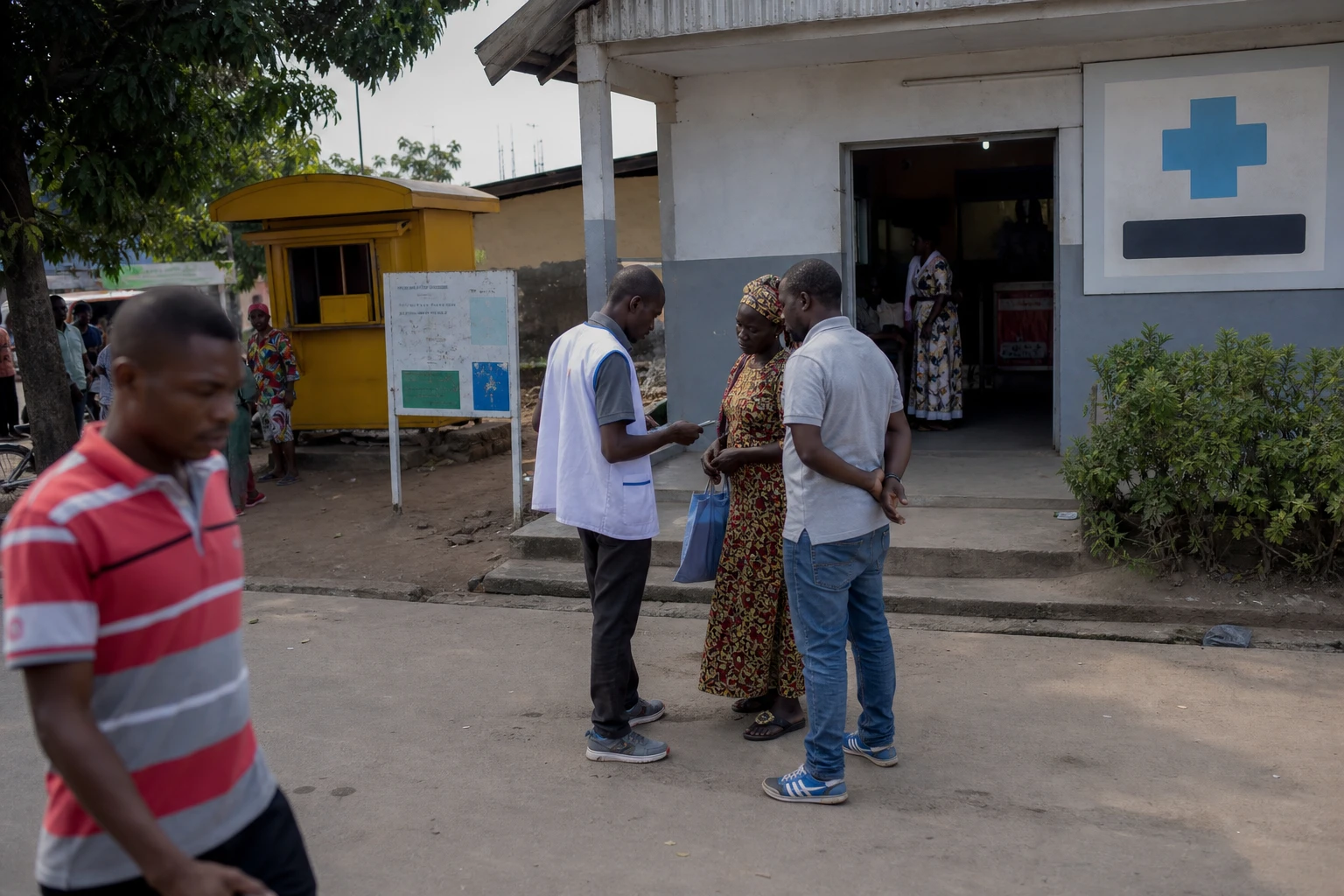
In eastern Democratic Republic of the Congo, every health alert runs up against the same obstacles: difficult roads, isolated areas, local mistrust and pressure from armed groups. In this setting, Ebola is measured not only in confirmed cases. It is also reflected in how fast the response must move to avoid being overwhelmed.
The latest signals from Bunia, in Ituri, point to an outbreak that remains under strain. According to health authorities and response partners, the Ebola epidemic in DR Congo has passed a grave threshold, with more than 2,500 deaths reported and a spread described as exponential by the UN’s senior coordinator on the ground. The World Health Organization confirms this is the 17th Ebola outbreak recorded in the country since 1976, and that it began in May 2026 in Ituri province, in the country’s north-east.
A health crisis taking hold at the heart of Ituri
Ituri is not just a point on the map. It is a border province criss-crossed by population movements, mining activity, forced displacement and pockets of insecurity. Bunia, its provincial capital, serves as an administrative centre, a logistics hub and an operational base for the response. It is also where a decisive part of the battle against the virus is being fought.
DR Congo knows Ebola well. The country has already faced several major outbreaks, including the one in the east in 2018-2020, which remained the deadliest in its history for a long time before being surpassed by the current wave. This experience strengthened some capacities, but also exposed lasting weaknesses: underfunded health systems, unequal access to care, difficulties moving teams around and attacks on medical facilities. The 2026 outbreak is part of this long history, in which the health response often advances at the same pace as security constraints.
International partners are describing a crisis spreading beyond its initial epicentre. The UN says the affected area is larger than France, a comparison often used to convey the scale of the outbreak, but one that says nothing about the complexity of conditions on the ground in Congo. The real difficulty is not just geographical. It is logistical, community-based and political.
High figures, a response under pressure
The latest data point to a rapid increase in deaths and the spread of the disease to other health zones. The WHO says the outbreak was officially declared on 15 May 2026, after laboratory confirmation of the Bundibugyo virus, an Ebola strain for which no specific approved treatment or vaccine is available. This weighs heavily on the response strategy, as it limits the tools that can be deployed immediately.
On the ground, health teams must contend with another challenge: transmission sometimes outpaces the capacity to raise alerts, transport and isolate cases. The UN says additional resources have been sent to Bunia, notably by the United Nations Organization Stabilization Mission in the DR Congo, which deployed cargo flights to transport medical equipment from Kinshasa and Nairobi. This logistical support demonstrates the central role of the Congolese capital in national coordination, but also the continued dependence on air corridors to reach the east of the country.
The figure of more than 2,500 deaths cited by the UN coordination team should be read as a warning, but also as an indication of the limits of health coverage. In rural areas and urban outskirts, information circulates poorly, rumours travel fast and families sometimes delay seeking care. Added to this is fear of treatment centres, which are still often seen as places of isolation rather than care.
The situation also recalls another fact: in DR Congo, epidemics almost never unfold in isolation. They intersect with the movement of displaced people, funding constraints, security tensions and community fatigue after several years of successive crises. It is this combination that makes the response more complex than a simple medical campaign.
What the outbreak means for DR Congo and the region
For the Congolese government, the immediate challenge is twofold. It must break the chain of transmission, while also maintaining trust in health institutions. Without that trust, monitoring suspected cases, tracing contacts and referring people quickly to treatment centres become less effective. The problem is therefore not only medical. It is also social.
For people in Ituri and neighbouring provinces, the outbreak is making daily life more difficult. Displaced families often live near transport routes, where the virus can spread more quickly. Health workers are paying a high price: several attacks on health facilities have already been reported, and teams working in the field are operating amid constant tension. In these conditions, protecting staff and securing community support are as important as stocks of gloves, tests or vehicles.
At regional level, fears of the outbreak spreading to neighbouring countries remain real. Eastern DR Congo is connected to Uganda, Rwanda and Burundi through daily movements, both formal and informal. That is why the response is not the responsibility of Kinshasa alone. It also concerns the East African Community, health authorities along the borders and regional surveillance mechanisms. Any delay in detecting an isolated case could have serious consequences in areas with intense cross-border movement.
The continental implications are clear. Ebola is once again a reminder that a health crisis in Central Africa can quickly become a regional issue. It tests DR Congo’s ability to protect its eastern provinces, as well as that of the African Union and regional bodies to support rapid, coordinated and credible responses. What happens next will depend on the logistical capacity of the response, the security of teams and the authorities’ ability to maintain access to remote areas in the coming weeks.



