
 Algeria
 Egypt
 Libya
 Morocco
 Sudan
 Tunisia
 Benin
 Burkina Faso
 Cabo Verde
 Côte d'Ivoire
 Ghana
 Guinea
 Guinea-Bissau
 Liberia
 Mali
 Mauritania
 Niger
 Nigeria
 Senegal
 Sierra Leone
 The Gambia
 Togo
 Cameroon
 Central African Republic
 Chad
 Equatorial Guinea
 Gabon
 Republic of the Congo
 São Tomé and Príncipe
 Burundi
 Comoros
 Djibouti
 Eritrea
 Ethiopia
 Kenya
 Madagascar
 Malawi
 Mauritius
 Mozambique
 Rwanda
 Seychelles
 Somalia
 South Sudan
 Tanzania
 Uganda
 Angola
 Botswana
 Eswatini
 Lesotho
 Namibia
 South Africa
 Zambia
 Zimbabwe
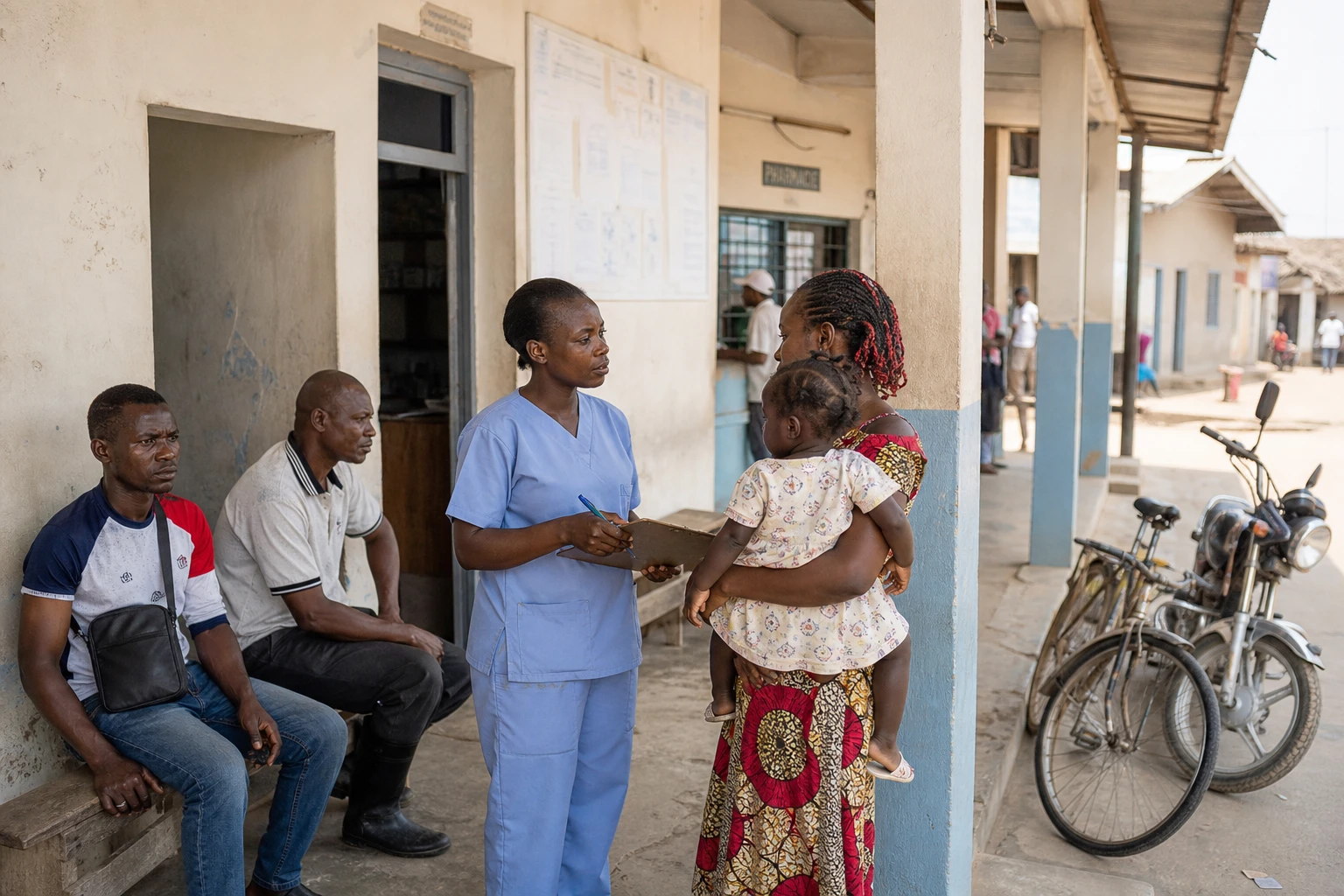
In Ituri, the curve is slowing but the threat remains
In Kinshasa, major health crises are often spoken of as a distant front. In reality, they unfold first in Bunia, Mambasa and Tchomia, in health centres, on dirt roads and in villages where every delay comes at a cost. This is where the Democratic Republic of the Congo is once again measuring the toll of an epidemic that never recedes all at once, even when the pressure begins to ease.
Since 15 May 2026, the country has been facing its 17th Ebola virus disease outbreak, this time caused by the Bundibugyo virus, with an initial outbreak in Ituri. The World Health Organization and Africa CDC describe an outbreak that was initially concentrated in eastern Congo before spreading to other provinces and requiring a coordinated response with the national authorities.
The facts: an outbreak still active, but better contained
The latest available figures show that the situation remains serious. As of 7 September 2026, the WHO reported 6,757 confirmed cases and 3,267 deaths in the DRC, for a crude case fatality rate of 48.3%. The same source said Ituri remained the epicentre, with 5,406 confirmed cases since the start of the outbreak, and that transmission had reached a sixth province, North Kivu, with the outbreak spreading to the Kayna health zone.
The Congolese Ministry of Public Health continued to publish situation reports on 14, 13, 12, 11, 10, 9, 8, 7 and 6 September 2026, pointing to daily monitoring of the outbreak. Africa CDC, for its part, announced a revised 180-day plan in Kinshasa on 4 September to step up the response and save lives. In other words, the response has shifted from immediate emergency action to consolidation, without the outbreak being declared over.
In this context, saying that the peak has “passed” is less an announcement that the crisis is over than a sign of a relative slowing in the curve in some areas. This distinction matters. A temporary fall in new cases does not mean transmission has stopped. It suggests above all that chains of infection may be becoming easier to detect, isolate and monitor. This is an inference based on data published by the WHO and Africa CDC, which continue to stress that the virus is circulating in several health zones.
Why Ituri remains pivotal
Ituri carries considerable weight in this outbreak because it combines several vulnerabilities. The province borders other countries, is crossed by trade and family movements, and has health systems often under strain. When alerts come late, the virus spreads faster than contact-tracing teams can respond. When roads are difficult, sample collection, patient transfers and community surveillance are delayed. The outbreak is therefore not just a medical issue. It also exposes the state of infrastructure, the government’s ability to reach people and the strength of coordination with regional partners.
Kinshasa’s decision to work with the WHO and Africa CDC is strategic. The mechanism helps avoid an isolated response, as eastern DRC shares health and security dynamics with Uganda and South Sudan. Africa CDC had in fact convened an emergency regional meeting with the authorities of all three countries as early as 15 May, demonstrating that monitoring points of entry and cross-border coordination are integral to the response. In the Great Lakes region, a viral outbreak almost never remains local.
The revised 180-day plan launched in early September also confirms that the battle is now a long-term one. Surveillance must be funded, isolation strengthened, healthcare workers protected, safe and dignified burials supported, and community trust maintained. Without this, every apparent setback can be followed by a resurgence. The high mortality figures published by the WHO show that the window for action remains narrow.
Different effects across regions and households
Nationally, the outbreak is hitting the eastern provinces first. But its consequences quickly extend to Kinshasa, where budget decisions are made, and to markets inland, where fear of infection can reduce attendance at healthcare facilities. For households, this means longer journeys, extra expenses and sometimes foregoing routine consultations. For healthcare workers, it means greater risks, more psychological pressure and constant vigilance. For the authorities, it means maintaining public trust in a context where rumours can spread faster than prevention messages.
The contrast between major announcements and everyday life in low-income neighbourhoods, rural communities and outlying health areas is stark. In urban centres, information travels faster. In remote areas, alerts often depend on community networks. This is why national figures must always be read in light of the worst-affected provinces. Ituri is bearing the brunt, while the rest of the country remains exposed through population movements and trade.
A Congolese alert with regional reach
This outbreak extends beyond the Democratic Republic of the Congo alone. It is a reminder that in Central Africa and the Great Lakes region, health security is now a regional issue, on a par with trade, borders and the movement of people. The WHO, Africa CDC and the Congolese authorities are working towards the same goal: preventing the outbreak from becoming a sustained source of cross-border transmission. The coordinated response involving Kinshasa, Addis Ababa and technical health agencies also shows that African crisis-management tools have become central.
The next key test will be whether the curve can be stabilised over several weeks, not just a few days. As long as Ituri remains the epicentre and other provinces are affected, talk of an end to the crisis would be premature. The real signs to look for will be a sustained fall in cases, the full containment of transmission chains and an end to the outbreak’s geographic spread. Until then, the DRC is facing a major public health challenge, as well as a test of institutional credibility and regional cooperation.



