
 Algeria
 Egypt
 Libya
 Morocco
 Sudan
 Tunisia
 Benin
 Burkina Faso
 Cabo Verde
 Côte d'Ivoire
 Ghana
 Guinea
 Guinea-Bissau
 Liberia
 Mali
 Mauritania
 Niger
 Nigeria
 Senegal
 Sierra Leone
 The Gambia
 Togo
 Cameroon
 Central African Republic
 Chad
 Equatorial Guinea
 Gabon
 Republic of the Congo
 São Tomé and Príncipe
 Burundi
 Comoros
 Djibouti
 Eritrea
 Ethiopia
 Kenya
 Madagascar
 Malawi
 Mauritius
 Mozambique
 Rwanda
 Seychelles
 Somalia
 South Sudan
 Tanzania
 Uganda
 Angola
 Botswana
 Eswatini
 Lesotho
 Namibia
 South Africa
 Zambia
 Zimbabwe
An outbreak testing the speed of Congo’s response system
When an Ebola outbreak surpasses 7,000 cases across several provinces, the issue is no longer just a health matter. It is also logistical, social and political. In the Democratic Republic of the Congo, the immediate challenge is clear: contain a disease that is still advancing, while protecting areas where healthcare sometimes arrives late and trust in health alerts remains fragile.
The picture remains mixed. On the one hand, response teams are seeing signs of a slowdown in some areas. On the other, transmission continues to spread and new hotspots are emerging in the east and north-east of the country. Across Africa, the situation is a reminder that a local outbreak can quickly become a regional problem when population movements, border markets and informal routes remain active.
Ituri, North Kivu, Haut-Uélé: the heart of the response
The current outbreak was officially declared on 15 May 2026 by the Congolese authorities. It is caused by the Ebola Bundibugyo virus, a strain already known in the country, but one that is striking in a particularly difficult context: local insecurity, population displacement and irregular access to health facilities. It is the 17th Ebola outbreak recorded in DR Congo since the virus was identified in 1976.
As of 7 September 2026, DR Congo had reported 6,757 confirmed cases and 3,267 deaths, according to data compiled by WHO. Two days later, an outbreak response report cited by Congolese media recorded 7,022 confirmed cases and 3,398 deaths as of 10 September, with a case fatality rate of 48.4%. This rapid increase mainly highlights the scale of the gap between the virus’s actual spread and the ability to record data on the ground.
The disease now affects seven provinces according to the latest reports: Ituri, North Kivu, Haut-Uélé, Tshopo, South Kivu, Bas-Uélé and South Ubangi. Ituri remains the epicentre, with more than 5,400 cumulative cases as of 7 September, while North Kivu accounts for a significant share of new infections. WHO also notes that 61 health zones are affected, and 51 of them had recorded at least one case in the previous 21 days.
This geography matters. In DR Congo, a province is more than a line on a map: it determines the movement of teams, the delivery of equipment, access to laboratories and the speed of treatment. In Ituri, at Lita, the response now relies on triage tents, an operational laboratory and infrastructure upgraded with support from several partners. This kind of arrangement reduces the risk of infection, but it cannot by itself make up for supply disruptions, delays in testing and the fear that still leads some patients to stay at home.
Real progress, but still fragile
International authorities are now reporting encouraging signs. WHO said transmission was declining in some of the hardest-hit areas of Ituri and that South Kivu had reported no new cases since late May. But the organisation stresses one essential point: the national curve has not yet turned down everywhere, and containing the outbreak will require several more months of effort.
This nuanced assessment is important. In an Ebola outbreak, partial improvement does not mean victory. Surveillance teams must monitor contacts, isolate cases quickly, ensure safe care and organise safe burials. Yet as of 7 September, WHO was still reporting 24,719 contacts to be followed up, 85.3% of whom had actually been seen in the previous 24 hours. This is a strong operational result, but also proof that the response remains under strain.
Vaccination and clinical trials have now been added to the arsenal. WHO said the use of Ervebo, the only licensed Ebola vaccine, should remain limited to a research protocol for this Bundibugyo strain, as the available evidence is still insufficient for routine programmatic use. In other words, science is advancing, but not fast enough to remove the need for basic epidemiological control.
On the ground, the challenge goes beyond medicine. DR Congo’s east is a hub for population movements, trade routes and mining activity, and includes areas that are sometimes difficult to reach. WHO has also warned that travel along informal routes could fuel spread across borders. That is why screening at official crossing points, coordination with Uganda and stronger cross-border surveillance remain central.
What this crisis says about DR Congo and the region
For the Congolese authorities, this outbreak is a test of sustained effort. DR Congo has already built up recognised expertise in responding to Ebola. But experience is not enough when the outbreak moves into areas where facilities are fragile, teams are exposed and community fatigue is real. Progress seen in Lita, Bunia and some monitoring areas shows that a response more firmly rooted in local communities can change the course of the outbreak.
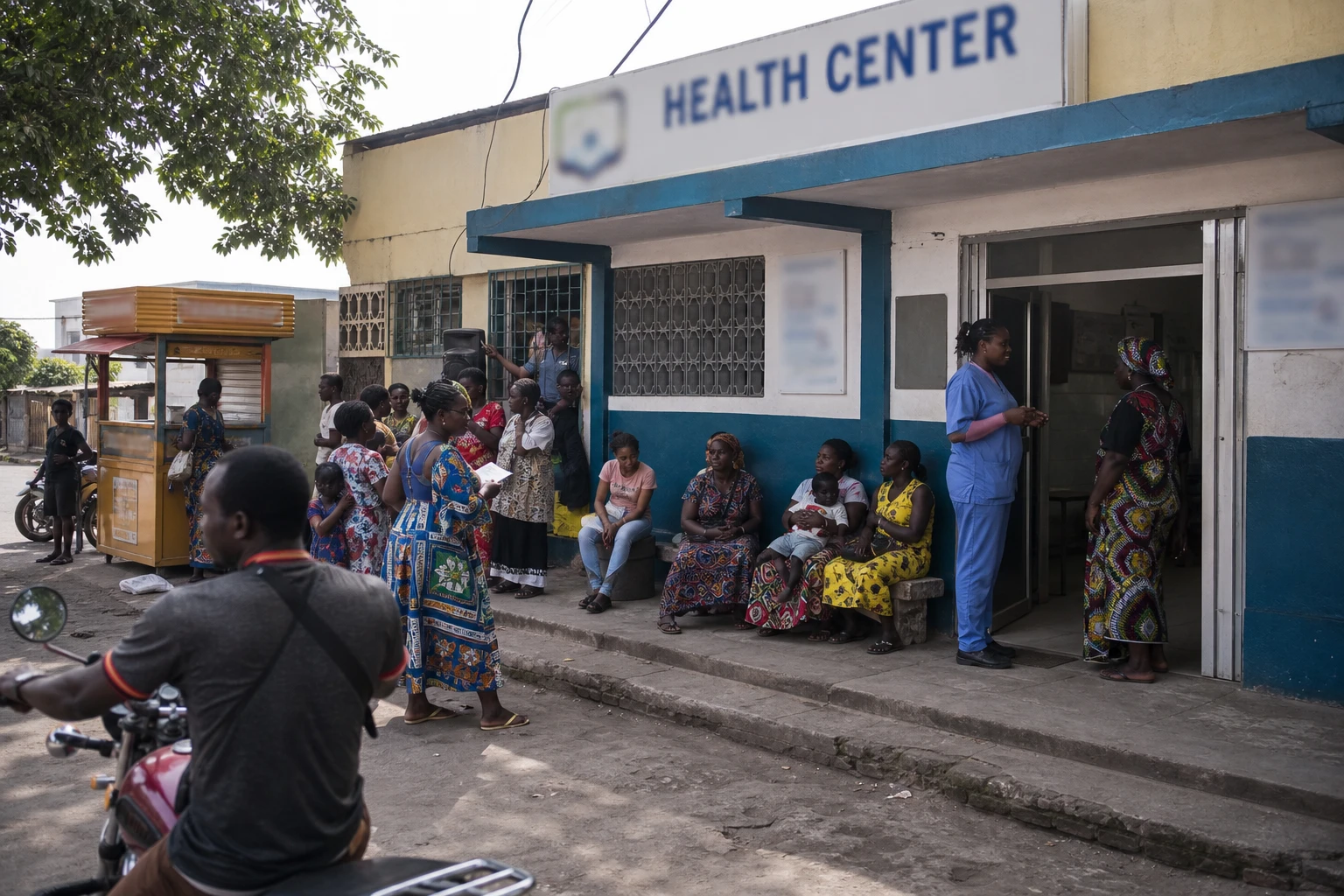
For the population, the difference is measured in very practical steps: knowing where to go at the first symptom, being able to get tested quickly, trusting healthcare workers and not waiting for the condition to worsen. For cities, the challenge is whether hospitals can handle cases without becoming overwhelmed. In rural areas, the first issue is access. When transport takes a long time and diagnosis is delayed, deaths can rise quickly. Outbreak response reports also show that some areas are already using their treatment centres beyond their nominal capacity.
At the continental level, the crisis also highlights the growing role of African coordination. WHO Africa and Africa CDC are monitoring the outbreak as a threat with regional reach, not just a Congolese one. The two institutions have called for stronger surveillance, laboratories and exchanges between neighbouring countries. This approach is vital, because modern epidemics respect neither administrative borders nor bureaucratic delays.
What happens next will therefore depend on three factors: the ability to maintain surveillance in the hardest-hit provinces, the strength of cross-border cooperation, and the speed of therapeutic and vaccine trials within the authorised framework. If these three levers hold, DR Congo can still push back the wave. Otherwise, the disease will continue to gain ground, area by area, for several more months.



