
 Algeria
 Egypt
 Libya
 Morocco
 Sudan
 Tunisia
 Benin
 Burkina Faso
 Cabo Verde
 Côte d'Ivoire
 Ghana
 Guinea
 Guinea-Bissau
 Liberia
 Mali
 Mauritania
 Niger
 Nigeria
 Senegal
 Sierra Leone
 The Gambia
 Togo
 Cameroon
 Central African Republic
 Chad
 Equatorial Guinea
 Gabon
 Republic of the Congo
 São Tomé and Príncipe
 Burundi
 Comoros
 Djibouti
 Eritrea
 Ethiopia
 Kenya
 Madagascar
 Malawi
 Mauritius
 Mozambique
 Rwanda
 Seychelles
 Somalia
 South Sudan
 Tanzania
 Uganda
 Angola
 Botswana
 Eswatini
 Lesotho
 Namibia
 South Africa
 Zambia
 Zimbabwe
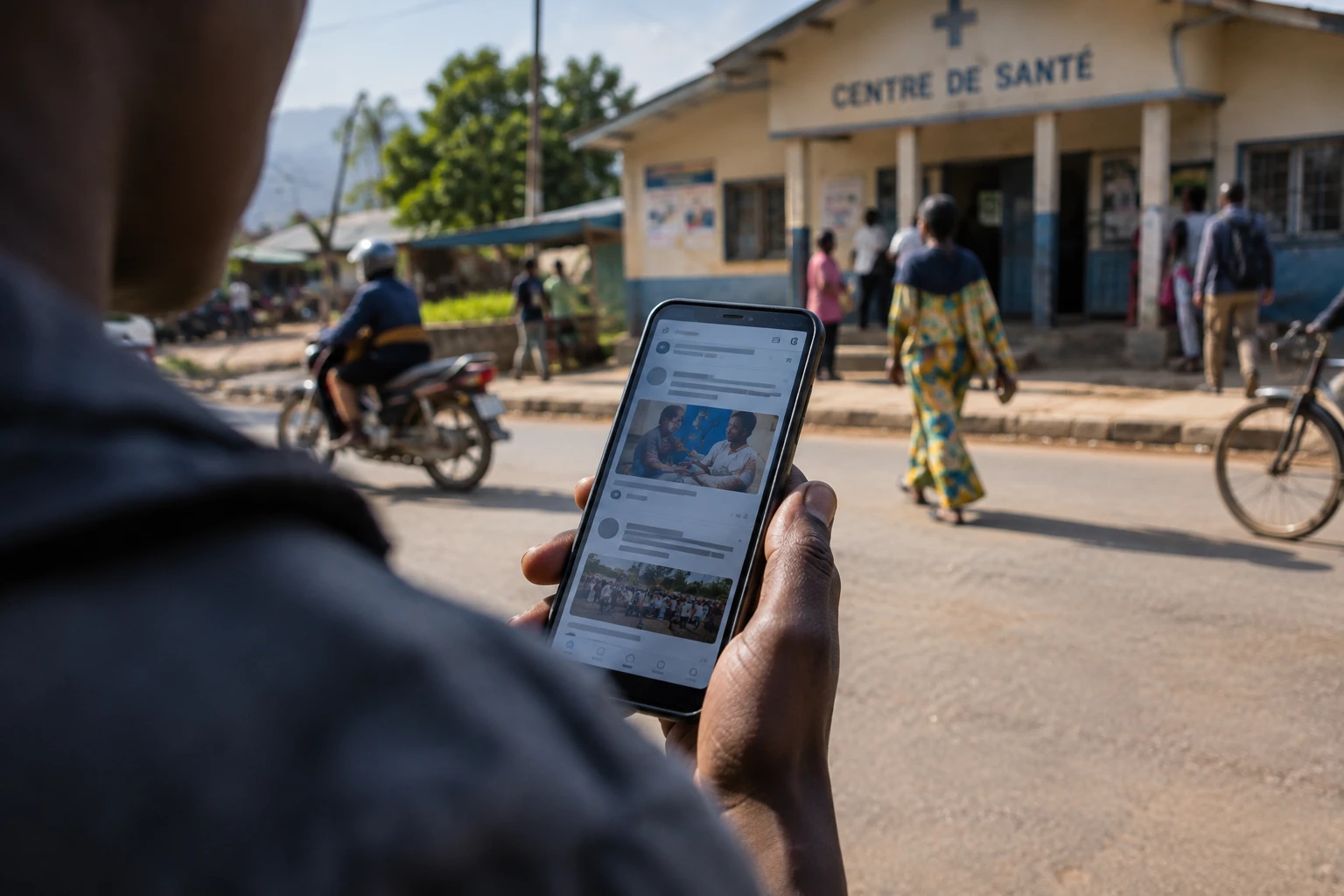
When nearly one death is recorded for every two confirmed cases, the issue is no longer just how quickly a virus spreads. It also highlights the difficulties of identifying patients, tracing their contacts and making care accessible in areas where insecurity and displacement complicate health work.
As of 13 October 2026, authorities in the Democratic Republic of the Congo (DR Congo) reported 9,066 confirmed cases and 4,381 deaths linked to the Bundibugyo outbreak. The toll, reported by the Associated Press using figures from the health ministry, exceeds that of every previous outbreak recorded in the country. The World Health Organization (WHO) had recorded 8,728 confirmed cases and 4,205 deaths as of 6 October. The different reporting cut-off dates account for part of the gap between these figures.
An outbreak spreading faster than surveillance can track
The outbreak was declared in May 2026 in Ituri, in the north-east of DR Congo. Since then, confirmed cases have spread to seven provinces and dozens of health zones, the administrative areas where primary care is organised. The latest figures reported on 13 October listed 65 affected zones. The WHO counted 64 as of 6 October, 48 of which had reported new cases in the preceding three weeks.
These figures describe an active outbreak, but do not necessarily capture its full scale. According to officials cited by the AP, confirmed cases may represent only about a third of infections. Patients who are not tested, deaths outside healthcare facilities and difficulties travelling all complicate estimates. The figures should therefore be read as a count of identified cases, not a complete measure of all transmission.
Contact tracing remains another weak point. As of 4 October, the WHO said 23,741 of the 29,535 recorded contacts were being monitored, or 80.4%. The operational target is 85%. A contact is someone who may have been exposed to the virus; monitoring them for 21 days helps identify symptoms quickly and limit further transmission.
The virus is transmitted after symptoms appear, through direct contact with the blood or other bodily fluids of an infected person, or with contaminated objects. But early symptoms — fever, fatigue and aches — resemble those of other common illnesses, including malaria. Diagnosis can therefore be delayed, particularly if a patient first visits a general health centre far from a laboratory or specialist unit.
A rare strain with no approved specific vaccine
The current outbreak is caused by Bundibugyo virus, a rare Ebola strain. It is not the Zaire strain, which caused several major outbreaks in the Congo and is targeted by the Ervebo vaccine. On 8 October, the WHO said that no vaccine or specific treatment had been approved for Bundibugyo. Ervebo is being used among frontline workers, but its effectiveness against this strain remains to be established.
Research is nevertheless progressing alongside the emergency response. A trial involving the Democratic Republic of the Congo’s National Institute for Biomedical Research and medical partners is studying obeldesivir, an experimental antiviral given after suspected exposure, before symptoms appear. It is not an established treatment or a vaccine: its effectiveness still needs to be assessed. The work also shows that Congolese research teams are contributing to the development of knowledge and to public health decisions.
For now, proven tools remain rapid testing, isolation and care, contact tracing, infection prevention in healthcare facilities and safe burials organised with families. Yet a significant proportion of deaths are reported in communities rather than treatment centres. This may indicate that people are identified late or do not receive appropriate care in time. Fear of isolation, travel costs, distance and a lack of facilities may affect households and communities differently.
Providing care in a region shaped by conflict and movement
In Ituri and North Kivu, insecurity hampers surveillance and prevents health teams from reaching some communities. Population displacement, difficult roads and commercial or mining activity connect distant communities. These factors make transmission chains harder to identify, although mobility itself should not be confused with a single cause of the outbreak. Where teams cannot operate regularly, contact tracing and the delivery of supplies become less reliable.
The relationship between health services and communities matters just as much. Reluctance cannot be reduced to an irrational refusal of care: it may be fuelled by fear, misinformation, past experiences of responses seen as coercive and a lack of trust in institutions. Approaches involving local community representatives, religious leaders and healthcare workers can help explain measures and adapt practices. But they must be accompanied by available care and transparent information.
The crisis is also a reminder that response capacity is not measured solely by the number of teams deployed. It depends on laboratories, treatment centres, stocks, transport and the continued provision of routine care. For families, particularly outside cities, stronger border surveillance cannot replace access to nearby diagnosis and prompt care.
A regional challenge requiring coordinated responses
Outbreaks do not respect borders. Uganda has previously been affected by Bundibugyo, and Kenya reported an imported case in early October from DR Congo, after a journey through Kampala. The patient died; Kenyan and Ugandan authorities launched contact tracing. The WHO says the risk is particularly high in DR Congo and high in countries sharing a land border with it. This assessment underlines the need for co-operation, but does not mean the outbreak is spreading unchecked across the region.
For Central Africa and neighbouring countries, the priority is to co-ordinate alerts, testing, information-sharing and care for sick travellers, while avoiding disruption to trade that is essential to border communities. The situation is testing the African Union’s health mechanisms and national capacities, as well as trust between authorities and communities. The next reports will need to show whether contact tracing improves, new clusters are detected sooner and ongoing trials offer additional options against Bundibugyo.
Monitoring sources: WHO epidemiological update as of 6 October 2026, ministerial figures reported on 13 October, situation reports from the Congolese health ministry and information on the antiviral trial in DR Congo.



