
 Algeria
 Egypt
 Libya
 Morocco
 Sudan
 Tunisia
 Benin
 Burkina Faso
 Cabo Verde
 Côte d'Ivoire
 Ghana
 Guinea
 Guinea-Bissau
 Liberia
 Mali
 Mauritania
 Niger
 Nigeria
 Senegal
 Sierra Leone
 The Gambia
 Togo
 Cameroon
 Central African Republic
 Chad
 Equatorial Guinea
 Gabon
 Republic of the Congo
 São Tomé and Príncipe
 Burundi
 Comoros
 Djibouti
 Eritrea
 Ethiopia
 Kenya
 Madagascar
 Malawi
 Mauritius
 Mozambique
 Rwanda
 Seychelles
 Somalia
 South Sudan
 Tanzania
 Uganda
 Angola
 Botswana
 Eswatini
 Lesotho
 Namibia
 South Africa
 Zambia
 Zimbabwe
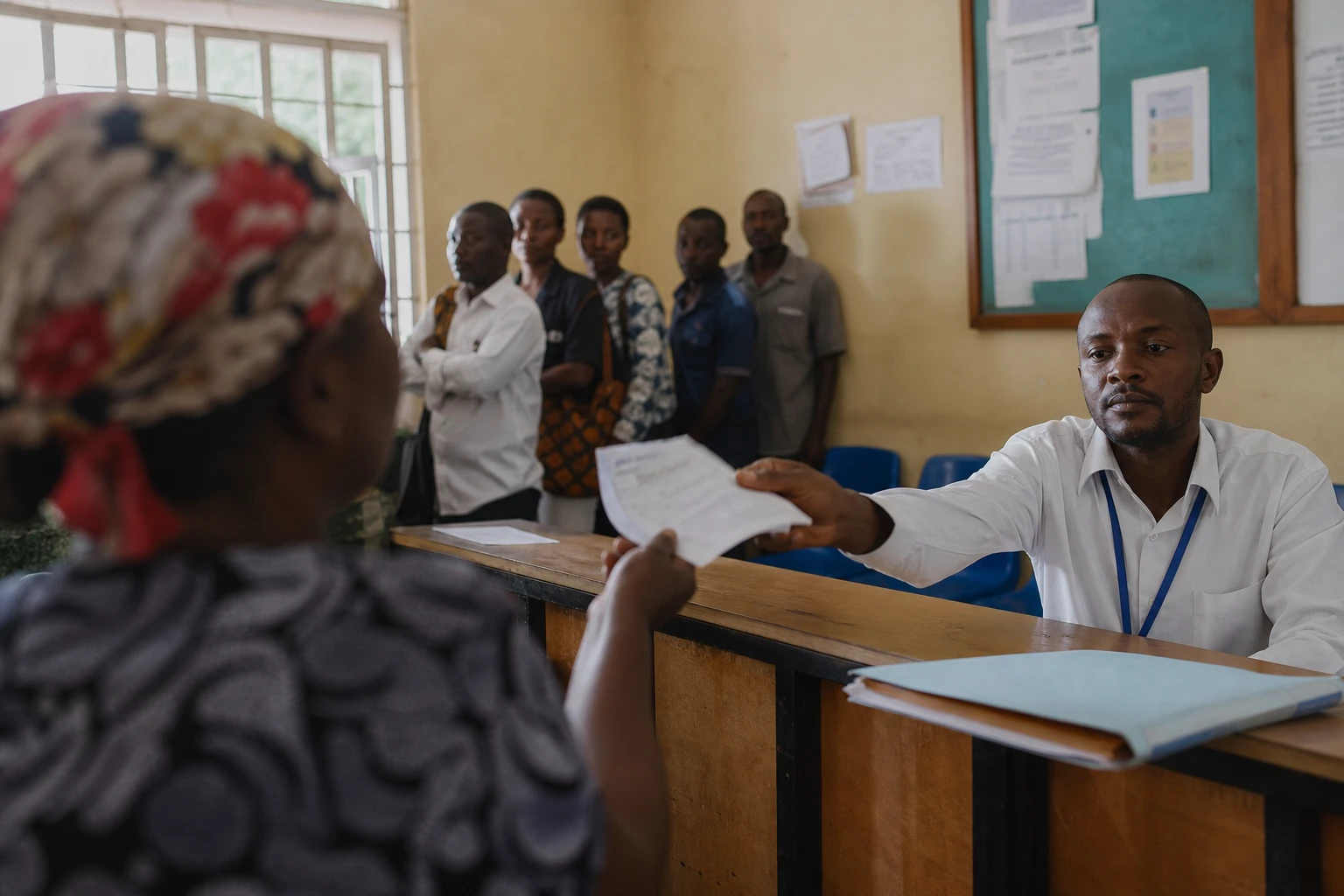
When an outbreak strikes an area already under strain
In the east of the Democratic Republic of the Congo, an Ebola outbreak is never just a public health issue. It immediately runs up against blocked roads, families on the move and the simplest, often most urgent, question: how will we eat tomorrow?
In Ituri, this reality weighs heavily. The province is still affected by insecurity, population movements and disrupted access to markets. In this setting, the medical response cannot proceed alone. It must go hand in hand with food, transport, water, community protection and support for health facilities.
Ituri, a health crisis within a wider emergency
Ituri is in the north-east of the Congo, at the heart of an area where the movement of people, goods and humanitarian teams remains precarious. The neighbouring province of North Kivu and, more broadly, the entire eastern region of DR Congo have for years been affected by a tangle of armed conflicts, displacement and pressure on public services.
The latest available humanitarian data describe a country where hunger remains widespread. The World Food Programme estimates that 26.5 million people across DR Congo face acute food insecurity. Of that total, Ituri is among the worst-affected areas, with 1.7 million people facing crisis-level hunger or worse. The picture is clear: when incomes fall and markets empty, disease spreads faster.
This situation is not the result of a single shock. It stems from a combination of factors: local conflicts, protracted displacement, rising transport costs, falling food production and limited access to land. FEWS NET also notes that conflict-affected areas in north-east DR Congo remain in a food crisis, with pockets of emergency-level food insecurity in some parts of Ituri and North Kivu.
What the Ebola response involves
The current Ebola outbreak, caused by the Bundibugyo strain, was confirmed in May 2026 in Ituri province. The WHO subsequently classified the event as a public health emergency of international concern because of the regional risk and the difficulties of controlling it in an unstable environment. The Congolese government and the WHO have also stressed that the response remains national, led from Kinshasa with support from provincial authorities.
The World Food Programme already plays a central logistical role. It helps move teams, deliver medical supplies and support treatment centres with hot meals. The organisation has also expanded its food and nutrition assistance in affected areas. Its country director in DR Congo, David Stevenson, stresses a simple point: without access to food, families find it harder to follow health guidance, isolate themselves and monitor contacts.
On the ground, this co-ordination is crucial. A treatment centre can be set up quickly, but patients, carers and health workers still need to be fed. Supplies must also reach isolated villages. Yet in eastern Congo, a passable road can never be taken for granted. When routes close, aid travels by plane, light truck or boat along diverted routes. Costs rise, delays lengthen and shortages multiply.
Why hunger undermines public health
The link between hunger and Ebola is direct. A family that cuts meals to get through a few days quickly becomes exhausted. It has less room to comply with a quarantine, lose a day’s work or travel to a health centre. In rural areas, this pressure weighs even more heavily than in provincial capitals, where markets are sometimes better stocked and health facilities closer at hand.
Malnutrition also complicates medical care. It weakens the body and can worsen severe cases. That is why humanitarian organisations now talk about an integrated response. The aim is not only to contain the virus, but also to maintain households’ ability to get through the crisis. The WHO, the Congolese government and the WFP now share this approach, although resources remain insufficient.
Underfunding is a particularly sensitive issue. The WFP has warned that it needs additional resources to reach the most remote communities and support a sustained response. On the ground, that means more fuel, humanitarian flights, storage, staff and secure deliveries. Without these resources, the response is concentrated in urban centres and along major routes, leaving outlying villages more exposed.
A test for DR Congo and for Central Africa
The current crisis extends beyond Ituri alone. It is a reminder that epidemics do not stop at administrative borders. Movement between DR Congo and Uganda, traders’ mobility, families on the move and links between provinces create a regional health zone. The WHO also cited a cross-border risk when the outbreak was announced.
For DR Congo, the challenge is twofold. It must contain Ebola without further undermining livelihoods in the east. It must also prevent each health crisis from turning into a wider food crisis. For the authorities in Kinshasa, the difficulty lies in balancing the emergency response with restoring basic services. For households, the needs are more immediate: security, food, healthcare and the normal movement of goods.
The lesson for Africa is clear. Countries facing conflict, climate shocks or mass displacement must consider health, logistics and food security together. In the Congolese case, Ituri is a stark test: an epidemic cannot be controlled through vaccines, tests and medical teams alone, but also depends on a territory’s ability to keep feeding its population.



