
 Algeria
 Egypt
 Libya
 Morocco
 Sudan
 Tunisia
 Benin
 Burkina Faso
 Cabo Verde
 Côte d'Ivoire
 Ghana
 Guinea
 Guinea-Bissau
 Liberia
 Mali
 Mauritania
 Niger
 Nigeria
 Senegal
 Sierra Leone
 The Gambia
 Togo
 Cameroon
 Central African Republic
 Chad
 Equatorial Guinea
 Gabon
 Republic of the Congo
 São Tomé and Príncipe
 Burundi
 Comoros
 Djibouti
 Eritrea
 Ethiopia
 Kenya
 Madagascar
 Malawi
 Mauritius
 Mozambique
 Rwanda
 Seychelles
 Somalia
 South Sudan
 Tanzania
 Uganda
 Angola
 Botswana
 Eswatini
 Lesotho
 Namibia
 South Africa
 Zambia
 Zimbabwe
As case numbers slow, caution remains
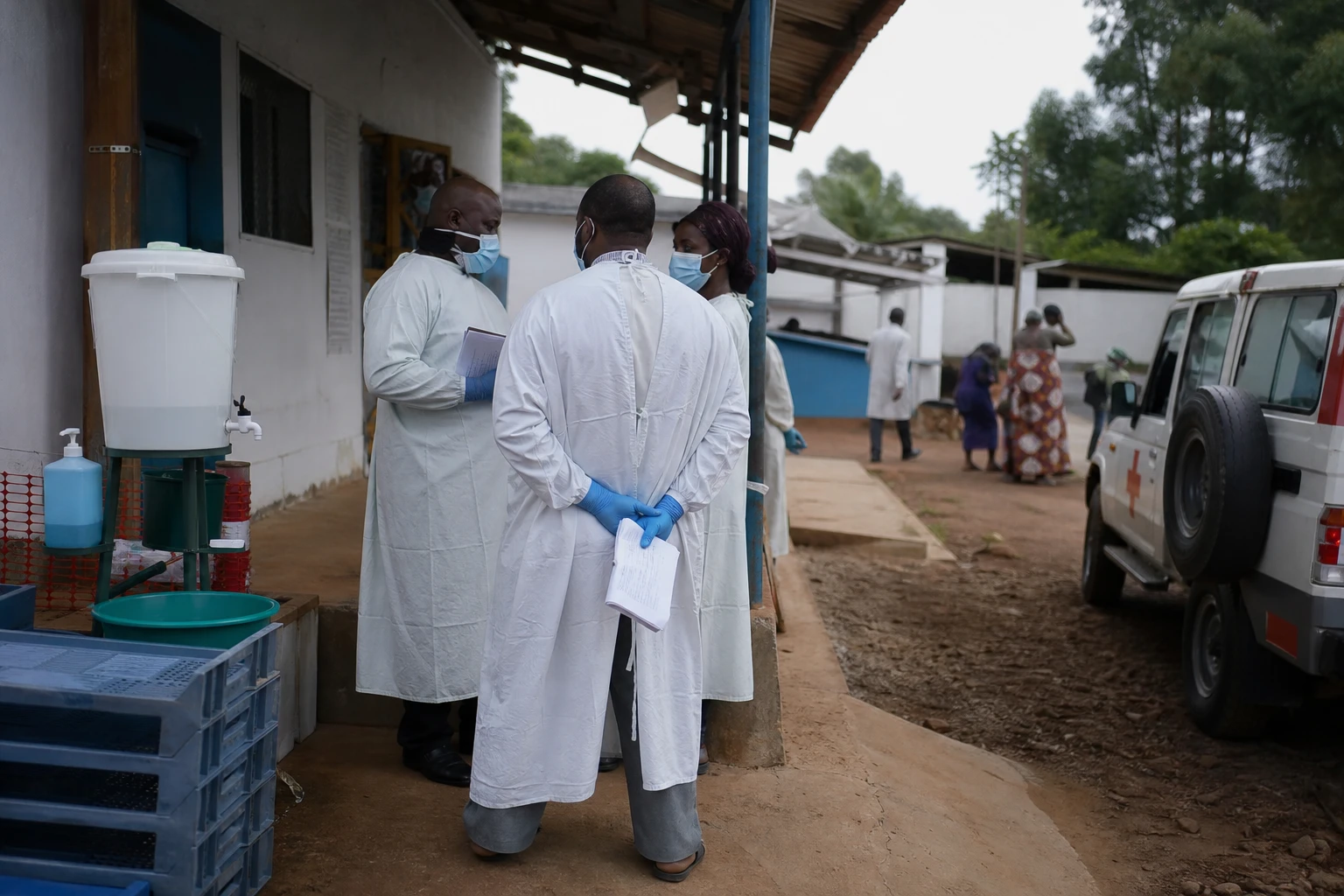
In Bunia and several parts of Ituri, relief does not feel like a return to normal. In the Democratic Republic of the Congo’s 17th Ebola outbreak, indicators are finally easing in the main hotspot, but the virus is still circulating, and any delay in detection can reignite the chain of transmission. Health authorities describe this as a phase of decline, not a victory.
This update matters beyond Ituri, too. The DRC remains the African country most regularly confronted with Ebola outbreaks, with health systems often strained by insecurity, displacement and the remoteness of services. At regional level, the alert also covers border provinces, as well as Uganda and South Sudan, because informal crossings remain numerous despite official border controls.
Ituri at the centre, Kinshasa stepping up oversight
On 4 September 2026, in Kinshasa, the Congolese government and its partners launched a revised 180-day multisectoral plan to accelerate the response. The objective is simple: break transmission faster, better track contacts and protect healthcare workers. This phase shows that the response is no longer just medical. It is also logistical, community-based and political.
On 15 September, Jean-Jacques Muyembe, director-general of the National Institute for Biomedical Research, described the epidemic in Ituri as being “in decline” in Bunia. He pointed to more favourable epidemiological signals, including fewer attacks on health centres and the absence of scenes of panic seen at the worst moments of the crisis. But he also called for more funding to maintain pressure on the virus.
The figures confirm a relative decline, without diminishing the seriousness of the situation. As of 7 September 2026, the World Health Organization had recorded 6,757 confirmed cases in the DRC and 3,267 deaths, a high case fatality rate of 48.3%. Ituri still accounted for 5,406 confirmed cases and remained the epicentre of the epidemic.
Real gains, but conditions remain fragile
The phrase “past the peak” should be treated with caution. In an Ebola outbreak, a temporary decline can reflect both genuine improvement and a better surveillance system. The WHO notes that the recent increase observed in the DRC is partly explained by more intensive case-finding, expanded testing and the reporting of data that had previously gone unreported. In other words, seeing the epidemic more clearly does not mean it is automatically receding.
On the ground, several obstacles continue to complicate the response. Insecurity, population mobility and reliance on informal healthcare facilities hamper the monitoring of patients and contacts. In the east of the country, these factors combine with difficult journeys, mistrust of response teams and fragmented public services. For families, this means longer journeys, later consultations and a greater risk of silent transmission.
The health response therefore remains on a narrow front. As of 7 September, the WHO said that 2,007 people had been vaccinated in six health zones across three provinces, while a clinical trial of treatments had already enrolled more than 300 confirmed patients. Vaccination of healthcare workers and frontline teams was also under way. These are important tools, but still insufficient to claim lasting control without community trust and rapid access to care.
What this outbreak says about the DRC and Central Africa
This epidemic is a reminder of a reality often underestimated outside the continent: in the DRC, a public health emergency is rarely isolated. It intersects with security, roads, markets, schools and regional movement. Ituri, North Kivu, Haut-Uélé, Tshopo, Bas-Uélé and, further afield, neighbouring countries form a zone of movement where surveillance must remain continuous. African organisations, led by Africa CDC, called for urgent regional coordination at an early stage.
The continental implications are clear. When the chain of transmission extends across several provinces, the response can no longer rely on a single ministry or capital. It requires laboratories that can act quickly, trained community health workers, available supplies and clear public messaging. On 7 September, the WHO still assessed the risk as very high for the DRC, high for countries sharing a land border with it, and low for the rest of the African region and the world. This classification makes the stakes clear: contain the outbreak locally to prevent a regional problem.
The coming weeks will determine what happens next, as surveillance data emerge and affected areas are identified. If indicators continue to improve in Ituri, the question will not simply be how to close an episode. Above all, the gains will need to be consolidated, the response funded and an apparent decline prevented from masking a resurgence in outlying areas. In the DRC, with Ebola, the real turning point is never when the curve begins to flatten. It is when the health system manages to stay on its feet long enough to prevent a rebound.



