
 Algeria
 Egypt
 Libya
 Morocco
 Sudan
 Tunisia
 Benin
 Burkina Faso
 Cabo Verde
 Côte d'Ivoire
 Ghana
 Guinea
 Guinea-Bissau
 Liberia
 Mali
 Mauritania
 Niger
 Nigeria
 Senegal
 Sierra Leone
 The Gambia
 Togo
 Cameroon
 Central African Republic
 Chad
 Equatorial Guinea
 Gabon
 Republic of the Congo
 São Tomé and Príncipe
 Burundi
 Comoros
 Djibouti
 Eritrea
 Ethiopia
 Kenya
 Madagascar
 Malawi
 Mauritius
 Mozambique
 Rwanda
 Seychelles
 Somalia
 South Sudan
 Tanzania
 Uganda
 Angola
 Botswana
 Eswatini
 Lesotho
 Namibia
 South Africa
 Zambia
 Zimbabwe
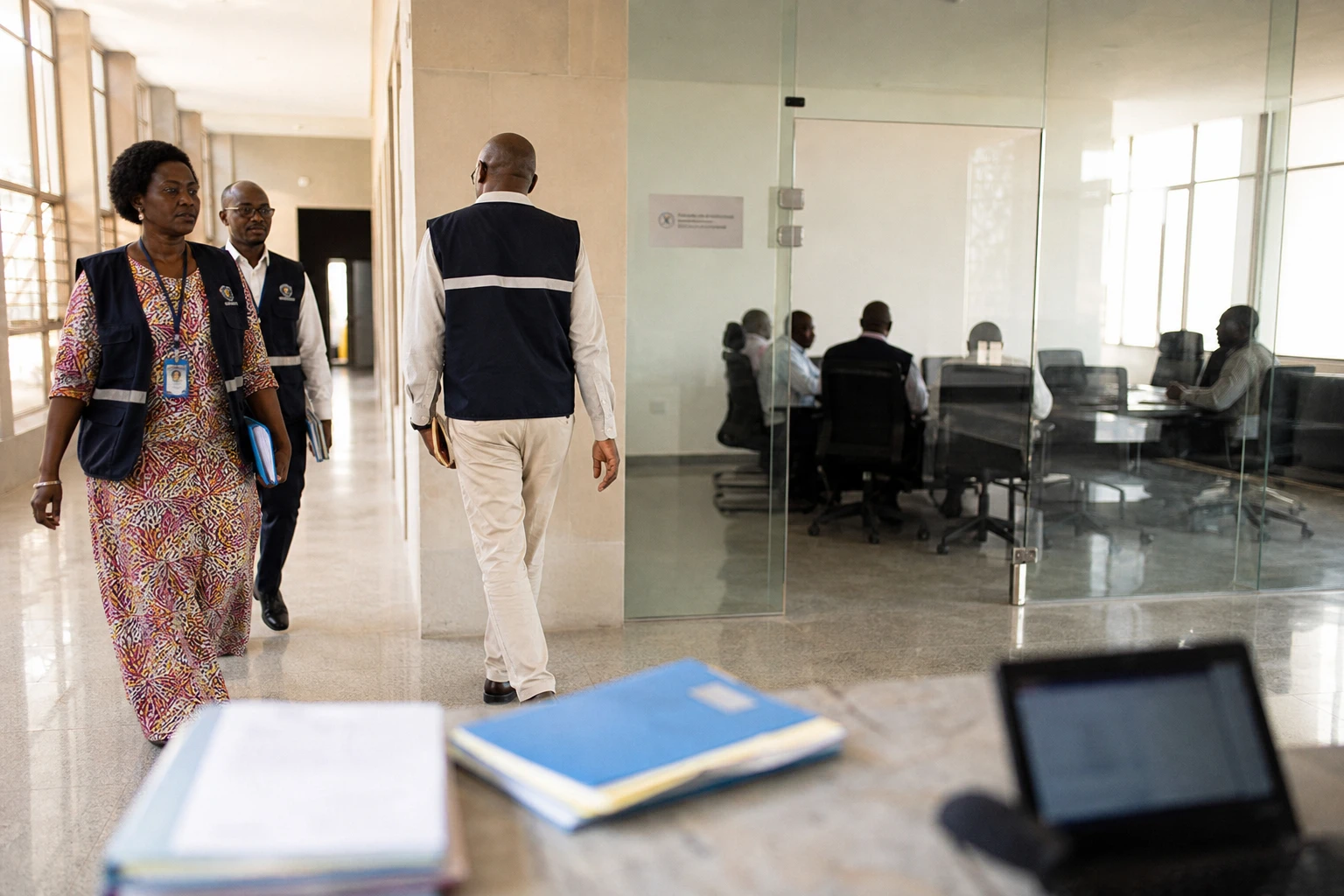
In Ituri, falling curves are not yet enough to declare the crisis over
In the east of the Democratic Republic of the Congo, an epidemiological improvement can quickly obscure a harsher reality. When new cases fall in Bunia or along some routes in Ituri, the response still hinges on a very practical detail: reaching patients early enough, before the disease spreads beyond homes and villages.
This vigilance remains all the more necessary because the current epidemic is no longer confined to a single outbreak. From Kinshasa, health authorities are coordinating a far-reaching response, supported by the WHO, Africa CDC and other partners, in a region marked by insecurity, population displacement and cross-border movements into Uganda. In this context, saying that the peak has “passed” describes the trend, but not yet the risk.
An outbreak that began in Ituri, then became a national health crisis
The current epidemic was declared on 17 May 2026 in Ituri province, in the north-east of the country. Tests by the National Institute of Biomedical Research in Kinshasa confirmed Ebola virus disease caused by the Bundibugyo virus. It is the 17th Ebola outbreak recorded in the Democratic Republic of the Congo since 1976.
Kinshasa’s role at the heart of the coordination effort is no accident. The National Institute of Biomedical Research (INRB), the National Public Health Institute and the health ministry centralise data there, while field teams work in health zones that are sometimes difficult to access. In Central Africa, the Economic Community of Central African States (ECCAS) and regional health mechanisms are also involved, as the disease has already crossed into Uganda during this outbreak.
The facts: real improvement, but a still-heavy toll
On 15 September 2026, Jean-Jacques Muyembe, director-general of the INRB, said in Bunia that the epidemic was receding in Ituri. He cited greater community acceptance, earlier case detection and faster referral of contacts. He also reported a decline in violence against medical teams and health facilities.
The Congolese government, for its part, said a few days earlier that the peak had been passed in the second half of August and that the 17th epidemic was “under control”. According to the situation report circulated by the authorities, 10 of the 61 affected health zones had reported no new cases for at least 21 days, while a slowdown was visible in several areas of Ituri, including Nia-Nia, Nizi and Mongbwalu.
But the figures remain high. As of 7 September, the WHO reported 6,757 confirmed cases and 3,267 deaths. On 10 September, the Congolese authorities reported a cumulative total of 7,022 confirmed cases and 3,398 deaths. The gap between these totals mainly reflects different cut-off dates, not a substantive disagreement: the crisis remains one of the most severe the country has faced, with a case fatality rate of around 48%.
What the decline changes — and what it does not resolve
Falling infections give field teams some breathing space. They allow contact tracing to be consolidated, more treatment centres to open and pressure on facilities in Bunia and rural parts of Ituri to ease. As of 1 September, the province had 25 care facilities, including 15 Ebola treatment centres and 10 transit centres. This is a significant operational advance, even if access remains uneven across different areas.
For residents, the issue is more immediate. In several localities, community deaths — those occurring outside treatment centres — continue to complicate the response. Schools have reopened in some affected areas, signalling a desire to preserve social life, but also the need to strengthen day-to-day surveillance. In displacement sites, family mobility and overcrowding further increase the risk of transmission.
The problem is therefore not only medical. It is also logistical, financial and social. Health authorities are seeking new funding for ambulances, healthcare workers’ allowances and epidemiological surveillance. The request makes one thing clear: a falling curve can turn upwards quickly if the chain of care weakens, especially in a country where distance, insecurity and community mistrust remain significant challenges.
A Congolese warning with implications for the region
The epidemic has already spread beyond Ituri. The WHO has reported its spread to six provinces, and then a seventh in some updates, with outbreaks in North Kivu, Tshopo, Haut-Uélé, Bas-Uélé and South Kivu. Neighbouring Uganda has also been exposed to cross-border transmission. For Central Africa and the Great Lakes region, the lesson is clear: the movement of people, goods and families calls for a regional response, not just a national one.
In Kinshasa, the revised 180-day plan launched on 4 September reflects this broader scope. It aims to strengthen surveillance, contact tracing, care and community engagement. The coming weeks will be decisive on two very specific fronts: the ability to keep new cases under control in Ituri, and the ability to prevent active pockets in North Kivu and other provinces from restarting the chain of transmission.



