Algeria
 Egypt
 Libya
 Morocco
 Sudan
 Tunisia
 Benin
 Burkina Faso
 Cabo Verde
 Côte d'Ivoire
 Ghana
 Guinea
 Guinea-Bissau
 Liberia
 Mali
 Mauritania
 Niger
 Nigeria
 Senegal
 Sierra Leone
 The Gambia
 Togo
 Cameroon
 Central African Republic
 Chad
 DR Congo
 Equatorial Guinea
 Gabon
 Republic of the Congo
 São Tomé and Príncipe
 Burundi
 Comoros
 Djibouti
 Eritrea
 Ethiopia
 Kenya
 Madagascar
 Malawi
 Mauritius
 Mozambique
 Rwanda
 Seychelles
 Somalia
 South Sudan
 Tanzania
 Uganda
 Angola
 Botswana
 Eswatini
 Lesotho
 Namibia
 Zambia
 Zimbabwe
In the east, a gas terminal becomes an industrial choice
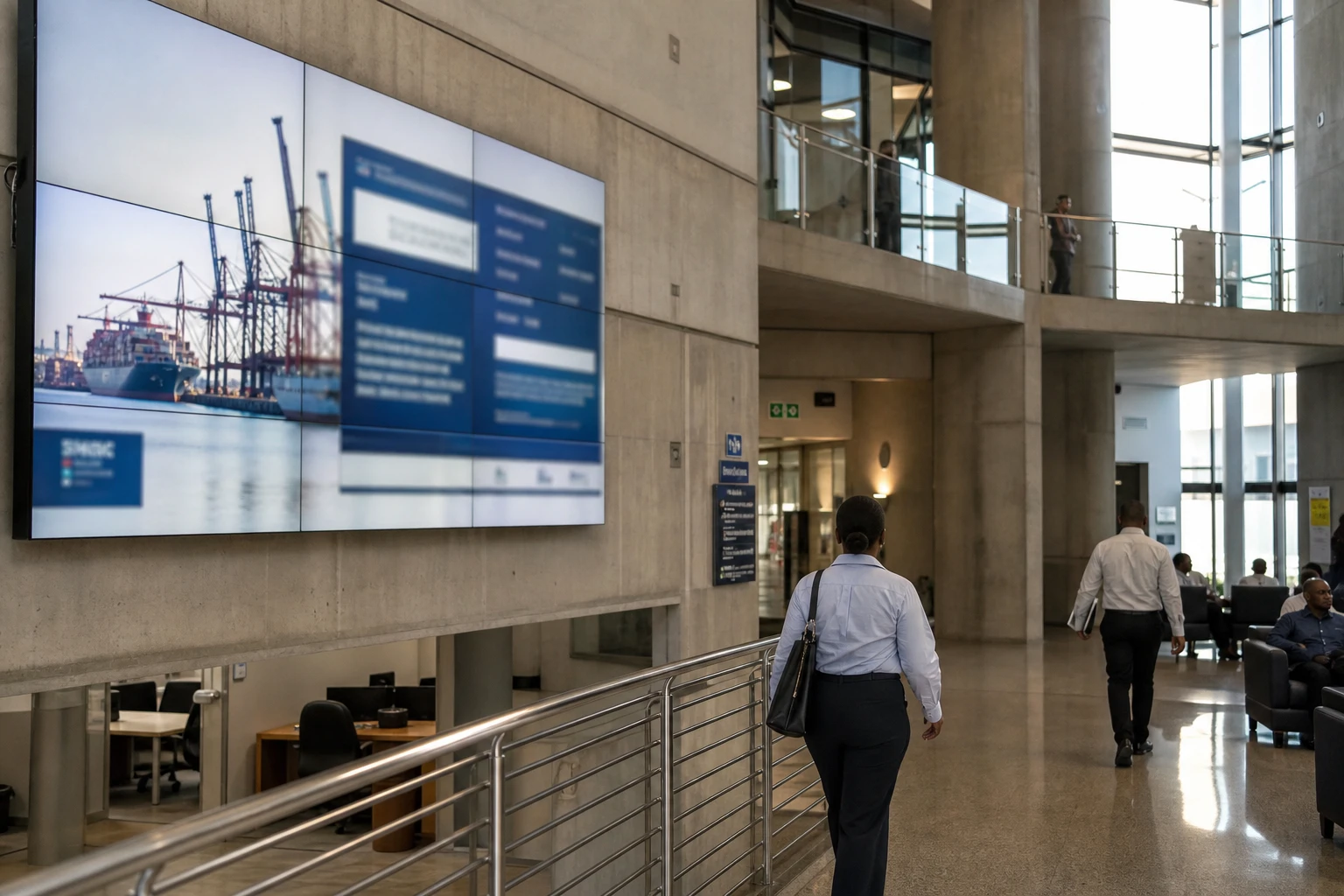
In East London, in the Eastern Cape, the debate is about more than ports. It touches on how South Africa organises its energy flows, industrial jobs and logistics corridors. For a country seeking to secure its supply while modernising its ports, an LNG terminal is no ordinary construction project. It is a bet on the movement of gas, the reliability of supply chains and the role each port should play in the national economy.
The regional context matters as much as the technical detail. The Eastern Cape wants to consolidate its role on the country’s eastern seaboard, alongside Ngqura, Port Elizabeth and East London. Transnet National Ports Authority, which manages South Africa’s eight commercial ports, has been promoting a policy of specialisation for several months: Durban for containers, Richards Bay for bulk cargo, Ngqura for major industrial and energy traffic, and Cape Town for other strategic functions. The aim of this division is to address the delays that have built up in the port system and better link ports, rail and industry.
In this framework, the east of the country is no longer a blind spot. InvestSA already presents the Ngqura hub as an area geared towards investment and export activities, while energy planning documents cite LNG infrastructure at strategic ports such as Richards Bay, Coega and Saldanha. East London is therefore part of a broader strategy: bringing energy closer to factories, particularly in the Eastern Cape and the rest of southern Africa.
What Pretoria and Transnet are putting on the table
On 16 September 2026, Transnet announced that it was seeking a terminal operator for East London. The tender is for a small- to medium-capacity LNG import terminal. The model is clear: the private operator will have to design, finance, develop, build, operate and maintain the infrastructure, then transfer it at the end of a 25-year concession. The arrangement confirms a clear trend: the state port authority retains the land and the framework, but leaves most of the risk and expertise to the private sector.
The announcement does not stand alone. In late May 2026, Transnet National Ports Authority signed a 25-year operating agreement with Ukwanda LNG for an onshore regasification facility at the Port of Ngqura, in the same province. In other words, the Eastern Cape is advancing in stages, with several entry points into the gas chain. East London could become a second, complementary link alongside Ngqura, rather than a direct competitor.
The timetable and legal structure matter. A long concession allows heavy investment to be recouped, but it also requires regular volumes to be secured. Without purchase agreements, industrial customers and adequate onshore connections, an LNG terminal remains a costly shell. Transnet’s previous actions also show that since 2024 the public company has been seeking private partners for LNG projects in Durban, East London, Mossel Bay and Cape Town. The current move is therefore the culmination of a process already under way.
What gains for the province, and what risks for the project?
For the Eastern Cape, the potential benefits are clear. A gas terminal could attract port services, construction jobs, maintenance activities and downstream investment. It could also boost the competitiveness of energy-intensive industrial facilities, particularly in a province that has long sought to broaden its productive base. But the impact is not automatic. A terminal cannot create an economy on its own. It must fit into an industrial ecosystem capable of using the gas and turning it into sustained activity.
The first risk is commercial. Imported LNG must find buyers. The second is logistical. The gas must then be transported to consumers through reliable onshore infrastructure. The third is financial. The smaller the volume, the higher the unit cost. For a port such as East London, historically focused on automotive trade and certain specialised cargoes, success will therefore depend on the ability to establish a stable base of demand, not merely announce new equipment.
There is also a question of national coherence. South Africa is seeking to improve port performance after years of underinvestment, congestion and operational difficulties. In this context, specialising port platforms can prevent resources from being spread too thinly. Durban remains the main container port. Richards Bay retains a major role in bulk cargo. Ngqura is expanding its industrial traffic. East London, meanwhile, is trying to enter the country’s energy map without abandoning its port vocation. This approach is more coherent than disorganised competition between ports.
A South African decision with regional implications
Beyond the Eastern Cape, the issue matters to all of southern Africa. SADC still depends heavily on fragmented energy networks, ports with uneven facilities and incomplete cross-border infrastructure. If South Africa develops several entry points for gas, it could also strengthen its role as a regional hub. Conversely, if the projects remain isolated, they risk creating pockets of activity with no systemic impact.
The continental significance is clear. LNG has become a transition tool for several African economies, but its success depends on contractual discipline, port quality and the ability to link infrastructure to real industry. The East London case will therefore be watched far beyond the province. It will show whether South Africa can make ports a lever for orderly reindustrialisation, rather than merely a backdrop for successive projects. In the coming months, attention will focus on the choice of operator, followed by the credibility of the gas transportation plan.