
 Algeria
 Egypt
 Libya
 Morocco
 Sudan
 Tunisia
 Benin
 Burkina Faso
 Cabo Verde
 Côte d'Ivoire
 Ghana
 Guinea
 Guinea-Bissau
 Liberia
 Mali
 Mauritania
 Niger
 Nigeria
 Senegal
 Sierra Leone
 The Gambia
 Togo
 Cameroon
 Central African Republic
 Chad
 Equatorial Guinea
 Gabon
 Republic of the Congo
 São Tomé and Príncipe
 Burundi
 Comoros
 Djibouti
 Eritrea
 Ethiopia
 Kenya
 Madagascar
 Malawi
 Mauritius
 Mozambique
 Rwanda
 Seychelles
 Somalia
 South Sudan
 Tanzania
 Uganda
 Angola
 Botswana
 Eswatini
 Lesotho
 Namibia
 South Africa
 Zambia
 Zimbabwe
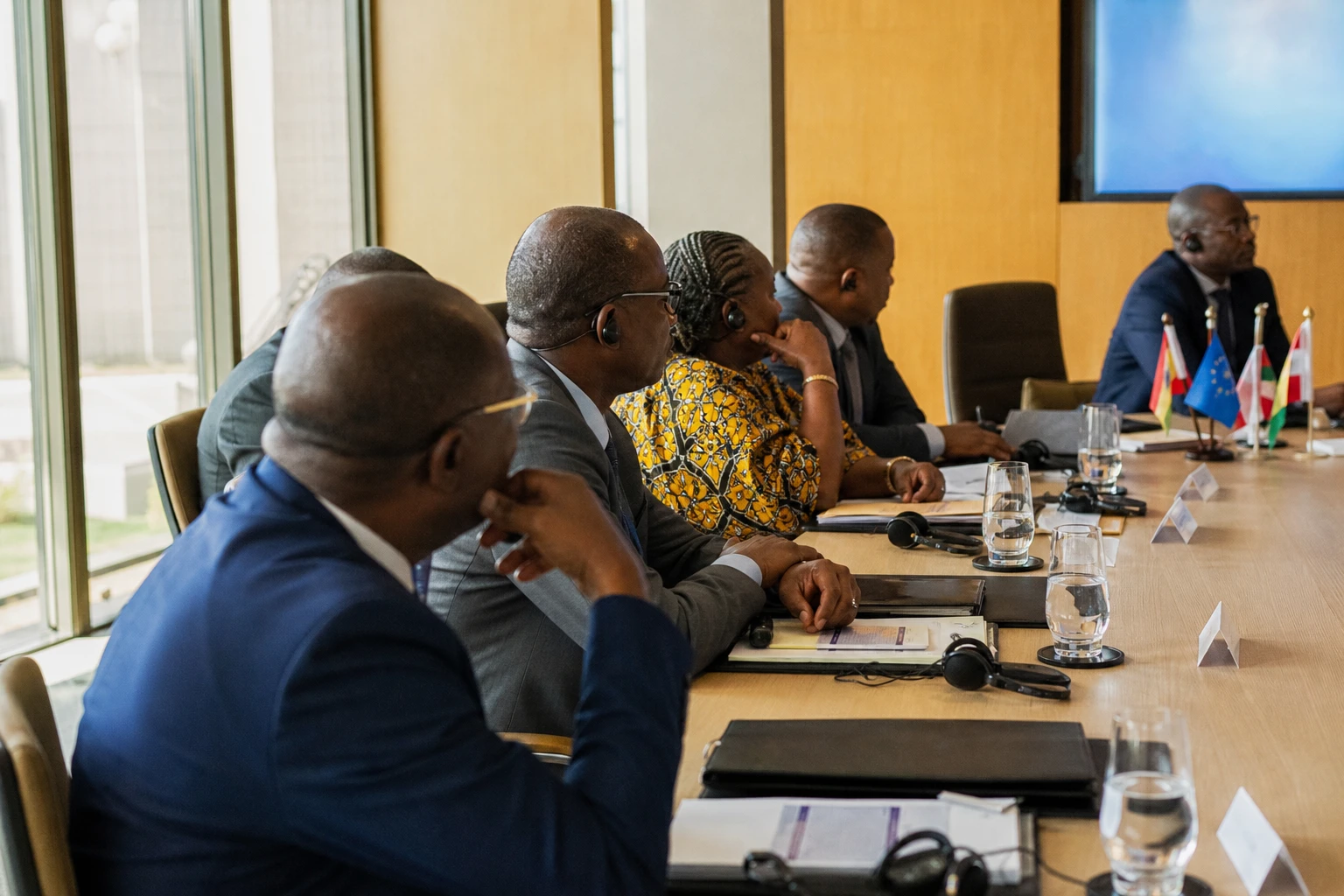
In Kinshasa, the security partnership concluded with Washington opens up new prospects, but it is neither an automatic military guarantee nor secured funding. Instead, the text outlines gradual cooperation, linked to the transformation of the armed forces of the Democratic Republic of the Congo and the protection of Congolese strategic interests.
An agreement set against the reshaping of the Great Lakes region
The memorandum was signed on 4 December 2025 in Washington, amid diplomatic efforts led by the United States to address the crisis in eastern DR Congo. The ceremony took place on the sidelines of the signing of a peace agreement between DR Congo and Rwanda, in the presence of several African leaders and representatives of partner countries. The Congolese presidency presented the occasion as a turning point in relations between Kinshasa and Washington.
The text concerns defence, security and the professionalisation of the Congolese military apparatus. It is, however, part of a broader framework. The United States is also seeking to strengthen its presence in critical mineral supply chains, while DR Congo wants to attract more investment, develop local processing and preserve its territorial integrity.
This dynamic directly concerns the Southern African Development Community, SADC, a regional organisation involved in the security response in eastern DR Congo. It also affects relations between DR Congo, Rwanda, Uganda, Burundi and Angola, whose security and economic interests intersect in the Great Lakes region.
Security objectives tied to strategic resources
The memorandum explicitly links security, infrastructure and minerals. Protecting critical resources and rare earths is among the partnership’s objectives, alongside defending strategic infrastructure and respecting Congolese territorial integrity.
This rapprochement reflects changes in the global market. Copper, cobalt, lithium, coltan and certain other minerals have become essential for batteries, digital equipment, electricity grids and defence industries. DR Congo already plays a central role in global cobalt production and has mining potential that is attracting the interest of several powers.
For Kinshasa, the issue is not simply to sell more minerals. The Congolese government is seeking investment in infrastructure, processing and the creation of local value chains. The Congolese foreign ministry describes the partnership as a framework bringing together security, critical infrastructure and efforts to combat cross-border trafficking.
The wording of the memorandum nevertheless matters. In itself, it does not give US companies automatic rights to Congolese resources. It establishes a framework for discussion and cooperation. The economic arrangements must be set out in other agreements.
Military training before equipment
The first operational component concerns training. The text envisages a programme intended to make DR Congo the recipient of the largest professional military training initiative in Central Africa.
The areas identified are specific: intelligence, logistics and military engineering. They correspond to several weaknesses regularly observed in the Congolese armed forces. An army may have large numbers of personnel yet remain ineffective if it lacks reliable intelligence, supply chains and technical capabilities.
Border controls and information-sharing are also among the areas under consideration. These issues are sensitive in eastern DR Congo. The movements of armed groups, mineral trafficking and the circulation of weapons cross national borders. Cooperation will therefore be unable to deliver lasting results without coordination with neighbouring countries and regional mechanisms.
Modernising equipment, by contrast, is presented as a later step. Washington could consider material assistance if the Congolese army demonstrates lasting progress in three areas: professionalisation, respect for human rights and accountability.
A political commitment, not a blank cheque
The memorandum guarantees no funding. Any assistance will depend on available resources and applicable US laws. This qualification limits the document’s immediate scope, but also underlines its rationale: the United States is setting conditions before increasing its military support.
For the Congolese authorities, this clause could provide leverage for reform. It could also become a source of frustration if the promised training progresses slowly or material assistance remains hypothetical. For the military, cooperation could improve professional skills. For the population, the question will be whether these gains translate into better protection for civilians in conflict zones.
Human rights will therefore be central. In regions affected by violence, a military operation is not measured solely by the number of positions retaken. It is also judged by the protection of residents, troop discipline and the justice system’s ability to investigate abuses committed by all parties.
The Congolese government will also have to address questions about economic sovereignty. Civil society organisations have welcomed the prospects for local processing and skills transfer, while calling for greater vigilance over the terms of access to minerals. The Congolese Press Agency reported these expectations around adding value to resources locally.
Five years to turn a framework into results
The memorandum is set to run for five years. It is not legally binding. Additional texts will have to define programmes, responsibilities, any funding and monitoring mechanisms.
This framework leaves considerable scope for negotiation. It allows Washington to make its commitment conditional on the evolution of the Congolese army. It also gives Kinshasa a basis for seeking more concrete cooperation, particularly on intelligence, border surveillance and infrastructure security.
The main test will be consistency between the security and economic components. A strategy focused on minerals will not meet Congolese expectations if it does not simultaneously strengthen infrastructure, skills and local revenues. Conversely, lasting military reform will remain difficult without institutions capable of controlling borders, financial flows and smuggling networks.
In the coming months, attention will therefore focus on implementing agreements, the first training programmes and the criteria used to assess the army’s progress. The real scope of the DR Congo–US partnership will be measured less by the signing in Washington than by its tangible effects in Kinshasa, in the eastern provinces and across mineral value chains.



