Algeria
 Egypt
 Libya
 Morocco
 Sudan
 Tunisia
 Benin
 Burkina Faso
 Cabo Verde
 Côte d'Ivoire
 Ghana
 Guinea
 Guinea-Bissau
 Liberia
 Mali
 Mauritania
 Niger
 Nigeria
 Senegal
 Sierra Leone
 The Gambia
 Togo
 Cameroon
 Central African Republic
 Chad
 Equatorial Guinea
 Gabon
 Republic of the Congo
 São Tomé and Príncipe
 Burundi
 Comoros
 Djibouti
 Eritrea
 Ethiopia
 Kenya
 Madagascar
 Malawi
 Mauritius
 Mozambique
 Rwanda
 Seychelles
 Somalia
 South Sudan
 Tanzania
 Uganda
 Angola
 Botswana
 Eswatini
 Lesotho
 Namibia
 South Africa
 Zambia
 Zimbabwe
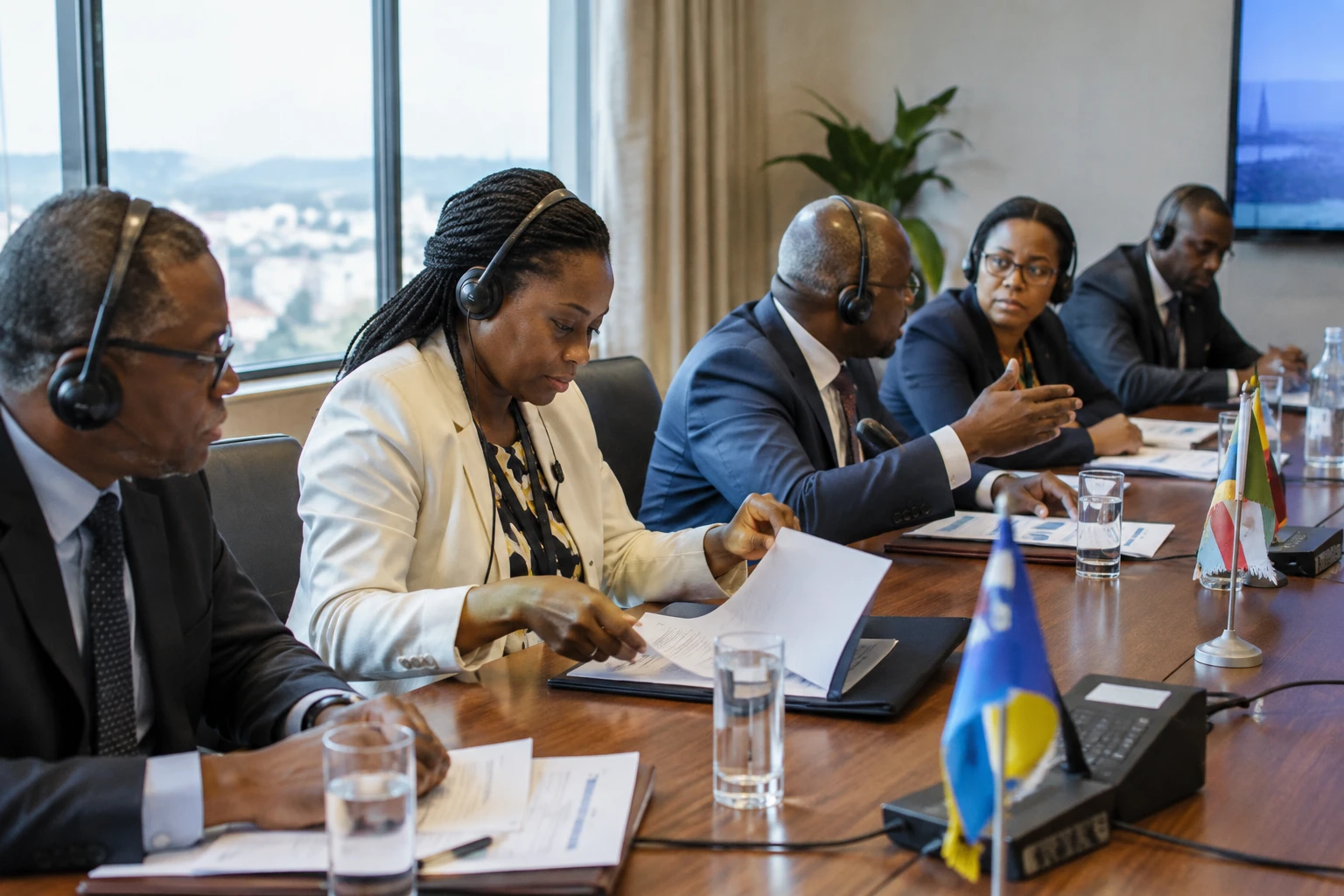
A trade review is not a certificate of compliance. For the Democratic Republic of the Congo (DR Congo), the meeting in Geneva is instead an opportunity to set out the country’s rules, answer questions from its partners and assess the gap between announced reforms and their implementation. The stakes will then play out at the borders, in businesses and across regional markets.
A review focused on transparency and implementation
On 28 and 30 October 2026, member states of the World Trade Organization (WTO) reviewed DR Congo’s trade policies. It was the country’s third review, following those in 2010 and 2016. The Congolese delegation in Geneva was led by Julien Paluku Kahongya, the Minister for Foreign Trade.
The term “validation”, sometimes used in accounts of the meeting, can be misleading. The WTO does not certify that a trade policy has been successful. Its mechanism is an exercise in transparency: members discuss two documents, one prepared by the organisation’s secretariat and the other by the government concerned. They ask questions and make observations. The process is not, in itself, a sanction or a general endorsement of the country’s choices.
This framework matters to Kinshasa. It gives trade partners an opportunity to question rules affecting imports, exports, customs and market access. In turn, the authorities can present their reforms and identify support needs. The conclusions derive their value from follow-up, not simply from holding the sessions.
Clearer procedures, but work remains
In Geneva, Julien Paluku highlighted several changes made since the previous review. These include the modernisation of customs procedures and the Trade Information Portal, a service intended to make information useful to businesses available online. The aim is to reduce uncertainty over the formalities and requirements governing trade.
The minister also cited compliance with the WTO Agreement on Trade Facilitation. The agreement aims to simplify and speed up the movement of goods across borders. For businesses, more predictable procedures can limit delays and costs. But an online portal or regulatory reform is not enough if border posts lack resources, information is not kept up to date or rules are applied inconsistently.
The government’s account also refers to technical support from the WTO and efforts to mobilise international donors. This support could cover administrative capacity and the implementation of commitments. However, it does not replace the domestic investment needed in customs systems, transport infrastructure and co-ordination between agencies.
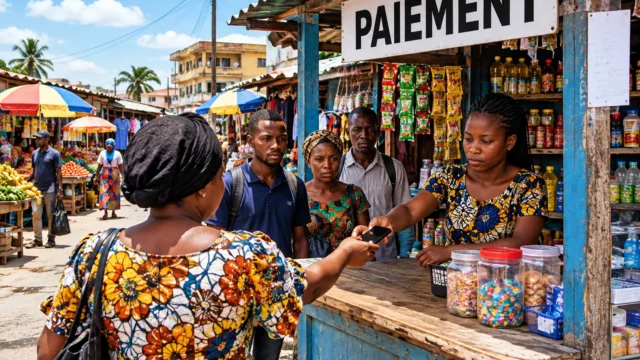
The government also referred to women’s participation in trade and economic empowerment, including through guarantee schemes designed to support entrepreneurship. The issue is a practical one: small businesses and women cross-border traders do not always have the same financial or administrative capacity as large companies. Access to finance will have lasting effects only if accompanied by clear rules and accessible procedures.
From Kinshasa to regional corridors
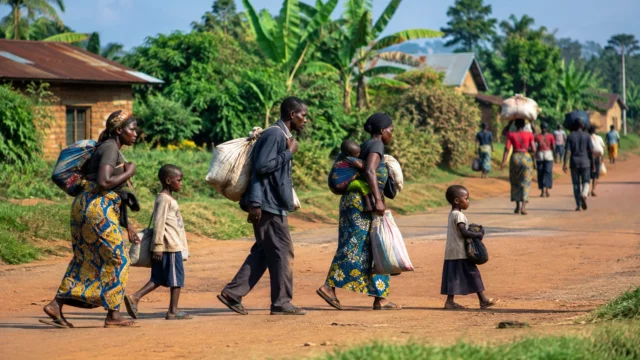
For DR Congo, a vast country with several landlocked regions, foreign trade depends as much on national rules as on connections with its neighbours. The country is a member of the Southern African Development Community (SADC) and the East African Community (EAC), two regional blocs pursuing ambitions for trade integration. Border posts and transport corridors therefore directly link reforms decided in Kinshasa to the costs borne by businesses and traders on the ground.
The effects will not be the same everywhere. Formal businesses able to use digital services and call on specialists may benefit more quickly from centralised information. Small operators, particularly those trading across borders, have greater need for simple procedures, reliable timeframes and effective access to support schemes. In regions far from the capital, the quality of infrastructure and the presence of government agencies will matter as much as the rules adopted.
DR Congo is also seeking to become more integrated into the African Continental Free Trade Area (AfCFTA), which aims to facilitate trade between African countries. The existence of agreements does not, on its own, guarantee an increase in trade. Rules still need to be made compatible, tariff preferences communicated and the movement of goods ensured. The WTO review thus provides a multilateral diagnosis, while results will also be measured in regional and continental frameworks.
The next test will be implementation
The political significance of the meeting lies in the visibility it gave to Congolese reforms. However, encouragement from partners should not be confused with an independent assessment of their effectiveness. The questions raised by members, the government’s responses and the review documents provide a basis for tracking progress and shortcomings.
For economic operators, the most telling indicators will be customs-clearance times, the clarity of formalities, access to information and the ability of support schemes to reach small businesses. For the authorities, the task will be to maintain the announced tools, co-ordinate government agencies and turn technical assistance into lasting local capacity.
The meeting in Geneva therefore does not close the debate on DR Congo’s trade policy. It makes it more visible. The next step will be to determine whether the commitments presented translate into trade that is less costly and more predictable, in Kinshasa as well as at the borders and along the corridors linking the country to its African partners.