
 Algeria
 Egypt
 Libya
 Morocco
 Sudan
 Tunisia
 Benin
 Burkina Faso
 Cabo Verde
 Côte d'Ivoire
 Ghana
 Guinea
 Guinea-Bissau
 Liberia
 Mali
 Mauritania
 Niger
 Nigeria
 Senegal
 Sierra Leone
 The Gambia
 Togo
 Cameroon
 Central African Republic
 Chad
 Equatorial Guinea
 Gabon
 Republic of the Congo
 São Tomé and Príncipe
 Burundi
 Comoros
 Djibouti
 Eritrea
 Ethiopia
 Kenya
 Madagascar
 Malawi
 Mauritius
 Mozambique
 Rwanda
 Seychelles
 Somalia
 South Sudan
 Tanzania
 Uganda
 Angola
 Botswana
 Eswatini
 Lesotho
 Namibia
 South Africa
 Zambia
 Zimbabwe
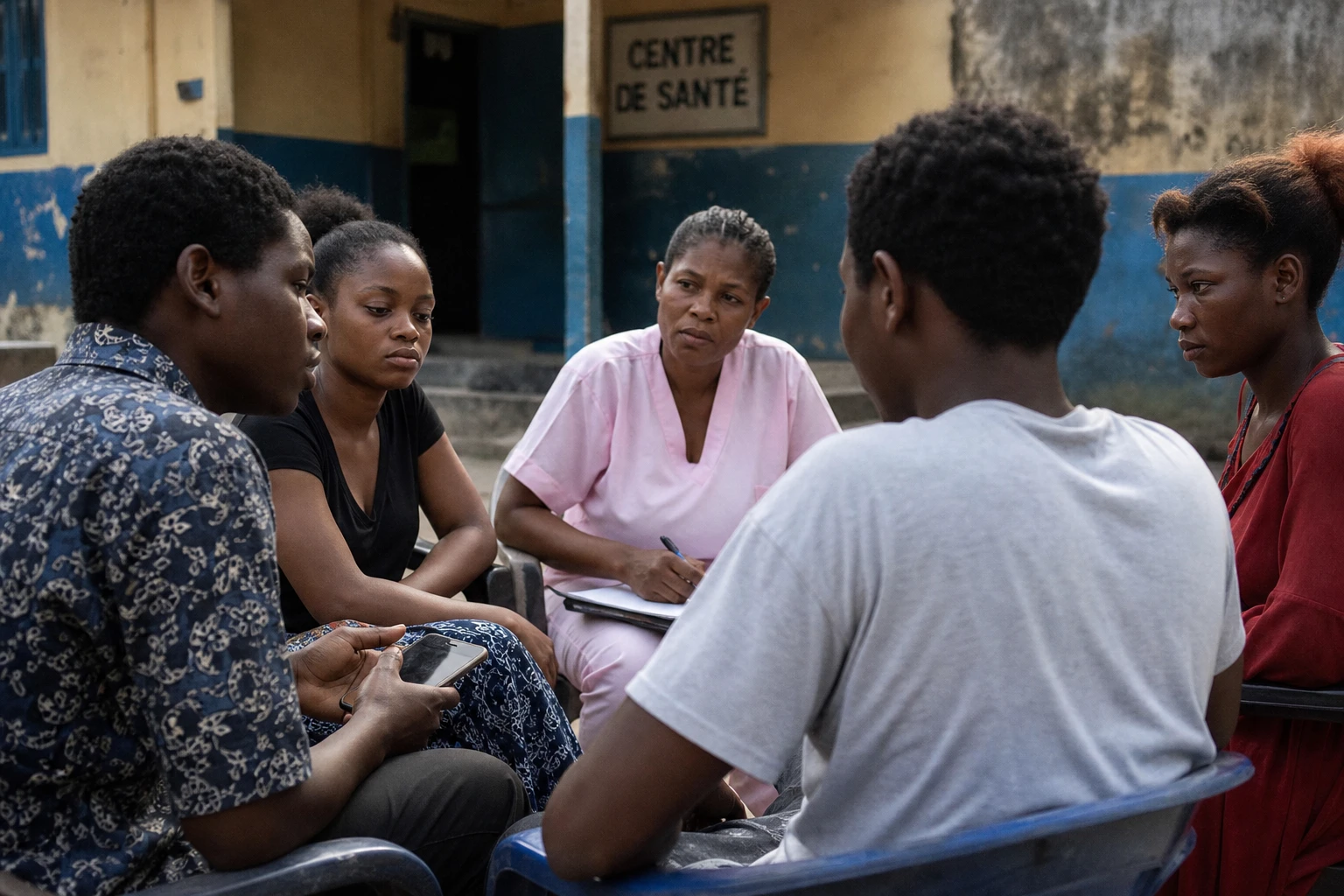
When distress goes unanswered
In the Democratic Republic of the Congo, talking about mental health is often harder than acknowledging the pain itself. Yet the issue directly affects families, schools, neighbourhoods and workplaces. In a country marked by repeated trauma, silence around suicide further deepens the vulnerability of those seeking swift and discreet help.
The issue is not an abstract one. Health professionals point out that a suicide attempt often occurs against a backdrop of psychological distress, substance use, violence or post-traumatic stress. In Africa, the World Health Organization also highlights the weakness of support systems: few trained staff, little dedicated funding and services still too concentrated in major cities.
Kinshasa confronts a need that can no longer be ignored
In Kinshasa, World Suicide Prevention Day provided a focal point for local mobilisation around a tool that seems simple in principle: a national, anonymous and free helpline. The aim is to offer an initial response to people in crisis, particularly young people, before isolation takes hold. The Ministry of Public Health also lists the day among its public health events, a sign that the issue is beginning to move beyond the circle of specialists.
This initiative comes against a broader backdrop. The DRC faces multiple health emergencies, while the east of the country continues to suffer the effects of conflict, displacement and disruption to services. The WHO notes that the country’s health situation remains severely affected by ongoing conflicts, population displacement and weakened health infrastructure. In this context, mental health is a basic need, not a luxury reserved for urban centres.
Figures that concern health workers
Available public data point to one conclusion: suicide is a real problem, but it is under-documented. The WHO says it causes nearly 800,000 deaths a year worldwide and is among the leading causes of death among 15- to 29-year-olds. For the DRC, an estimate cited in Kinshasa puts annual deaths at 5,000 to 5,800, with suicide described as the third leading cause of death among young people in the country. This figure should be treated with caution, as it remains a field estimate, but it gives an indication of the scale of the alarm.
At the African level, regional health bodies confirm the scale of the problem. WHO Africa says the continent carries a heavy mental health burden, with fragile systems and very few specialist health workers. The framework adopted by African health ministers sets clear targets for 2030: national policies, dedicated budgets, indicator monitoring and stronger services. In other words, the challenge is no longer to acknowledge the gap, but to close it.
Practical responses remain incomplete
Those working on prevention are calling for safe spaces to talk, stable funding and a presence in every province. This demand touches on a sensitive aspect of the Congolese health system: resources are scarce, specialists are few and psychological services remain concentrated in major cities. WHO Africa estimates that the region has an average of 1.6 mental health workers per 100,000 people, compared with 13 globally. This helps explain why many people in distress find neither a swift welcome nor regular follow-up.
Prevention also depends on public discussion. By giving a popular cultural figure a platform, organisers hope to break the shame that still surrounds the issue. This choice is significant in a country where artists, churches, youth associations and families often play a more direct social role than formal institutions. Mental health is not dealt with only in hospitals. It also depends on the collective ability to listen, guide and protect.
What this episode says about the DRC and the region
For the DRC, the challenge goes beyond suicide prevention alone. It raises questions about universal health coverage, the place of psychology in primary care and the treatment of trauma linked to violence. The Ministry of Health highlights institutions such as the National Institute of Public Health and the Health Promotion Fund, which could provide leverage to finally integrate mental health prevention into public policy. But without an identified budget, trained staff and community-based support, the commitment remains fragile.
At the African level, the DRC is part of a wider struggle across the WHO African Region: tackling stigma, building accessible support systems and making mental health a public health priority. The continent no longer needs awareness campaigns alone. It needs lasting mechanisms capable of identifying distress earlier, directing people to help more quickly and providing better follow-up. That is where the continental significance of the Congolese issue now lies.



