
 Algeria
 Egypt
 Libya
 Morocco
 Sudan
 Tunisia
 Benin
 Burkina Faso
 Cabo Verde
 Côte d'Ivoire
 Ghana
 Guinea
 Guinea-Bissau
 Liberia
 Mali
 Mauritania
 Niger
 Nigeria
 Senegal
 Sierra Leone
 The Gambia
 Togo
 Cameroon
 Central African Republic
 Chad
 Equatorial Guinea
 Gabon
 Republic of the Congo
 São Tomé and Príncipe
 Burundi
 Comoros
 Djibouti
 Eritrea
 Ethiopia
 Kenya
 Madagascar
 Malawi
 Mauritius
 Mozambique
 Rwanda
 Seychelles
 Somalia
 South Sudan
 Tanzania
 Uganda
 Angola
 Botswana
 Eswatini
 Lesotho
 Namibia
 South Africa
 Zambia
 Zimbabwe
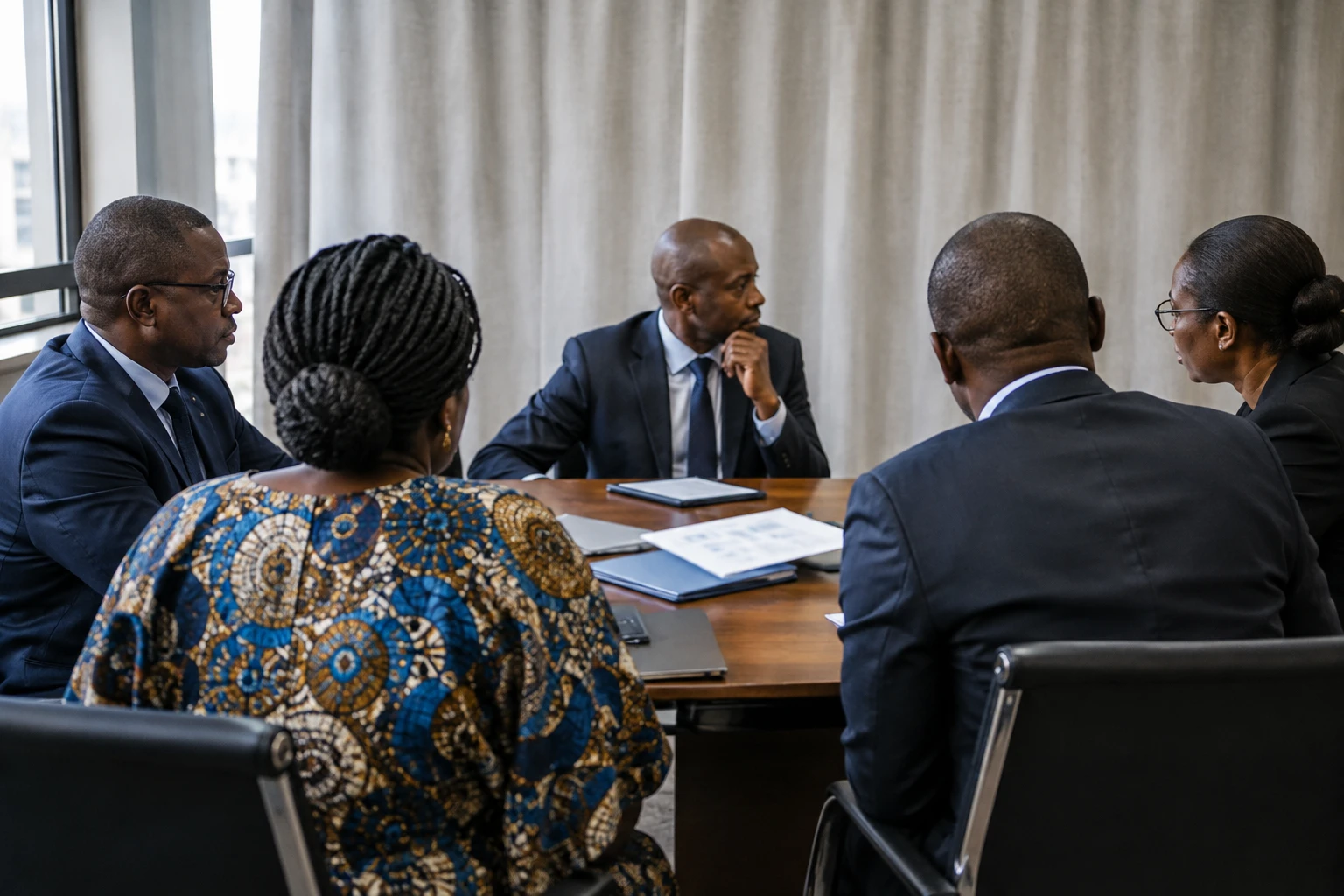
A law can set out how a referendum may be held without a vote being called immediately. In the Democratic Republic of the Congo, however, its promulgation has opened a central debate: how far can popular sovereignty go when the Constitution explicitly protects limits on presidential terms?
A new framework for consulting voters
Félix Tshisekedi promulgated Law No. 26/045 setting out the conditions for organising a referendum on 9 November 2026. The ordinance was made public the following day in Kinshasa, when Roger Kalenga, the deputy spokesperson for the head of state, read it on national television. The text replaces the 2005 framework, which was designed for the referendum held before the adoption of the current Constitution. Actualite.cd sets out the new legal framework, while L’Interview.cd confirms the promulgation and its entry into force.
The law specifies the stages of a consultation: initiation, calling the vote, campaigning, voting and the resolution of disputes. It defines a referendum as a vote of “yes” or “no” on a question or text. Under the provisions outlined when it was promulgated, citizens may vote if they are on the electoral register, are at least 18 years old and enjoy their civil and political rights.
Several actors could launch an initiative: the president; the government, following deliberation in the Council of Ministers; half the members of each of the two chambers of Parliament; or a petition signed by at least 100,000 Congolese citizens. This legal framework does not, however, mean that a referendum has been called. No polling date has been announced in the information available.
Constitutional safeguard at the heart of the debate
The controversy centres on the law’s possible scope. Félix Tshisekedi has led the country since 2019 and was re-elected in December 2023. The Constitution provides for a five-year presidential term, renewable once. Article 220 protects, among other things, the number and length of terms from any revision. The constitutional text is available on the DR Congo presidency’s website; the provision is also reproduced by Maconstitution.cd.
A legal question therefore arises: can a law organising a referendum enable the adoption of a new Constitution or the amendment of provisions that Article 220 makes unalterable? The referendum framework alone does not settle this interpretation. The law sets out a consultation mechanism; it does not automatically remove the limits written into the Constitution. The distinction between revising an article and replacing the Constitution thus becomes decisive.
The bill’s passage through the institutions adds another element to the debate. The Constitutional Court ruled it compliant with the Constitution on 28 July 2026, while raising reservations about several articles. The law then returned to Parliament for further deliberation. Radio Okapi reported the Court’s decision; the outlet also followed the bill’s renewed parliamentary scrutiny. These steps show that the adoption of the framework has already involved the institutions responsible for checking its compliance.
Opposition, ruling majority and public trust
Opposition groups gathered in the Article 64 Coalition, or C64, fear the referendum could be used to circumvent the two-term limit. They describe this prospect as a “constitutional coup”, a phrase expressing their political accusation rather than an established legal classification. Rallies against the proposal were held in Kinshasa and other cities in June and September. The Associated Press also reported on mobilisation and tensions surrounding demonstrations in Kinshasa, Lubumbashi and Kindu. Its report on the September demonstrations documents the political climate surrounding the reform.
The ruling majority, for its part, presents the referendum as a way to give direct expression to popular sovereignty. This argument refers to Article 5 of the Constitution, which recognises the exercise of sovereignty through elections and referendums. The two sides are therefore not merely debating how to organise a vote: they disagree over how to reconcile the popular vote, constitutional limits and institutional continuity.
For citizens, the practical stakes extend beyond parliamentary circles. The credibility of any vote would depend in particular on how the question is worded, fair access to the media, freedom to campaign and the ability of the Independent National Electoral Commission to organise the vote across the entire country. Conditions for participation may also vary between Kinshasa, major cities and remote areas. The law sets out a framework; its implementation and the safeguards offered to voters would affect the trust placed in the result.
A national milestone under regional scrutiny
The next development to watch is therefore not a polling date, which has not been announced, but any decision to call a referendum and the wording of the question put to voters. Parliamentary debates, decisions by the Constitutional Court and statements by political parties will help clarify whether the text remains a general consultation tool or becomes the basis for a broader institutional reform.
This sequence concerns the balance of politics in the DRC first and foremost, but it also resonates across the Great Lakes region and within the African Union, where institutional stability and the transfer of power are closely watched. The DRC belongs to the Southern African Development Community (SADC), a regional organisation that also provides a forum for political dialogue. The law alone does not establish that a third term is secured or that a referendum will take place. The decisive issue will be whether any future initiative is compatible with the Constitution, and how institutions, parties and voters are able to debate it.



